
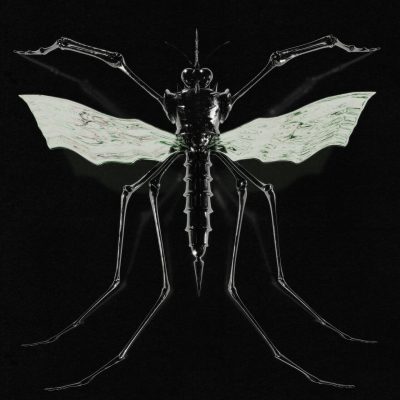
The British Northwesterners’ latest album is a tight sludge of psych-punk that is hard to get rid of completely.
Wax Head is a Manchester-based psych-punk quartet which consists of drummer and frontman (only known mononymically as with the rest of the members) Lewis, guitarist Harry, bassist Kip, and keyboardist Archie. Their style will surely lend comparisons to Osees at first but their inspirations fuel more likeness to King Gizzard and the Lizard Wizard. In a feature from Baby Step Magazine, the quartet’s local picks range from drone music with avant-garde jazz drum improv to sharp post-punk kicks with a prog-like rhythm that is reminiscent of Geordie Greep’s to the mellow indie rock twang that is out of the Modest Mouse playbook. These bits of divergence will be helpful later on in understanding the appeal of their debut album – GNAT.
GNAT isn’t a kind of album that has a concept that makes its tracklist more than the sum of its parts. It is neither a record that defies what we would normally expect of music itself nor is it a record that broadens it. It is, by all accounts, a standard punk album that shrieks and pounds with its guitar distortions and whose mumbled vocal effects resemble a murkier side of psychedelia. However run-on-the-mill the description sounds, GNAT actually pulls some serious punches in its instrumentation.
Right from the beginning with its self-titled track, the guitar riff and the kick drum at times come off like a mechanised fuck-you deprivation from the late Steve Albini’s band Big Black in the 1980s. The lyricism feels secondary to the textures where the monotonic mixing compounds on you in a hypnotic way. The grit is impossible to ignore. ‘Bug Doctor’ wavers in its synths like an amateur playing violin yet its seeming shoddiness only adds to, not detracts from, the song as it syncs with the cymbals like some frantic panic attack. And the vibrancy of the structure is noteworthy in how the drumming especially takes on a life of its own without regard to falling back on the same rhythm. In ‘Terminal Sinker’, the music as a whole resembles more like Jay Reatard’s punchy style if it’s been dipped into radioactive waste. The final result being a more claustrophobic display of fuzz that’s been built from the instrumentation all together.
Wax Head’s roots in garage rock aside from alien psychedelic production helps to add to its crunch more prominently even if there are bits of what looks like mistakes being made. ‘Clatter Coats‘ saw its starting riff miss a few notes right before the first verse comes in which only adds to the charm of the song’s fleeting decadence. In the longest track that is ‘Resin214’, the vocals came right before the instrumental intro ends which showcases the ramshackle charm and the lengthy instrumental second half feels convoluted, but it has a lot of interesting directions. The synths in the third-quarter of the song has a more transcendent escalation which resembles a Shepherd’s Tone, the final bit of riffs are consistently repetitive with another guitar going out of tune to add to the franticness, and the feedback is intensifying to close out the song. ‘Takeover’ sees its vocals be at its most neutered as it is even more indistinguishable from the distorted vocalisation which makes for a nightmarish impression.
Last, Wax Head’s mentioned subtle influences shine through on several tracks that owe some credit to older genres or singles even as they’re reshaped to fit within psychedelia. ‘Rusty Cutter’, through its drenched parody of the rockabilly structure, comes off as paranoid rather than charismatic and it’s something that makes it sound likeable. ‘Drawöh vs Lineus Longissimus’ is perhaps the only song in the album that is not led by Lewis’s singing but rather by a noted studio tinkering of a sample which alludes to human fragility. There’s a subtext of mortality that mirrors Paul Hardcastle’s iconic ‘19’ back in 1985 although it’s more so based on existential synergy rather than anti-war dissonance. ‘Clamp’ is the final track which caps off the entire album under a direction that emphasises on brief out-of-tune notes that is out of the post-industrial playbook and maximised tempo akin to heavy metal technicality. Its tension never lets up all the way through to the very end which allows its viscerality to stay with you for a good while.
GNAT might not be a perfect album as its music ultimately doesn’t sound out of place enough from its contemporaries to stand out even if there are small differences within its deep cuts. It is, however, a devastating record in its direction. The production errs toward the type of psychedelia where the overall experience is that of overdosing rather than surreal which puts you on guard. The instrumentation never lets up even if there are some slips that incidentally adds to the charm of each song through its brief pick-up in tempo. And whatever small bits of differences you can identify makes for a slightly rewarding experience upon further relistens.
Wax Head might not have conjured up a masterpiece on their first go at making an album, but it is a footprint that will likely form the bedrock for them to make better and better records for the years to come. I would recommend this album for fans of both more rough-edged psychedelic music where the production doesn’t feel as refined as in Tame Impala’s and garage rock/punk fans who want the extra grit in its sound. Even if it’s by no means an original piece, let alone perfect, GNAT will hopefully stand out as a footnote that predates the band’s future magnum opuses.


Leave a Reply