
Bocchi the Rock, K-On!, and Girls Band Cry are among the most popular shows of their season to the point where their albums sell. How do they click?
Over the past 20 years, Japan is seeing some of its most iconic animated shows not be for teenage/young adult men nor were they about biblical levels of destruction done by superpowered folks. They star teenage/young adult women who share a common goal – making it in music. They tend to attend either a secondary school or college, they might have passing experiences in their craft, and they might even know a friend or two who’s in the business longer than they do. What matters is the journey as their love for playing their instruments shape their personality throughout the series.
The three shows whose popularity has helped to fuel interest in music are: K-On!, a 2009 slice-of-life which simply documents the lives of several school students as they perform as a band that’s the cornerstone of their self-run music club; Bocchi the Rock!, which leans much more strongly towards comedy as it follows a socially anxious guitarist who befriends and plays for an aspiring rock band; and Girls Band Cry, the more dramatic portrayal of trying to aim for stardom where a ragtag quintet of young adults and teenagers confront both their ambitions and their personal dramas while hanging around in Kawasaki which was premiered in 2024. All three are acclaimed with their own following and these are backed strongly by their music.
While there are a lot of factors in highlighting the success of the show like its writing or its animation, the general purpose of this blog will mean that emphasis will be placed on the key theme – music. The eras of which the three shows initially aired marked different times in music where certain music genres at least in English-speaking countries like the United Kingdom are more popular. This in turn will likely influence the interest surrounding the kind of songs that were performed from the anime. At the time of K-On!’s release, it’s around the time when pop punk is popular although it’s gradually fading from mainstream prevalence. For Bocchi the Rock!, the comeback of indie rock as an alt-music staple with clear creative freedom. Girls Band Cry, the revival of post-hardcore punk and emo music which tickles the feelings of the downtrodden along with the uptick in V-tubers as an online phenomenon.
It’s very important for the music especially in the music-based show/film to be fitting of the mood and genre that it follows. Hamilton the musical might thrive for its use of hip hop as the symbol of the importance of the United States’ immigrants, but its more upbeat tone draws criticisms for whitewashing the controversies of the Founding Fathers. On the other hand, the 2022 epic period Babylon saw its jazzy instrumentals sound less like swing music and more like the best Postmodern Jukebox adaptation of house tracks to fit with its decadent tone. The tempo, production, and vocals found in each of the explored bands will help to inform and add to the specifics of their specific anime.
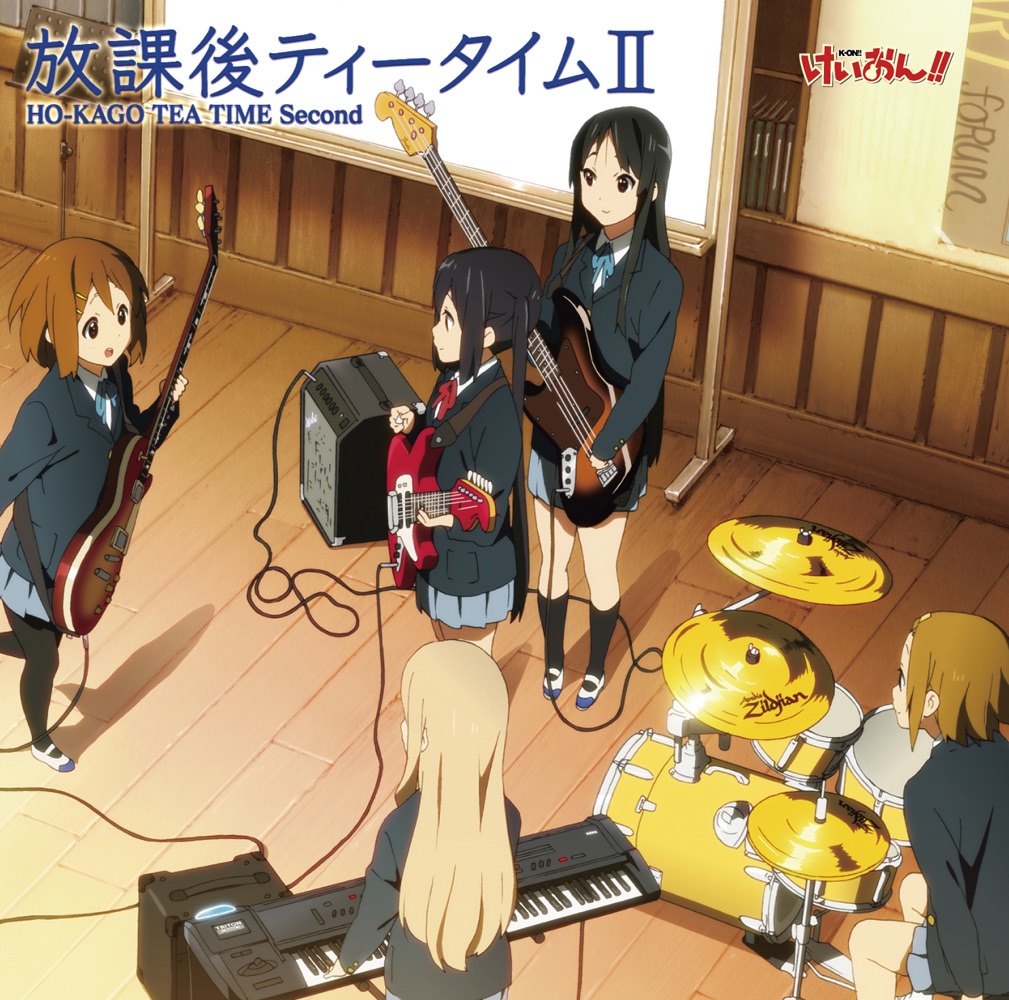
K-On!’s main band is Ho-Kago Tea Time, named simply after the members’ tendency to drink tea together during their session after school. The light-hearted nature of the anime where drama is virtually nonexistent save for the inevitable graduation lends credence to the band’s music. Additionally, the main genre in question is a more power pop-oriented kind of Shimokita-kei which draws both from Western alt-rock staples like noise pop and from J-Rock. It helps, expanding on with the musical context regarding the time of K-On!’s premiere, that North America was seeing both indie bands like Bomb the Music Industry! release classics like Scrambles and bigger names such as Sum 41 release hit singles in ‘With Me’.
The traits help to create what Ho-Kago Tea Time’s main appeal would look like and that is the emphasis towards more “moe” feelings like friendship. The music itself owes itself to Shimokita-kei certainly, but it’s also shaped by the particularities of the members’ musical background. It’s largely driven by barre chords due to rhythm guitarist and lead vocalist Yui Hirasawa’s inexperience. Keyboardist Tsumugi Kotobuki is classically trained as a pianist which adds a smidge of grandeur to the textures. And drummer Ritsu Tainaka and bassist Mio Akiyama are inspired by a live concert on TV with some implied experience which sets them up towards pop punk. The results thus leaned towards the kind of music that sounds simple on the surface, yet its liveliness is punctuated by the diversity in the experiences of the characters.
Bocchi the Rock!, being premiered more than a decade later in December 2022, expands on K-On!’s approach with their starring band. Kessoku Band, named after the zip-ties that the titular Hitori “Bocchi” Gotō and her three friends are selling for merchandise, are largely independent and it shows from the diversity in their songs. One track, it resembles a dance-punk outing. In another, a brooding tidbit of alienation and bottled feelings. Even each of the members have their own songs to sing in the end throughout the show which best sums their personality and character arc – with Bocchi as the main songwriter in-universe none the less! It is befitting given that the creator of the original manga, Aki Hamaji, is a fan of J-rock herself and would frequently include references to many bands in the beginning of each issue.
On ‘Distortion!’ which is sung by lead vocalist and rhythm guitarist Ikuyo Kita (or Kita Kita), it is a dissonant kind of power pop which tackles the use of songwriting as the remedy to cope with loneliness. ‘Karakara’ has a more post-hardcore knack with a more complex time signature to compliment Ryo Yamada’s encyclopedic love for music yet it also keeps in mind the challenges life throws at her carefree way. ‘What is Wrong With’ is led by de-facto band leader and drummer Nijika Ichiji is the most twee in that it’s both the celebration of enjoying yourself and – as a hint towards a spoiler – a bit about the heavy weight of achieving dreams for the sake of your loved ones. Last is the cover of key inspiration Asian Kung-Fu Generation’s ‘Rockn’ Roll, Morning Light Falls on You’ which was sung by Bocchi which puts into conflict her constant anxieties with the need to move on forward with life no matter what.
Last, Girls Band Cry sticks out in contrast with the two shows with Togenashi Togeari which was borne in name from the band’s first live performance when lead singer Nina Iseri reads out the word from a random shirt in an act of improvisation. So far, Ho-Kago Tea Time and Kessoku Band have sought to show off by being more colourful in their influences, Togenashi Togeari is more uniform in their tunes. It is much more angsty than even Bocchi’s most emotive admissions of fearing being left out and it’s much heavier in its guitar distortion than Hirasawa’s most punk riffs. Not to mention as well that the real-life story surrounding the development of the anime involves the audition of amateur musicians with little to no experience in voice acting to try and get a more authentic feel to the atmosphere. The result is a virtual band project, run in real life by record label Agehasprings, that aims to keep the longevity of Gorillaz and yet retains the cutting edge that’s found in the best emo bands.
Almost all of the songs are sung by Iseri with a more damning theme of isolation, depression, and betrayal. It is a wholeheartedly moody kind of tune which has more in common with Mass of the Fermenting Dregs than it does the pillows. ‘Void’ for instance has a fast tempo in its guitar riff which accentuates the feeling of being out of place with the modern world. Meanwhile, ‘Answer to Extreme’ ups the amp with the aggressive bassline and even more distorted guitars to convey the pressure felt from keeping up an image as a way to protect yourself. For the last example, ‘Emptiness and Catharsis’ puts the piano to the forefront not so much as a remedy as it is a companion to the need for an emotional catharsis.
Although there are differences between the three bands, they all develop their own followings as a result of their distinct identities. The uptick in newfound musicians are frequently reported and imitations are often done out of the love of the show. This however didn’t go into empirical detail about the popularity surrounding the streams or views of the songs. Ho-kago Tea Time, being a staple of the older side of the internet, saw their songs reach millions of views on YouTube while Kessoku Band’s own tunes get tens of millions of listens from Spotify. Togenashi Togeari’s music videos already reach around hundreds of thousands to a million views on YouTube in addition as evidence of the show’s notable popularity. The shows’ success thus create a strong precedent towards the creation of the band not only as the main ensemble to keep track of, but as a breathing virtual project that is well-tied to the heart of its key themes.
 GutterPutter
Leave a comment