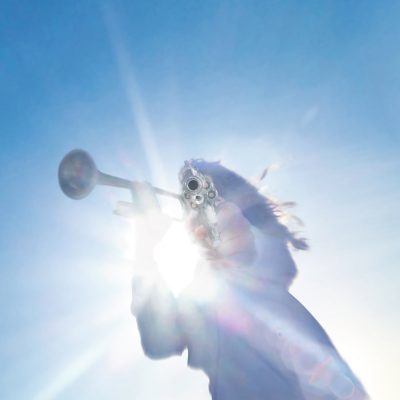
The stalwart New Yorkers’ fifth album is immediately making headlines, its eclectic indie rock style standing firm in its sharp form.
At the time of writing, Geese is now a household name in New York City’s rock scene. Getting its start more specifically in the borough of Brooklyn, the band consists of Cameron Winter, the vocalist and guitarist who have a solo career as well; Emily Green, another guitarist; Dominic DiGesu, the bassist; and Max Bassin, on the drum. The quadruple initially made three albums between 2018 and 2021 with only a burst of recognition. It was in 2023 when their fourth album 3D Country broke them through to critical acclaim. Many especially praise them for their energetic and personable performance although at least from my experience, it’s more befitting to a handful of tracks than to the whole record. To say the least.
Following two years including a strong solo debut from Winter, Geese made a return with Getting Killed. At this time, the band had honed their skills with Winter’s songwriting being on the up and the instrumental technicality much less prone to needless showmanship. Their flashy style has embraced a more nuanced position in other words. It was previously my main complaint about their last effort in that as impassioned as it is, it is one that verges on being too bombastic for its own good. It doesn’t know when to allow a slower tempo to further manage the emotive reaction of the listeners. This album however showed that the problem was just about fixed overnight (helped by Winter’s Heavy Metal) as the song structures now incorporate a more flexible range of pacing to aid its psychedelic impressions.
This is hinted by the starting track in ‘Trinidad’. In it was a quiet-loud dynamic between the funky quiet of the verses with its mellow bassline and a krautrock-like rhythm compared to the abrupt loss of sanity in the chorus from its trombone and overt stereo mixing. – “There’s a bomb in my car!” ‘Cobra’ further highlights the suaveness and the more chill direction the band undertook through Winter’s crooning vocals that would remind fans of Geordie Greep alongside a more twangy slurs in its guitar notes. It’s a nice hint of reverence to Black Midi that was named as a key influence in a past Rolling Stone interview. Such clear proficiency was soon proven by its third track, ‘Husband’, where the percussive playing is more tribal, the layered mixing of vocals gradually more transcendental, the slow build towards the crescendo more hypnotic. All bets are off that the band’s talent lies beyond their competence in their instruments.
However, the slower pace isn’t one that Geese relies entirely on to show that they are worth the praise. They can still go fast when they need to and they are still capable of meeting the highs of their last album without coming off as extravagant. Or at least the extravaganza didn’t linger around for too long. Take for example the title track where the guitar riff and the bassline melds with the young, seemingly androgynous backing vocals as the kick drums and the toms get rolling like a military drill. The irony is that it doesn’t quite fit with the lyrical focus on conformity and complacency with modern-life distractions by not going far enough in its zaniness. Not as far as in ‘Trinidad’.
‘Island of Men’, on a more positive note, keeps you alert with its post-punk simple riff which might call for the Sound’s ‘I Can’t Escape Myself’ or one of LCD Soundsystem’s 6+ minute epics. It gets you to concentrate on the slowly seeping claustrophobia from the mixing as the content is now seemingly on the self-denialism and constriction that comes with being a closeted trans person. Such a theme would have come off as insensitive if not for how the instrumentation’s liveliness ebbs and flows with the lyricism’s criticism of escapism away from your real self. Think maybe someone like Jordaan Mason, 100 gecs‘ Laura Les, or even Sufjan Stevens on a broad LGBT+ spectrum. It’s respectful because it strikes the balance between hinting towards a deeper, more socially conscious theme and yet being abstract enough as to not let your lived experiences make you come off as being out of touch.
The riveting part of Geese carries onward in ‘100 Horses’, ‘Half Real’, and ‘Au Pays du Cocaine’ where the guitar playing feels web-like from the scales and gentle with the natural harmonics. Here, stylistic influences began to show its full extent as the likes of krautrock and blues rock began to exert themselves through the motorik-like drum rhythm that sticks to common time and the trombone’s toots. The final result is a subtly exciting piece of restraint that is so dense in how it handles the volume or energy in its very fibre that it should have gone more outward in how it’s been played. In other words, the very flashiness that made 3D Country come off as trying too hard to please in my opinion now feels a bit too absent in Getting Killed. It’s ironic that as big an improvement as this is, it almost feels afraid to unleash the drive that puts the band on the map in the first place. The plus side is that ‘Bow Down’ verges on that signature trait with its repetitive yet ear-catching riff and infectiously personable vocal delivery before breaking down into what amounts to four instrumental solos happening in the same time.
The final two tracks in Getting Killed kicks down two cans that define the album and Geese’s artistic trajectory throughout it. ‘Taxes’ was released as the lead single and it best demonstrates the approach that the band are aiming for. The buildup towards a beautiful climax was first made of motorik drumming and more muted guitar playing before the decisive chime of notes that is out of a hidden jangle gem. The second half is so gorgeous that it paradoxically calls for the first to be more murky in its execution to make the development all the more enriching. Those who have seen the music video might know what I’m thinking of. ‘Long Island City Here I Come’ marks the long-awaited breakout of the band at their most zaniness as the instrumental playing becomes less composed and more maniacal. In the context of the wider record’s restraint, such a moment feels like a big payoff for the fans especially as the other instruments begin to pile up and the chords more uncoordinated and messy. It’s a personal bummer in a way that such a happening could have been teased out more in other tracks at the very least.
When I first listened to Getting Killed, I thought it’s a definite step up from Geese even if I might not have liked it enough to rate it as high as the likes of La Brea or Black Country, New Road. After three or four full listens, the little details of the album really start to grow on me as notable gems to keep in mind to the point where it’s a bit like Horsegirl in its little subtleties. Geese sought to make a left turn in their album that is less reliant on their musical talent and more on the song structures that add to the atmospheres of living in an overly comfortable modern world. It’s through this that allows for more room for breather as Winter’s signature variety in singing and expressively varied production shape each song in a small enough way to make itself magnetic.
The trade-off however is one that verges on nostalgic as the hollowing of explosive instrumental playing, one that would have been a worthwhile compensation, instead mitigates the suffocating feeling of conformity and anxiety. Fans and critics will undoubtedly cheer for this as Geese’s best album yet which is a well-deserved stellar achievement given that all members are only in their early to mid-twenties. Its technicality would even snag many more in the months and years to come. Yet, it is the minimisation of the very virtuosity from their previous effort that risks the accusation that it would soon be known by a vocal hatedom as overrated. I really enjoy it, but there are some definite pockets when Geese could have honked like a phoenix being reborn.


Leave a comment