
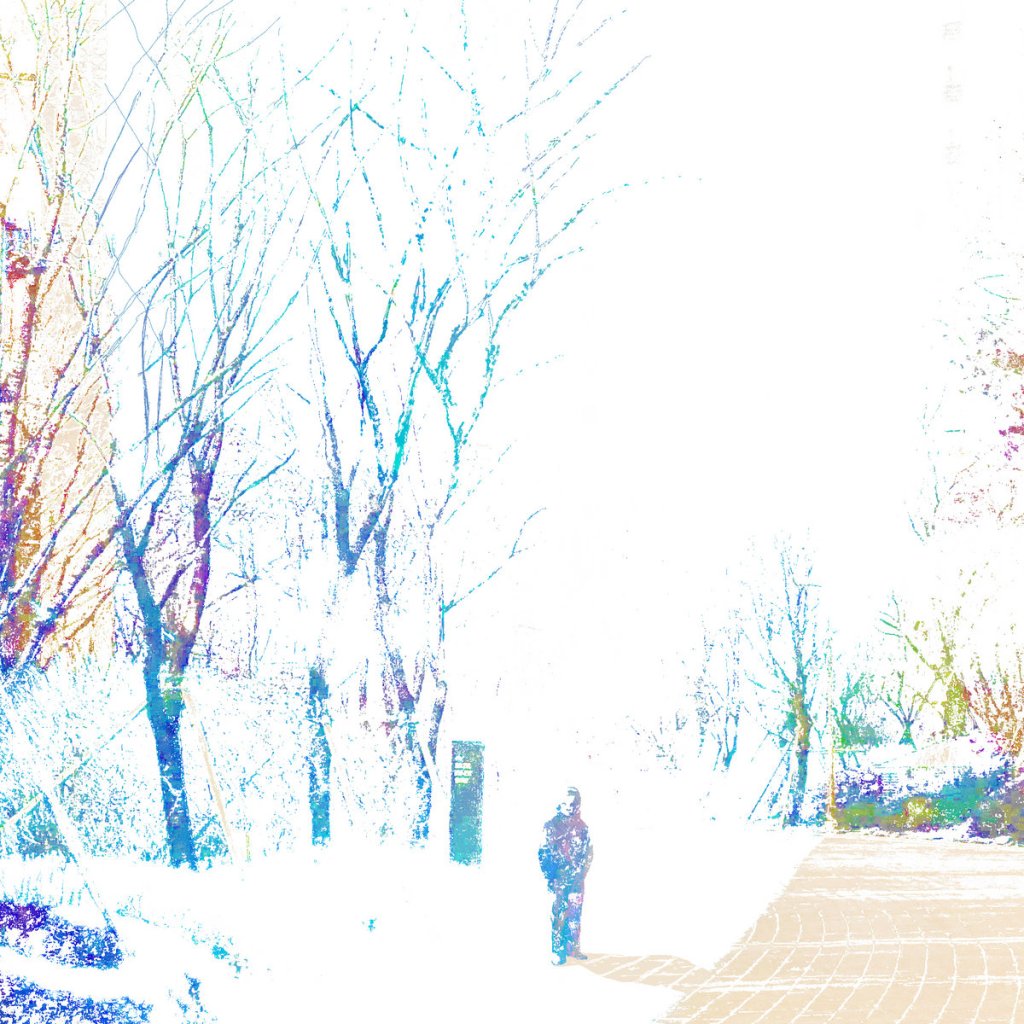
The third album from one of South Korea’s most exciting new names sees him grow up from a dreamer to a legendary auteur.
4.7/5
Wow. I always consider myself to be the kind of person who gets impressed at any clear improvement that’s been made. But this album is a gem for those who are just about to get into South Korea’s underground music scene. Parannoul is the anonymous South Korean music artist whose breakthrough record, To See the Next Part of the Dream, I enjoy for its use of emo angst with the ferociousness of shoegaze. While he does adopt other names for different genres such as Mydreamfever, Parannoul is perhaps the one name that is on many underground music fans’ heads for a good reason. His production, filled to the brim with varying effects of reverberation, compliments well with his introspective lyrics (better understood via translation from Korean) that sums up the dread that people like myself would often go through. That & the soaring instrumentation that easily comes crashing through like a wave of feelings.
After the Magic is set to be his third solo album, taking a good step back from full-on melodrama to play with his biggest strengths. You can tell right from the beginning with ‘Polaris’, a mellow track with a lovely little acoustic guitar strum and electronic beats which documents his acceptance of being ordinary. That is, until you reach halfway through when his signature shoegaze meltdown pours on through, glitchy sounds & more subdued vocal mixing. & it is glorious; the implicit realisation that he’s not that ready to give up his dreams in exchange for mediocrity hits hard. Once you take note of the screeching guitar and pulsating drum, you are taken in to answer one question – “what happens if we grow up?”
Driven by the motif of sleepiness and dreaming, ‘Insomnia’ draws us in to compare the mundanity of our daily lives to the sense of derealisation. “I close my eyes, as fallen into my mind” sings Parannoul with what seems to be a female backing vocal, “Hope I’m not here when my eyes opened [sic] again”. That stands in contrast to the more defiant, more post-punk ‘Arrival’ which literally takes us through a tunnel of crescending sounds with a contemplation on a one-sided relationship. When the guitar riffs blend together with help from the synths to mark a bridge before the climax, it makes the final part all the more rewarding. Three tracks in and we might as well be spoiled with a tsunami of whirling pedal effects, sublime mixing of the drums, and some hard-hitting coming-of-age lyrics.
That’s not even the best part of the whole album.
Among my favourite tracks in the album is ‘We Shine at Night’, a luscious contemplation on what it means to connect and be true to ourselves even as we change beyond recognition. On the back of tight drumming, dreamy indietronic beats, an overwhelmingly dense texture that’s alike to post-rock, and maximalist production, hope always grabs hold in the background when you feel down. The lyrical theme of relating and bonding is heartfelt at its core, but there’s always that bittersweet feeling that we risk forgetting our friends no matter our closeness. These all boils down to a humble blend of lo-fi singing, bowed violins, and glitching electronic drum pattern. You need to give it a listen; it’s just that amazing.
That’s not all. ‘Parade’ combines its bombastic drumming with ringing violins to a wave-like structure where you find a contrast between the typical shoegaze expansiveness with bouts of bedroom pop contemplation on growing up. ‘Sketchbook’ sees Parannoul delve deep into glitchy ambient pop that’s shrouded in its fuzzy production as he mulls over growing up in isolation. Ending in a more lower-mixed chant with a haziness like dream pop, we are led to a jangle pop sample in ‘Imagination’ where the guitar melodies and backing synths prove themselves to make a lovely combo. Lyrically dealing with the comparison between falling in love and ageing, the motif of dreaming keeps on going in what could well be one of the most accessible songs he has done.
In a left turn, the last three tracks shies away from the ethereal loudness that Parannoul is accustomed with as if we’re brought to the sobering reality of becoming an adult. ‘Sound Inside Me, Waves Inside You’ is a more folksy, dream pop-based output which reminisces on the promise to meet again on a constellation (pick me up with that line!) even when the time to leave comes. ‘Blossoms’, named after the cherry blossoms which many Koreans associate with true love, beauty, and purity, is a more standard rock song about realising that you will never be with your love interest again.
Ironically in sync with the bells on the bridge as if you’re at a wedding, the climatic restrained rage of waking up allows ‘Imagination’ to give way to the titular track. A largely post-rock way to end the album with its electronic soundscape, Parannoul comes to terms with losing contact with his love interest through waking up. In the process, he grows up to become an adult with all its imperfections even as he hoped to meet with her in the future.
After the Magic is one ambitious project. For all its density with swirling guitar riffs and rapid-fire drumming, the album is about the fear of falling out of love as you transition from teenhood to become an adult. The metaphor of magic, a way to represent childhood bliss, is presented through the shoegaze instrumentation that is typical of Parannoul which goes away whether we’re confronted with the reality of our growing up. In a way, it helps to mask the lyrical content which provides the subtext of desperate clinging or even denial. However, unexpected from an artist who’s largely associated with the emo scene, there’s always an ounce of hope in meeting up with our younger dreams. What we have here is a treasure, an album that ties in our desire to remain as a child or a teenager with sleeping as an escape mechanism. It might not be perfect with the mostly monotonic singing, but this album will most certainly be remembered as a milestone for South Korea.


Leave a Reply