
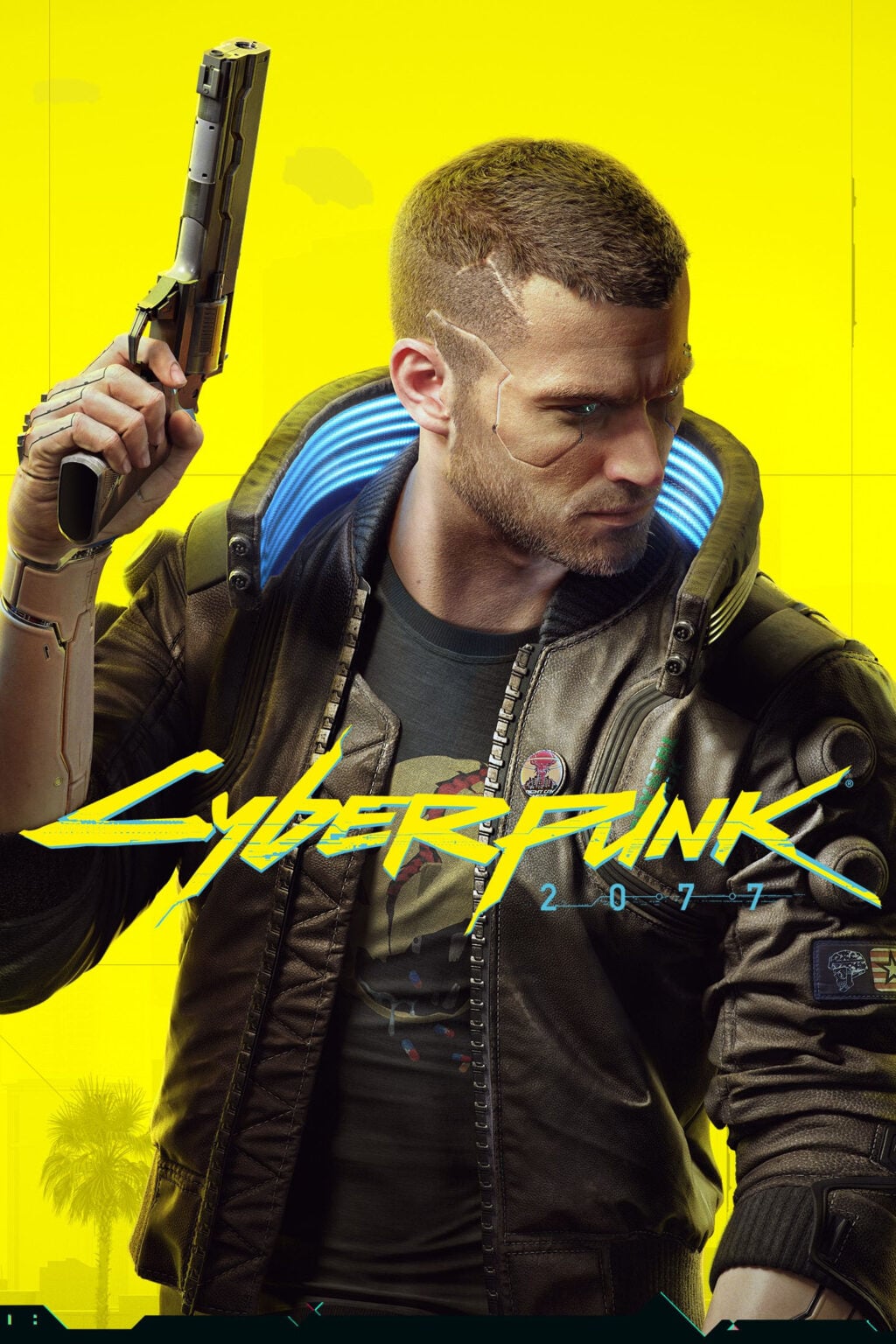
The 2020 roleplaying game based on Mike Pondsmith’s tabletop opus is a bit too cynical in its critique of capitalism and technology. To say the least.
“He who controls technology controls the future.”
Cyberpunk is one of those subgenres where the original intent gets easily warped against its own will. Corporate executives acting like feudal landlords are treated in isolation to the capitalist system that they are complicit in retaining. Addictive and hazardous cybernetics look too cool to caution transhumanist mindset in the same way that the act of smoking commands more respect for the appearance than it does health risks. And vapid consumerism gets itself entrenched within the merchandise that fans would feel tempted to buy even if it’s antithetical to the main theme.
Cyberpunk 2077, a CD Projekt Red role-playing game made after the tabletop RPG by Mike Pondsmith of R. Talsorian Games, is one key embodiment of the bricolage of contrapuntal notions that tie up the whole cyberpunk style. Set in 2077, you play as V who’s a mercenary with a specific responsibility of holding a biochip which contains a revolutionary called Johnny Silverhand to make a name of yourself in the corporatocratic metropolis of Night City. You meddle in the affairs of Arasaka, the Japanese conglomerate which is among the most powerful in Night City; work along with smaller syndicates such as the nomadic Aldecaldos or the Afterlife nightclub run by Silverhand’s former friend Rogue, who will help lead you to sweeter endings; and take gigs from brokers named fixers, a certain stairway to stardom.
At the time of writing, six years have passed since the release of the game. Despite its initially polarised reception over its bugginess and seemingly overhyped marketing, Cyberpunk 2077 had since then gone through a major re-evaluation of its reputation towards the positive end. Updates by CD Projekt Red to fix the game back up to its ordained glory, the release of an acclaimed anime spin-off Cyberpunk: Edgerunners in 2022, and an expansion pack in Phantom Liberty a year after carved a new path of reverence. There are still some bits of criticisms over the gameplay, but the game in its final version is now more fun to play without any issues that make you relate to Crowbcat for a second.
Yet, this article isn’t necessarily a critique of Cyberpunk 2077 from a product standpoint like its gameplay nor is it interested in evaluating Projekt Red’s overpromises even if it’s a tad bit related. Rather, the core focus lies in the representation of its themes – the all-consuming rage that is capitalism. The emphasis on escalating profits combined with the more laissez-faire approach to the market economic system as a go-to implementation carves the path for the world to be virtually ruled by corporate interest. The subgenre already cautions the involvement of advanced technology in our daily living when it’s in the hands of conglomerates; the game too acknowledges overreaching corporate influence as the key issue. Yet, it doesn’t offer any interest for what to do when the worst does come. It flounders and surrenders.
“Society is a machine; we’re all just cogs in the industrial machine.”
Throughout Cyberpunk 2077, you are met with many lived experiences of Night Club’s citizens who endure the worst of corporate exploitation, political corruption, and nonstop greed. For every Viktor Vektor or Misty Olszewski who always seem to have your back, you will have someone like Goro Takemura who’s in servitude to being an underling or Jackie Welles whose ambition leads onward to failure or worse. Or you have the Arasaka family who are functionally a dynasty unto themselves with insurmountable wealth and the Peralezes whose idealism gets tainted by lobbyists and business pressure.
For much of the game however, there lies a pervasive belief that the entrenched capitalist system is not only corrosive but also inescapable. Night City isn’t just the main setting. It’s functionally a character in and of itself; a microcosm of the corporatised society that’s in social decline. According to the 1992 sourcebook of the original tabletop game Home of the Brave, there was a major market crash in 1994 due to the Cold War which led to what was called the Collapse. Millions of Americans saw their finances plummet as increasingly dysfunctional political efforts paved the way for companies to hold sway over all facets of governmental branches and departments. With continuous chaos over the following decades, the United States disintegrated due to its codependence on capitalism as states around the world saw similar fates with their government being under corporate control.
Cyberpunk 2077 constantly reminds you that the world is also infected with corporatisation even if Night City sits as the microcosm of everything wrong with capitalism. One gig you can do involves planting a GPS transmitter onto the car of the Soviet Union’s diplomat Mikhail Akulov and steal the encrypted datashard from him later on. The game made good sure to highlight his investment in the hypercapitalism of the main setting and had signalled the superpower’s liberalisation through its welcoming embrace of the private market with a key example being robotics manufacturer Zhirafa and petrochemicals company SovOil. Another sourcebook of the original tabletop game, Eurosource Plus, went into detail the Soviet Union’s downfall from its rapid adoption of rapid privatisation and its codependence on SovOil especially to keep itself united.
Additionally, Eurosource Plus and another sourcebook Pacific Rim Sourcebook also went describes the overwhelming reach of corporate influence all around the world. The United Kingdom was in flux throughout the 2010s due to armed conflicts surrounding the monarchy with companies like Hilliard Corporation and Imperial Metropolitan Agriculture backing them in hopes of a laissez-faire economic policy. This soon was rewarded further on with governmental representation. The in-universe equivalent to the European Union in the European Economic Community sought to fend off international megacorporations yet Arasaka is able to set up its continental subsidiary within the continent with success. For Asia as laid bare by Pacific Rim Sourcebook, numerous countries like Japan and South Korea already have their issues with their megacorporations having major control over their politics and the neo-feudal ruling of family businesses especially.
Should we look deeper into Cyberpunk 2077 specifically, the grip of corporate control withers any ounce of freedom and identity. The key nomad faction of the Aldecaldos was once known as one of the most powerful nations in North America with over 100,000 members by 2020 according to Neotribes. By 2077, it withered down in size considerably down to a fraction with one of its branches, the Bright Family, having a crisis over whether to work with Biotechnica to find new work. The Badlands which is to the east of Night City at least isn’t drowning in corporate influence but the area’s described as being even more dangerous than living in the city state.
“Everything is for sale, even the past. So, make sure you choose wisely.”
Cyberpunk 2077 thematically centers itself on the bleakness of the present. Finding fulfilment in Night City should come through rising up in glory to become a local legend where you get a drink named after you in a bar called the Afterlife after your death. This tends to be through criminality in an act of vigilante justice against the corporates. Cyberpunk: Edgerunners exemplify this through the climatic showdown between the protagonist David Martinez and Arasaka which led to a cocktail bearing the former’s name after his death. You can find it in-game actually following a small update in light of the anime’s release.
Speaking of justice, many of the characters throughout the game sought to find such in light of the dystopia surrounding Night City. Yet, the response to the goals tend to either both-sides the conflict regardless of the proportionality of the issue along with the inability to fix systemic issues. As an example, the Afterlife’s barkeeper Claire Russell wants revenge on corporate employee and street racer Peter Sampson for seemingly killing her husband Dean in one race a year prior. Yet, the climax of her quest chain “The Beast in Me” pushed back against trying to punish him. Even in going for the best-case scenario by talking Claire out of killing him, Peter’s answer suggests that automobile casualties by crashing is commonplace to the point where it’s effectively free game for all involved drivers. Claire herself can’t kill Peter out of the cyclical nature of her enactment of vengeance. However, there’s no interest in answering the normalised violence of street racing that had led to both Dean’s death and Claire’s culminating search for justice in the first place.
Other characters illustrate the short-term fixes of living in a cyberpunk world without the aspiration to change it for the better of everyone involved. Joshua Stephenson finds peace in religion and wants to use his experience to make amendments to the lives of those he ruined. His execution through crucifixion however was used for a virtual reality simulation called a braindance that’s released for consumerist intent. Regina Jones, one of the fixers you can work for, tried to find a cure for the cybernetics-induced mental illness called cyberpsychosis although it’s an entirely independent project with little effects on long-term improvements.
The most dramatic instance of the flaw in the search of short-term fixes comes from the deuteragonist. Johnny Silverhand and his clique sought to blow up Arasaka Tower in 2023 to rid Night City of its biggest corporate influence only to be regarded as a terrorist in his initial death. The bomb he used was a nuclear one which led to thousands dying although it pales in comparison to the millions of lives ruined or even killed by the likes of Arasaka. Social murder apparently pales in comparison to the initial act of putting an end to the conglomerate. One that has its own paramilitary wing that’s among the largest and blatant political capital to ensure that it will always enjoy having despotic control over much of the world with Night City being one notable example.
And the framing that the game goes with Johnny’s attempt was one of bloodlust and futility. The writing of the game frames him as being careless with the lives he has killed in the process. The nuclear detonation is unneeded because it ultimately doesn’t destroy Arasaka in one go. In fact, it’s detrimental even due to civilian lives being lost. One of the endings in “Temperance” saw you willingly give your body up to Johnny after which, following many following months, he leaves Night City without updating your friends on what had happened. Not even a small step was made in the bid to set up the roots for the revolution aside from helping a new friend in Steve Sanchez.
There’s a kind of irony however that even should you personally try to enact small positive changes throughout the game is it incentivised by rewards. Many of the quests (called jobs in-game) would lead you to win a new item regardless of the intent you might otherwise have. The fandom would set up playthroughs to try and get players to maximise on how much they can get from finishing the quest in the best way possible which indirectly rewards the pursuit of greed. There is only one good answer in response to Night City’s corruption and it’s one that only works on an individual level.
“A happy ending? For folks like us? Wrong city, wrong people.”
All throughout Cyberpunk 2077, hope tends to be brought up as the antidote to hypercapitalism. Key allies like Judy Álvarez are optimists in trying to take over a nightclub called Clouds to save the prostitutes there called dolls. Others such as River Ward are otherwise earnest as law enforcement officers in an otherwise irreversibly corrupted institution. The best ending called “The Star” involves you seeking help with the Aldecaldos to remove the relic by raiding Arasaka Tower before leaving Night City altogether. The credit dialogues from the characters are usually the most positive with Misty’s tarot reading implying that you might live a happy life.
The problem with “The Star” is that it’s ultimately an individualistic ending. You might have a love interest in either Judy or another Aldecaldo member Param Palmer with you as you depart your old life in search for a new destiny. Yet this feels short of hope when you keep in mind the vast corporate outreach around the world where the freest areas are in complete disarray without any institutional structure. It’s small given current trajectories and while some good bit of liberty’s earned, it’s not enough to ultimately quell the inevitability of hypercapitalism. Even for Cyberpunk: Edgerunners, reports from attendees at the 2023 Japan Expo in Paris via Reddit as an example noted about an alternative ending where David’s love interest Lucy ends up being pregnant only to be scrapped in the belief that it’s too optimistic.
Cyberpunk 2077 was released in 2020 at a time when companies like Google and Amazon are overseeing growing involvement with governments to work for their whims regardless of the consequences. Billionaires like Mark Zuckerberg bend to the will of the head of states like Donald Trump all the while European governments like the United Kingdom are more open about implementing digital identification. These are condemned by a big tent of critics from politicians like British socialist Jeremy Corbyn or far-right to more general campaign groups like Reclaim the Net over its violation of civil liberties and encroaching mass surveillance. All the while, artificial intelligence has risen in prominence to the point where it’ll have irreversible changes to the very nature of work and even our day to day life.
The cynicism of the game in how it tackles capitalism comes off as discouraging compared to many other texts that sought to critique contemporary issues. George Orwell’s classic 1984 was first published in 1949 to push back against the authoritarianism of governments like the Soviet Union under Josef Stalin. An apocalyptic classic Threads was released as a film in 1984 to discourage nuclear warfare by highlighting its consequences through scientific research and hypotheses owing to Margaret Thatcher’s premiership where she stood out as a military hawk against Soviet influence in the midst of an arms race. Kendrick Lamar’s To Pimp a Butterfly is an instant classic for hip hop music in 2015 for how it highlights institutional racism and Black American culture which still stands to this day in light of the United State’s normalisation of discrimination in reaction to Barack Obama’s presidency doing little to alleviate societal issues. In 2019 even, Disco Elysium sticks out for its more wholehearted support of socialism, warts and all, as an ideal worth pursuing in spite of its history with authoritarianism and widespread violence right when the flaws of capitalism are reaching its climax.
Cyberpunk 2077 offers no urgency in its release. It acknowledges the problem of capitalism yet it’s disinterested in providing an alternative or even a full-fledged retort against its use. It humanises the lives of those who suffer under it without ever so much picturing them under a better system. It demonises the conglomerates that solely see people as an opportunity for profit all the while being incapable of envisioning a world without them. And it pictures the devastation of corporate influence yet couldn’t see society be free from it. Capitalism is the cancer that is eating away every fibre of what we most hold dear to our heart and yet we find ourselves unmotivated to even find a cure for it.
“From a situation in which nothing can happen, suddenly anything is possible again.”
Capitalist Realism is a 2009 academic book by Mark Fisher which goes into depth about the arising conflicts between our dislike of capitalism as an economic system and our inability to reshape it beyond what we ideally want. In the eighth chapter called “There’s no central exchange”, Fisher talks of the contrast between blaming the damage done on groups like the government and the inability to address the subtext of capitalist functions being at work which is responsible. In elaborating what he means, he highlights the tendency for us to boil down the perpetrators of much of our issues to individual actors which proves short-sighted in addressing all corporates’ dependency on building capital – “it is a mistake to rush to impose the individual ethical responsibility that the corporate structure deflects.”
By the end of the book, Fisher notes of the persistence of capitalism despite its numerous crises including the then-recent Great Recession that’s resolved through bank bailouts. He argues that we need to not wait for yet another crisis to put an end to the system but to instead devise an ubiquitous strategy against it that builds on the failures of left-wing alternative experiments. To conclude his book, Fisher sums his backing for radical alternatives even if it’s solely imagined if it inspires the lives of many to take charge at bettering the world in the long term:
“The long, dark night of the end of history has to be grasped as an enormous opportunity. The very oppressive pervasiveness of capitalist realism means that even glimmers of alternative political and economic possibilities can have a disproportionately great effect. The tiniest event can tear a hole in the grey curtain of reaction which has marked the horizons of possibility under capitalist realism. From a situation in which nothing can happen, suddenly anything is possible again.”
Cyberpunk 2077 proves itself to be too comfortable in its nihilism to inspire action or even an imagination of change the same way many texts would have pushed its audience towards. It exists more so as a product meant to be enjoyed and I do concede on this point at least that I have enjoyed my time playing the game. Yet, if examined seriously as an art piece, the game fails to tackle capitalism in a way that goes beyond its critique of incentivised greed and self-interest above all else. It proves too cynical to drive change in the time that we might well need it the most and thus it fails as an anti-capitalist work.
It is easier to imagine the end of the world than the end of capitalism. It is better to imagine the birth of a new world than to restart capitalism. A world without anything like Arasaka or a British government with many corporate employees as political advisors or cybernetics being sold as props only to push towards cyberpsychosis. A world without capitalism. If Cyberpunk 2077 fails to envision the future opposite to the system that it wants to fight against, then what good is it for once you look beyond the gameplay?


Leave a Reply