
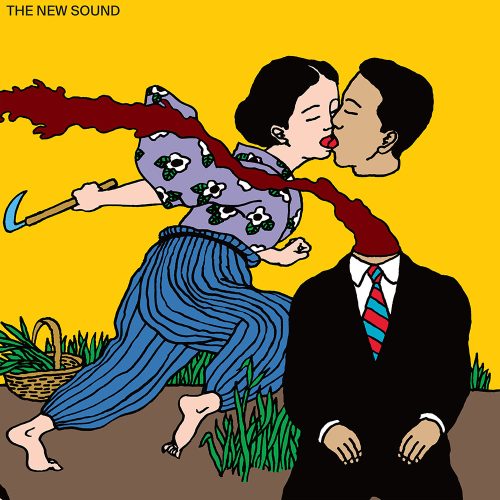
The ex-frontman of Black Midi’s solo debut is an epic prog-rock tale of inceldom and masculinity that never lets go of the pedal.
Black Midi is on an indefinite hiatus. Or a break-up according to the one and only Geordie Greep. Years of touring and a stacked five years’ worth of work meant that the three finally went their separate ways to focus on solo projects. Greep in particular went into detail about the reason behind the hiatus/split. In an interview with DIY, he feels that the later materials don’t quite match up to his standards and that his vision is diverging from his former bandmates. That and the personal reality that his relationships with drummer Morgan Simpson and bassist Cameron Picton are no longer the same as it once was back in the band’s beginnings in BRIT School.
Heading off on his newfound chapter as an ambitious solo artist, Greep envisions a work that, in his own words, is about “desperation”. Anxieties from people who “[are] kidding themselves that they have everything under control, but they don’t”. The New Sound’s lead single ‘Holy, Holy’ lends credence to the idea with its satirical take on macho culture. The song is about the narrating philanderer who brags of his achievements to his prospective lover within frantic riffs, samba-esque flavouring, and the polyrhythmic jazz performance. The second half of the song is a turner and the narrator reveals himself to be pathetic – his flirtation is nothing more than theatre to soothe his ego. Everyone is in on the act and, given his anaphoric calls “tell” his “date”, this feels a lot like the kind of shtick incels would get into.
“Incel” is an increasingly common slang/term in both the online culture and to the Millennials, the Zoomers, and even the Alphas. The word ‘incel’ derives from the combination of two words – “involuntary celibrate”. The term’s significance comes from the openness around sex and relationship alongside the standards set by feminism. No one man is entitled to be with someone just because society dictates that a male individual takes charge. In the mid-2010s, the manosphere brought forth calls to return to traditional masculinity without the presumed constriction of feminism. Not even the shocking mass shootings and the overreaction of GamerGate had caused many to second-guess the threats the idea posed to everyday living.
In The New Sound, sex and masculinity are the dominant themes. Oftentimes, they intertwine with one another, circulating the pervasive entitlement that lures many men into self-destructive tendencies. The key example takes the form of the intro ‘Blue’. Rapid-fire arpeggiated guitar melody, quaint backing of hi-hats and snare, and the tick-tocking of the bassline eludes the eruptive destruction of the second-person addressee’s ego. Yet one of the listed examples of the self-professed pride includes “[cumming] more than a hundred stallions” and possessing “a blanket that forms mountains”. These innuendos pave the way towards the reality that self-worth exists outside of expected images and public perception – “There’s no jury present, there’s no reporters / There’s no examination, it’s only you”.
Indeed, this fantasization carries itself throughout several songs with alarming impact even if the emphasis on sexualisation might prove itself weary. ‘Walk Up’ blends its improvisational cacophony of brutal prog with a parodic depiction of an affair between an office executive and a prostitute as an office romance. Helping the chaotic song is the honky tonk ending which feels like a middle finger to the “inaccessibility” of Greep’s music which only accentuates the pretensions of self-conscious men. ‘Terra’ wears its samba songwriting influences like a charm from its guitar playing and snappy layered chants as it mocks the fleeting love the narrator has for one lover that he might have implicitly left for his manufactured feeling of suffering.
Even in the ending of the album that is the cover of Moe Jaffe, Jack Fulton, and Nat Bonx’s ‘If You Are But a Dream’, the Sinatra-like vocal inflections only serve to show the imitative nature of toxic masculinity. With how the song sprung to notability in the 1940s-50s where men are set as breadwinners in a nuclear family, how the song’s addressee is as much a dream as the return to the good ol’ days where men are already predestined for responsibility and power. Who’s to say that the cover is self-referential?
Greep records much of the music in São Paulo, Brazil which enables so much of the samba influences throughout much of the record. It gives The New Sound a lot of life in the process of its synergy with the jazzy playing and unpredictable structures that had previously accompanied Black Midi. The title track, as one example, feels like a grand interlude that bridges the satiric melodrama between ‘Holy, Holy’ and ‘Walk Up’. Its rhythmic textures helps to steady the whole album from its sexual and masculine excesses the same way Frank Zappa let loose his impressive guitar solos and shifting time signatures in making One Size Fits All back in 1975. ‘Bongo Season’, the arguable weakest link, plays up the dissonant burlesque of the two mice committing seppuku with the melodic mixing that ties the instrumentals all together into one peaceful listen. In ‘Through a War’, the distinctive Spanish fingerpicking of the guitar compliments the obsessive pursuit of the love interest, the horns peering out triumphant even as the narrator brags of being ill from his fornication.
The highs come between ‘Bongo Season’ and ‘If You Are But a Dream’ with their lengthy durations, increasing experimentations, and shameless levels of confessionalism having been reached. ‘Motorbike’ features the sole non-Greep singing of HMLTD’s Seth Evans and the iconic drumming of Simpsons as the former sings in a deranged fashion his materialistic pursuits and his fatal craving for attention. ‘As if Waltz’ is perhaps the most hilarious out of the entirety of The New Sound with its romantic cuts to the titled waltz break and the unhinged starry-eyed love for a prostitute even to the point of “[watching] her fuck other men”. While the respective brutal prog and post-punk atmosphere gives each of the standouts their signature characteristic, they both ultimately represent the apex of the two central themes. ‘Motorbike’ with its condemnation of imagined male expectations and ‘As if Waltz’ with how sex can result in one-sided romances even if it might wound up as a casual encounter from the love interest…
Which leads to the pivotal climax (pun intended), the epic penultimate chapter in ‘The Magician’. Unlike the misleading love in ‘Walk Up’ or the fuck-you impression of ‘Blue’, this song feels sincere amidst its grandiosity, its undying love for a partner that is only a faint reminder as you both fade into obscurity from each other’s memories. Its multi-layered structure allows the song to play with its influences from the blossoming sensuality of samba fingerpicking in the first three chapters alongside Greep’s high notes to the melancholic piano ballad in the fifth verse to the crescendo that builds up throughout the seventh verse. Through this odyssey, we attach ourselves to the extreme sensations of the narrator and so, by the end, as he realises that his love is a lie like the magician, we feel the sheer weight of his pain. His love might be false in the sense that he imagines for the chemistry that might never exist, the future that never was, but his feelings surely do. And that is the beauty which ties together the deceitfulness of sex with the entitlement of toxic masculinity.
The New Sound isn’t an entirely perfect record. ‘Bongo Season’ feels a bit like a filler which doesn’t align well with Greep’s focus on desperation. The title track helps to tie the album together in its instrumentation yet it might feel a bit wanting in its textures. It could have been filled with lyrical elaborations or some deliberate mistakes to portray the similar sense of self-consciousness as other songs. Otherwise, the Latin influences, as mentioned previously, enable the album to feel lively in expressing its themes. The lyrics, raunchy as they are, work like magic in binding both sexual frustrations and toxic masculinity into two closely-related aspects that haunt many young men. Instrumentation, gloriously frantic as usual. Fans of Black Midi might mourn for the end of the band, but Geordie Greep shows that there is more to come from his clearly motivated spell of creativity. Enjoyers of jazz, prog-rock, samba, and all inbetween, beware. He might begin to hit his zenith.
 GutterPutter
Leave a comment