
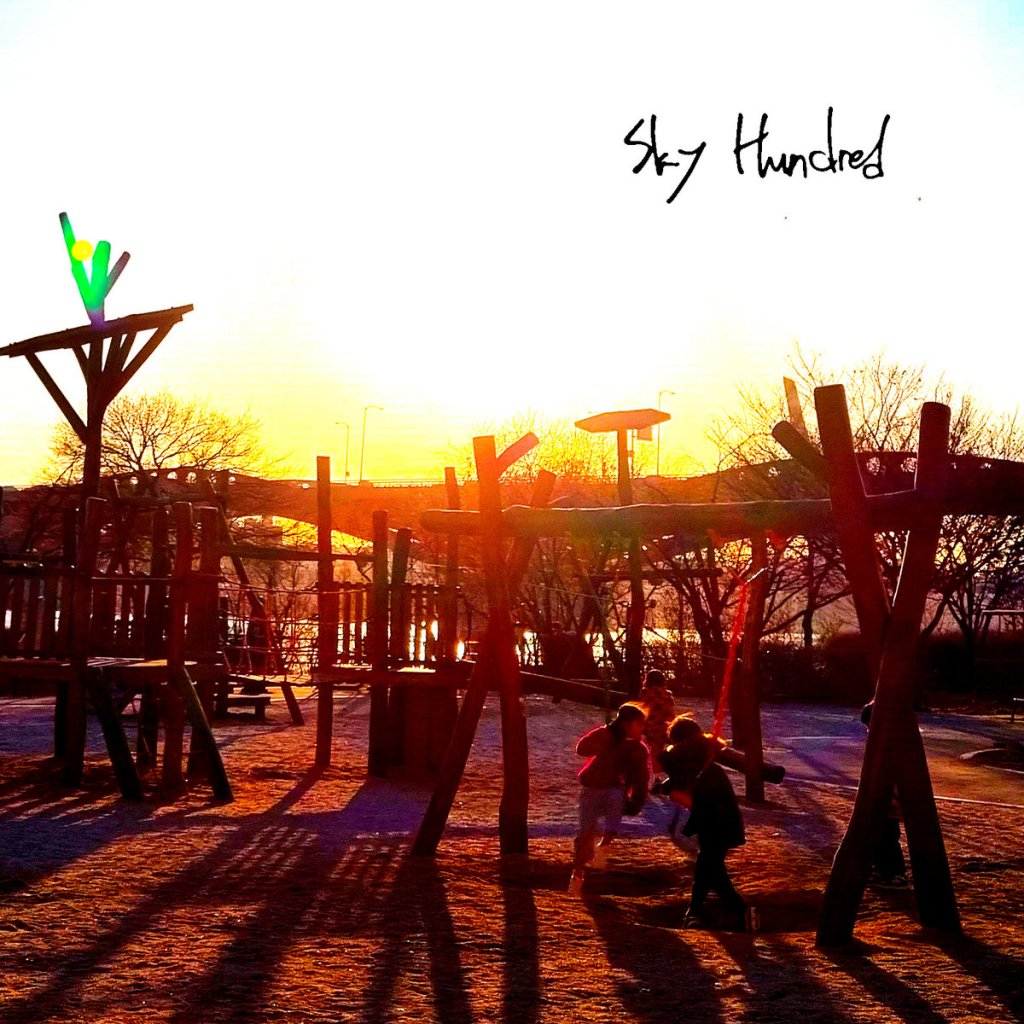
The bildungsroman Korean album that’s tied in part to idealism and reality is an instant classic. This will go down as the holy grail for growing up.
Parannoul has released four albums under this pseudonym. Starting with Let’s Walk on the Path of a Blue Cat in 2020, he broke through to online recognition for 2021’s To See the Next Part of the Dream, one that I had actually enjoyed for his blend of shoegaze and emo. His third record, After the Magic, came out in 2023 to which I consider to be one of the best albums of the year even if it might not necessarily contend with Silvia Pérez Cruz’s Toda la vida, un día as the definite favourite of mine. Nonetheless, each subsequent release shows that he is branching out in his instrumentation, his songwriting starts to get a bit sharper, even the production begins to come off as more pronounced in the midst of the feedback.
It comes off as no surprise that, from the perspective of a fan of Parannoul, be it you or even myself, the recurring theme throughout his discography is that of dreams and growing up. Parasocial as it seems to be, while he & I are roughly the same age with likely similar broad experiences, the focus always tends to dwell on the fears of being a young adult which makes for an intensely relatable experience. In To See the Next Part of the Dream, nostalgia dominates the album as he comes to terms with maturing in mundane, yet alienating circumstances. There are no big events that gave him the meaning he’s looking for, but there is the dread of feeling stagnant as a child who is grown up. After the Magic delves deep into a seeming romance between himself and the addressee as they gradually outgrow their relationship and the “magic” between them.
Being 23 years old, such a trope should feel too melodramatic given that he’s done it three times now, but each iteration instead forms a cohesive pattern of coming to terms with life. Coming to terms with becoming an adult. Sky Hundred distances itself from the banality of growing up and the bittersweet ending to a fantastical beginning of a love life. Instead, it puts its central theme on identity, the terrifying prospect that whatever interests, plans, or goals you might have in life will not turn out the way you want in the next few years. Change is scary because it happens naturally even if we feel that we have grown accustomed to who we are right now. Before we know it, our dreams are no longer aligned with our career, hobbies become dull with no resolution, happenings will occur in a way that cuts ties with our intended trajectory. All these factors build and inform our identities. As described on the Bandcamp page:
“The sky is watching hundreds of me, and no one has answered in front of me what makes the difference between them and me. What will happen to those who are left behind? If the end of magic is something that everyone experiences, is there any meaning in falling? Hundred skies have shone brighter than me, and I think I’ve grown too preciously [sic] to accept the truth and disappearance.”
Sure, the shoegaze remains as dense in its erupting textures as it does. The thundering drum marches on and the guitar continues to soar in its roaring intensity. Yet, the inclusion of the piano and electronic elements that was already set in After the Magic carries on here with greater deliberation and emotive impact. Take the intro in ‘A Lot Can Happen’, the immediate chord with its notes stretching out comes in an instant before the drum kit rolls through with the snares and the cymbals. The electronic pitch wavering in, the guitar strumming to blur the instruments all together, and the piano transitions to a twinkly riff-like sequence, all burying together in the borderline between crisis and cohesion. The seemingly messy mixing works like magic (pun unintended) as neither stands out more than the other, forming what amounts to the perfect buildup to the crescendo. As Parannoul lays out his thesis in self-reflecting on the past, the melodic piano passage was followed by the drum, then the arpeggiated guitar riff, then the subtle bassline and even a retro-esque burst of electronica. It all adds up to one climatic admission that the feeling must remain as it does forever.
In line with the more abrasive potential of dream pop, Parannoul’s production puts weight on layering, fuzzy reverbs, varying mixing, and occasional filters, thereby signaling the changing climate of your self-esteem. In ‘Maybe Somewhere’, he switches between the lo-fi filter, the harmonic vocals, and the default, clearer mixing of his singing to portray the different feelings he has on what it means to feel sincere be it anxiety, comforting, or determined. ‘Lights Off Repentance’ has the vocal layers be done under at least three distinctive deliveries: the more restrained version that takes front stage, the seemingly deliberate autotuned effect, and the screeching malaise that pops up. The three deliveries, given that it is in the most “upbeat” song about post-college alienation, represent the respective masking to come off as normal, the subtextual need to abide by the strict corporate culture of South Korea, and the desire to vent out your frustrations. When you pair that assumption up with tinkering of the instrumentation in the last paragraph, Sky Hundred feels much more calculated in how it wants to portray the growing fears of being a young adult.
We can geek out as much about the effects as we can, but the lyrical content itself is no easy matter to put aside. Being the third consecutive album that tackles growing up, Parannoul proves that he has a lot more in store when it comes to the isolating feeling of being a Gen-Z. How much? Building on from After the Magic, he weaves between childlike fantasy escapism with the inner soul-searching that is comparable to the bildungsroman, using second-person addressing to highlight his internal conflict for resolving his fears. Even as it’s sung entirely in Korean, the vocal inflection punctuates the conceptual journey that compliments its instrumentation well enough. It makes you feel as if there is a bittersweet nostalgia that runs throughout the album even if you might not understand the lyrics without the translation.
In ‘Gold River’ for instance, he imagines his past self as having its own agency, carrying around “that self-talk” which happens to be his implied anxieties or even depression in confronting the inevitable future. The symbolic metaphor of the “bright golden river” that the past self owns feels as if it’s out of a local legend or folklore, representing the escapism from adulthood and all the sobering changes that comes with it. ‘Backwards’ instils an abstract ponderance on the changes found between childhood and adulthood, blending the existential crisis of dying with the more poetic realisation that we technically “die” whether we no longer recognise our past selves. “Time doesn’t wait for us / I still have a lot to learn” comes the cries that penetrate through the reality of ageing, “I still have many things to tell you”. We miss our old selves and we desire to pick ourselves up from our shortcomings, but the reality is that life will continue on with or without the closures we have made before moving onward.
This helps to inform the centrepiece of Sky Hundred which is the 14 minute-long epic, the sixth track ‘Evoke Me’. Much like a lot of Parannoul’s music, the song takes pride in its crescending buildup as the key component of its song structure. However, it is split into three parts with each having its own instrumental priorities. The first has a lengthy twee electronic keyboard sequence for a starter while making clear the album’s primary symbol of the sky to represent the boundless, almost isolating opportunity that comes with growing up. In the signature whirlwind of guitars and drumming, the possibility of standing out starts to feel impossible, like naming one star that is the most unique out of the hundreds that shines at night (pun possibly unintended).
The second part sees the electronic music note staccatoed, more stuttery as Parannoul confronts his self-loathing and realise that however unextraordinary he is in reality, his music does resonate with others like himself. For every searing riff and eruptive percussion, he gets more defiant, his vocals just standing out slightly above the shoegazey barrage as he accepts the failure of his past self: “Taxidermify me / Who blamed only the world / And then ruined himself”. The third and final part proves itself to be more psychedelic in its production, the guitar feedback weaves between the audio output in the drumless space with horns instead. The lyrics at that point feels more meta-aware with a critical outlook on the listener for being interested in the sadder aspect of his music without doing much to engage with their life in reality. As it is said in the beginning of the part, “Are all movies real? They’re movies because they’re different from reality.” Life might be terrifying in how it forces change in all of us, but it does not need to be feared. It is not like a script that is headed towards only disappointment. We can still take control of it and push onward even if we find ourselves worse off in the process.
From there on, acceptance is a necessity in order for us to make amends with our past. Sandwiching ‘Backwards’ are ‘No One Talks About It Anymore’ and ‘Meaning of Regret’, two instrumental interludes that allude to Parannoul’s ambient works under mydreamfever. The former contains the piano that marks the spiritual renewal of neoclassical new age while the latter contains the faded, scattered recording of the conversation which implies the ending of a bond with no closure. The final track, ‘Fantasy’ feels contrapuntal. In its title comes the triumphant beginning that carries onward the uplifting acceptance of time’s eventual influence. Yet, even in this tranquil beginning comes the tension of the loud instrumentation and, in the case of the lyrics, Parannoul pairs up defeat with progress in a binary opposition. We cannot grow until we accept our shortcomings and we cannot fail until we grow. This elicits the humane kind of beauty behind all the chaos that caps itself off with the fading playing of the acoustic guitar. “Changing / Is not meant to be sad.”
Sky Hundred is essentially the top contender of my album of the year. While it carries on Parannoul’s streak of angsty albums under shoegaze with notable comparisons to emo, post-rock, and indietronica, this stands out for its humanist look into change. How we grow as individuals from adolescents to adults is no longer just a matter of whining about lost love or the feeling of being prosecuted by the whole world. It feels more existential, more grandiose, more all-consuming in how unique we really are when we compare ourselves to each other or if we are able to achieve our goals at all. When the instrumentation itself backs the feeling up with its bombastic noise that almost drowns out all the sentiments, when it still induces calmer sections to clarify that such changes are natural and should be appreciated, then it feels emotional in its own way. As lost as we might feel in navigating around everyday life while we flounder in our ambitions, Sky Hundred not only lets us know that there are others who are in the same position as ourselves. It is okay that we are struggling in the first place. Even if life does not pan out the way we wanted it to go, it is still fine because at the end of the day, that’s how we develop ourselves as individuals.
 GutterPutter
Leave a comment