
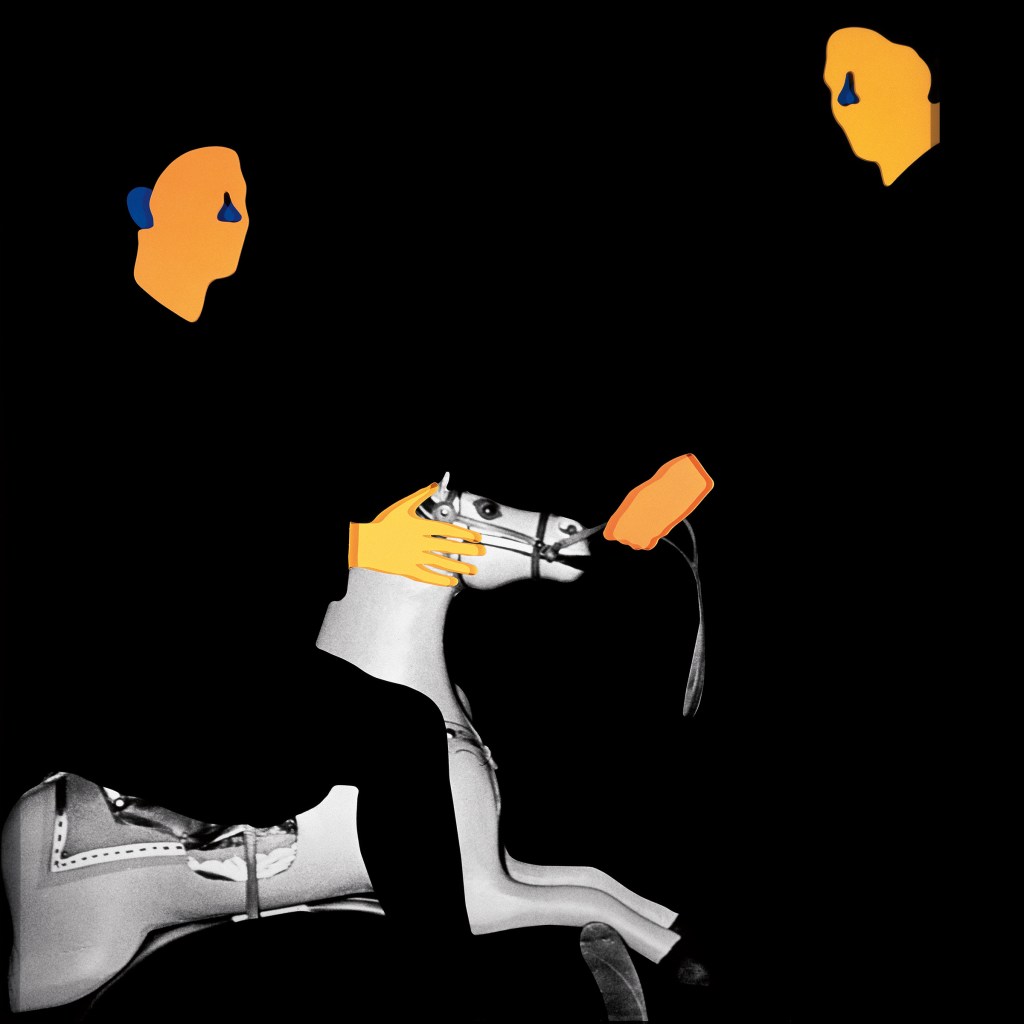
The stalwart American duo have concocted quite a fable on love, death, and maturing with pure psychedelia.
For a show of hands, did anyone ever listen to Quebec by Ween? It’s a record back in 2003 that, despite initially positive yet not overly enthusiastic reviews, have stood the test of time as one of the best cumulations of the artists’ creative development. While its psychedelic roots have remained with elaborate studio production and oftentimes surreal lyrics, there is a greater sense of introspection to be found in what would’ve been a whimsical listen. So much of the themes revolve around breakups, loneliness, mortality, and mental health. Such a whiplash might have caused many to turn away from it at the time of its release, but the fans have long since seen it as the cornerstone of the band’s discography.
There’s no joking about when it comes to novelty acts or, in this instance, pop artists’ potential of greatness. On listening to MGMT’s newest album Loss Of Life, a lot of the aspects there feel reminiscent of Ween’s deliberate left-turn in the attempt to prove their musicianship. Sure, everything might not be perfect in my opinion (for that even I find some albums to be better than Quebec that were released in the same year). Yet, the sense of growing and ageing is there, the awareness that life might not be all that we have hoped, the balance between childish wishfulness and adult contemplation have merged into one altogether. This is further enhanced when one half of the duo, Andrew VanWyngarden, said in his interview with NPR that the album sought to distance the band away from drugs in favour of “love and stability in relationships.”
From the circular beginning of ‘Loss Of Life (Part 2)’, the recitation of an extract from the legendary Welsh poem collection Llyfr Taliesin contrasts with the jingly synths and childlike electronica. This forms a certain disconnection as if to highlight the perpetual conflicts made surrounding the perils of adulthood. What do we want to be when we grow up as the world, in T.S. Eliot’s words, “becomes stranger” as the future makes our plans more unpredictable in result than we anticipated? The natural semantics was enforced in ‘Mother Nature’ where, in its more upbeat strums of the guitar, the mundanity of real life was blurred with the fairy tale-esque aspiration for idealised pursuits. The reverberations alongside the subtle touch of synths make for an inglorious exposition.
With the follow-up being the more glam-centric ‘Dancing in Babylon’ that sought to patch up a worn-out relationship, the power ballad-like structure results in one of the great strengths of Loss of Life. Initially, the song is out of Air Supply’s discography in its insistence of being in love and its constant echoes from the production. However, there are no climatic choruses and the featured vocals from Christine and the Queens make for a more authentic depiction of romance. That and it adds a more genderqueer interpretation over why we must buy into the claim that everyone must know why the sense of love must be public. In a similar fashion musically, ‘Bubblegum Dog’ and ‘Nothing Changes’ are borne out of David Bowie’s reputational peak in the 70s with all the existential ponders and social commentary.
An additional plus on the album is that of its genre diversity outside of its apparent psychedelia. Not only are there dozens of styles that are imitated like the aforementioned glam rock or structures like the power ballad, but it still finds its place in the whole sequence without coming off as being contradictory in its overall textures to one another. ‘Nothing to Declare’ weighs itself around its acoustic guitar with some Beatle-esque joviality in its backing instruments that contrasts with the necessity of making most of your life. ‘People in the Streets’ sees the duo show some serious shine in writing relatively conventional indie rock with a bit of synth and strings. ‘Phradie’s Song’ takes this diversity over towards melancholia and grievance through its downbeat tempo and crackling effects as if to suggest that there’s a sense of undying dedication that goes beyond death.
The last three tracks, in their own ways, have helped to cap the entirety of Loss Of Life in its own profound little way. ‘Phradie’s Song’ is one of the three tracks, yet its transition over to ‘I Wish I Was Joking’ is key in forming a record-wide climax of a diptych. Whereas it sought to portray the tragedy of unwavering love through its intensity, ‘I Wish I Was Joking’ implies the desperation of staying together even if it’s toxic and destructive to all. The one-off metaphor of the drugs in how “They’ll sink your mind and steal your friends” surmise the addictiveness of codependency; one can’t help but feel the need to stay with their partner even if all signs show that they do not love each other as much as they used to. Finally, the title track caps off with a wistful reminder of death’s inevitability over its minor-keyed instrumentations, harking back to the pessimism that pervades MGMT’s previous effort Little Dark Age (2018). Yet, instead of wallowing in its potential nihilism, we find ourselves to be starstruck with the prominence of benevolence and compassion amidst the thundering synths and horns. So comes the reminder of the album’s circular structure back to its intro.
The album is not perfect as while the more artistic emphases make for a nice touch, it does feel uneven in its application between the tracks. Some songs feel as if they could be more impactful with a literary allusion. To add as well, for all the psychedelic tropes that could be found in the vocal layerings and eccentric lyrics, I feel that there could’ve been a bit more in its production. Maybe the mixing could be spaced out a bit more to highlight the potential overwhelmingness that arises from living as a more mature adult. Maybe the music could do with a bit more experimental effects to show the uneasiness of love. Summarily, I feel there could have been more to the album that could hammer down the duo’s thesis a lot more thoroughly.
Thus, Loss Of Life represents what is mostly a grower that is sure to resonate with not only the band’s fanbase, but also those who are finding their way in life. It proves that to dismiss an artist as being just “pop” will do you no good if you do not give them the respect that they deserve if they make a definitively strong project. Full of thoughts and wonders, the record does not shy away from our impending mortality. Instead, it weaves it through with anecdotes of relationships. Like the preceding American duos who have left an indelible mark on psychedelic music more than twenty years ago, it’s safe to say that MGMT has grown up.
 GutterPutter
Leave a comment