The Californian Americana duo’s latest album defines beauty without any substance to back it; it’s purely an aesthetic masquerade.
A chance encounter arrived right when the dream was reaching its end. Then, it doubled to encompass the new heights of the duo. The Milk Carton Kids are a California-based duo of a folk-inspired style in the Americana with its twangy banjos and blending of guitar strums and fingerpicking. It consists of Kenneth Pattengale and Joey Ryan who both play acoustic guitar, compose, write lyrics, and sing their hearts out ever since founding in 2011. They released 7 records since then at the time of writing with their first 2 albums being free to download on their official website; it’s a surefire way to to hone some grassroots bond with fans like Gregory Alan Isakov or the Mountain Goat’s John Darnielle.
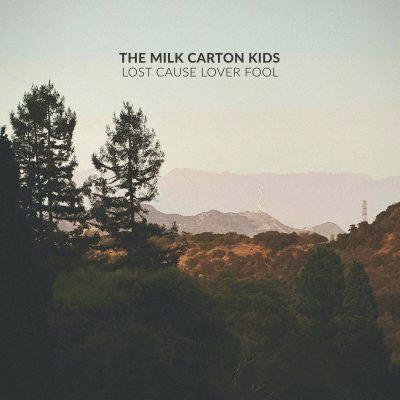
Lost Cause Lover Fool is their latest album which has a very mellow title. It gives off the same impression one might have in thinking about literary works about the death of past dreams like Tennessee William’s A Streetcar Named Desire or songs that need to be melodramatic to get to the point such as Okkervil River’s ‘Lost Coastlines’. In its sentimentality however comes unremarkableness. It has a shine in its production that allows the notes and the vocals to be heard like sublime water. This beauty however doesn’t do much for you to see the bottom for that the light blinds away any hope of translucidity. Once you get comfy with the music and you get the gist of the bucolicness of the whole thing, it reeks more like a pseudo-Romantic wannabe’s attempt to revive the aesthetic without truly getting what makes it so attractive.
Let’s break Lost Cause Lover Fool down so that we can see what makes the album sound good on the surface and nothing else underneath it. ‘Blue Water’ kicks the record off with the pastoral intertwining of the guitar and the banjo. It’s a lovely beginning that sets up the vibe of being in the countryside. Yet, the lyrics itself comes off as too elementary as if there’s beauty in nature – and nothing else after that reminds us of why it has that specific significance. “Blue, blue water / Sparkle in the morning light” does little to illustrate the tranquility of the outside world and its impact on us. This similar issue also appears in the title track, ‘Young Love’, and ‘I’ll Go Home From Here’ where the guitar melody also has a lullabying effect. Yet, it failed to lift the weights off the emptiness that is felt in the songs. You have the respective lovey-dovey bid that yearns without any more subtext, nostalgia of the old flame that’s void of introspection, and the inability to depict the devastating impact of what seems to be a divorce. It comes off as a d-side of Sufjan Stevens’s works which works solely as a writing exercise, not an articulate final project. And it didn’t enjoy the povital authorial context that is near-inseparable in its value to the entire listening experience.
The record also struggles to sophisticate its imagery in a way that brings to life its own environment. As I listen to it more and more, I reminisce all the more the sheer underrated brilliance of the previously mentioned Gregory Alan Isakov’s This Empty Northern Hemisphere which renders it the second best album to me in 2009 – the first being by Jordaan Mason. Compare the rudimentary, repetitive references to stones, rocks, and home without any notable metaphorical attachment in ‘My Place Among the Stones’ – “Solid as a rock / Safe but not alone”, “Off to a land I have never called my own”, and “I was rich on the day that I was born”. And then bring in Isakov’s ‘Dandelion Wine’ – “summer days were just a magazine,” “cutting grass for gasoline, […] so i can see ya soon…”, and “i rolled out the day that the apples fell”. One song tries to convey the feeling of homesickness without the vividity to get us to relate to its theme. Another paints nostalgia through consumerism, labour through oil, the prospect of moving on through the forthcoming fall season, and maybe even the inference that it’s set during the Great Depression in the United States.
Good luck then rummaging through the rest of Lost Cause Lover Fool for that it might be serviceable as a product, but it’s disposable in its resonance with others. Whatever highlights are worth identifying boils down to one. Most are hollow with the only notable positive being the gentle vocal harmonies between Pattengale and Ryan. ‘Ribbon’ contains said harmony at the cost of melodramatic coverage of love; it’s that kind of love song that blurts about being in love without saying anything else about what that love is. ‘Blinded and Smiling’ deals with mortality in a similar vein as Bright Eyes’ tunes in I’m Wide Awake, It’s Morning with the vocal performance too restrained to feel even worried or saddened. ‘Sad Song’ at least rolls on through with the consonances, but its broader lyrics feel incohesive for no good reason as it mused on going out, what appears to be a small festival, something about the relationship falling apart, nostalgia, and then moving on by going electric. The closest explanation that makes it work would be if it’s non-sequiter recollection but even then it offers little.
The one highlight that I wanted to shout out at least is ‘A Friend Like You’. Lost Cause Lover Fool feels like it revolves around its third track as its key staple because compared to the rest, its longer length and actual story surrounding a car trip that’s metaphorical of a toxic relationship is actually really affecting in one way or the other. The description feels more visually stimulating through its references to settings like the state of New Mexico, bonding together through “[smoking their] last joint”, and the absence of key events in favour of day-to-day living. It is here where the Milk Carton Kids come off as talented storytellers for once and they aren’t just “phoning in” on their work for this project. The song actually grabs your attention and presents itself in a way that both remind you of your former friends you know are bad influences and yet get you to yearn for hanging out with them on a road trip.
Lost Cause Lover Fool is an album that could be best-described as “gold-plated”. It might sound glamorous with how its production makes almost every sound in it clear, but it means little when the substance happens to be zilch. Barring ‘A Friend Like You’, the record as a whole feels like it’s been made in only a matter of 2 months with only around 2 days being dedicated towards songwriting – and with 1 whole day being focused on ‘A Friend Like You’. Fans of indie folk might find this attractive at first listen, but the layers will soon peel off to which they would ideally then move on to Chris Brain. I should try and give his new album a listen soon when I can.


Leave a comment