
In more than 20 years since the release of Warcraft III, many maps have been made to mimic the franchise’s epic scope. One series sums it up.
Minecraft, The Elder Scrolls, Cyberpunk 2077, many of the most popular game franchises right now explode in fame on their release date and find themselves sustaining their popularity through one staple – mods. Usually reserved to computers, users can tinker with the files of the game to create their own expansion or update. It is an intensely popular part of PC gaming and is often flaunted as one of the reasons why it’s better than consoles regardless of whether it might come off as obnoxious or pretentious. There is one franchise that is known for it that had long predated the mentioned franchises.
That is Warcraft. More than 20 years after the groundbreaking third installment was released, game company Blizzard’s fantasy video game franchise saw its community flourish through the World Editor. It’s a software that is made as a relatively simplified form of the game’s engine to allow players to create and modify maps in almost any direction. It was through that which allowed several maps to be made that were eventually incorporated into entire games. Dota is the most well-known for pioneering or at least popularising Multiplayer Online Battle Arena or the Aeon of Style-like genre. However, Warcraft III also saw many other projects made with the World Editor up to this day with each generation looking less like rehashes of Dota or epic arena fighting and more like grand-scale roleplaying games of several varieties. Among the more common being the “Life of a Peasant” which combines more literal roleplaying aspects with the use of multiplayer for maximum experience.
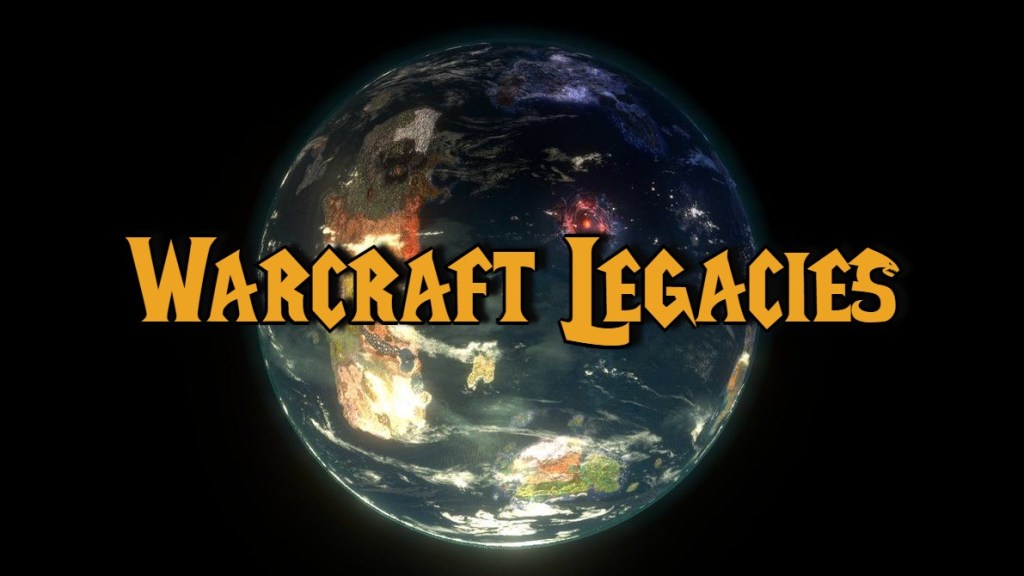
One particular fan-made series that I would like to write today is Warcraft Legacies – a series of massive maps largely worked on by several users. The four main developers are lord sebas, Technopig, HerrDave, and YakaryBovine. It previously went through different iterations under the name of Azeroth Wars which has notable differences in its gameplay mechanics. Much like a lot of the maps, it relies on online play to make for the full experience (even though I do admittedly play it on my own exclusively). It’s self-described as a “grand strategy” type where players must try to win by taking over enough control points by playing as one of 12 or even up to 24 factions. Players would earn income through the control points which are generated every turn (set by every certain amount of time) all the while they need to get their builders to acquire wood for more buildings or advanced units. It’s definitely comparable to the likes of Risk where you are incentivised to make alliances with the eventual goal of trying to take over most of the world for yourself. However, this also comes with the emphasis on real-time micromanagement and each faction having its own unique units.
For the factions, they are all grouped at first into a coalition based on the lore (loosely) of the franchise. Unless you want to play a round with two big alignments, the factions that have the closest relation to each other will initially be grouped together. An example of that would be the dwarves at Ironforge will be initial allies with the human-led Lordaeron and the mages-organised Dalaran in the Eastern Kingdoms as the three are a part of the Alliance by the time the franchise’s Third War commences (which makes the plot of Warcraft III). The orcish Warsong and Frostwolf Clans are initially allied with the Darkspear trolls and the goblins that run the Bligewater Cartel on the other hand as part of the Horde in the southward Kalimdor. There are other examples but it’s likely done more for balancing purposes or are based on the fandom’s requests like the Old Gods being grouped together or the blood elves not being allies with the high elves (and already existing before the destruction of the Sunwell).
Compared to Risk, the main objective is more lenient as the players don’t have to betray each other in trying to take over the game’s setting of Azeroth. Players who also feel that they have no possible way to win the game can also leave as well although it’s very likely that they might incur the scorn of the community without any reasonable context to explain why. In the beginning, there are objectives that must be accomplished before a certain turn to unlock advanced units including powerful heroes and acquire more established territories. It is worth noting that in terms of balance, it will vary between each faction with the Frostwolf Clan being derided as one of the weakest as its mechanics incentivises a more support-based macro strategy. Meanwhile, the Warsong Clan is once stated to be among the most overpowered for its multiple heroes and notable power spikes once it accomplishes its secondary objectives.
Summing up on Warcraft Legacies’ gameplay, it is by no means a perfect series of maps with its balancing difficulties and oversights from its ambitious premise by the World Editor’s standard. It’s arguably even more confusing back when it was Azeroth Wars when you need to lose a key control point to unlock new areas as a failsafe. This mechanic locks you out of potentially interesting scenarios and directions in a more competitive multiplayer environment. However, the ways that the team tries to diversify each faction with their units, their objectives, and even certain researches that allow you to take a risk in favour of unlocking your faction’s fullest potential. There are items around the world that you can try and get either as a reward or from killing a powerful neutral creep to boost your heroes’ capability, making them secondary objectives to edge out an advantage. Once again, it might not be the most balanced, but it’s one that encourages you to be more aggressive and be willing to expand around the map.
With maps like these, it makes me wonder all the more what would have happened had Blizzard decided to still maintain its breakthrough roots in real-time strategy. It already has left an indefinable mark with the Diablos series for RPGs and both Warcraft and the sci-fi Starcraft are key markers in RTSes. Yet, Warcraft is now best remembered as a massive multiplayer behemoth in World of Warcraft with many complaints around its shoddy writing in outlining its plot. Warcraft III at least has its cult following which still downloads maps to continue having fun. Warcraft Legacies highlights the potential of the franchise had it not gone down through the MMORPG route. It highlights the wide scope that makes the franchise beloved and shows the potential of making playable factions outside of the four races in the base game. It’s an underrated part of the franchise’s fandom and it deserves more shoutout as a good example on how a loyal modding community helps to maintain the game’s community well past its prime – and get you thinking about its potential.


Leave a comment