
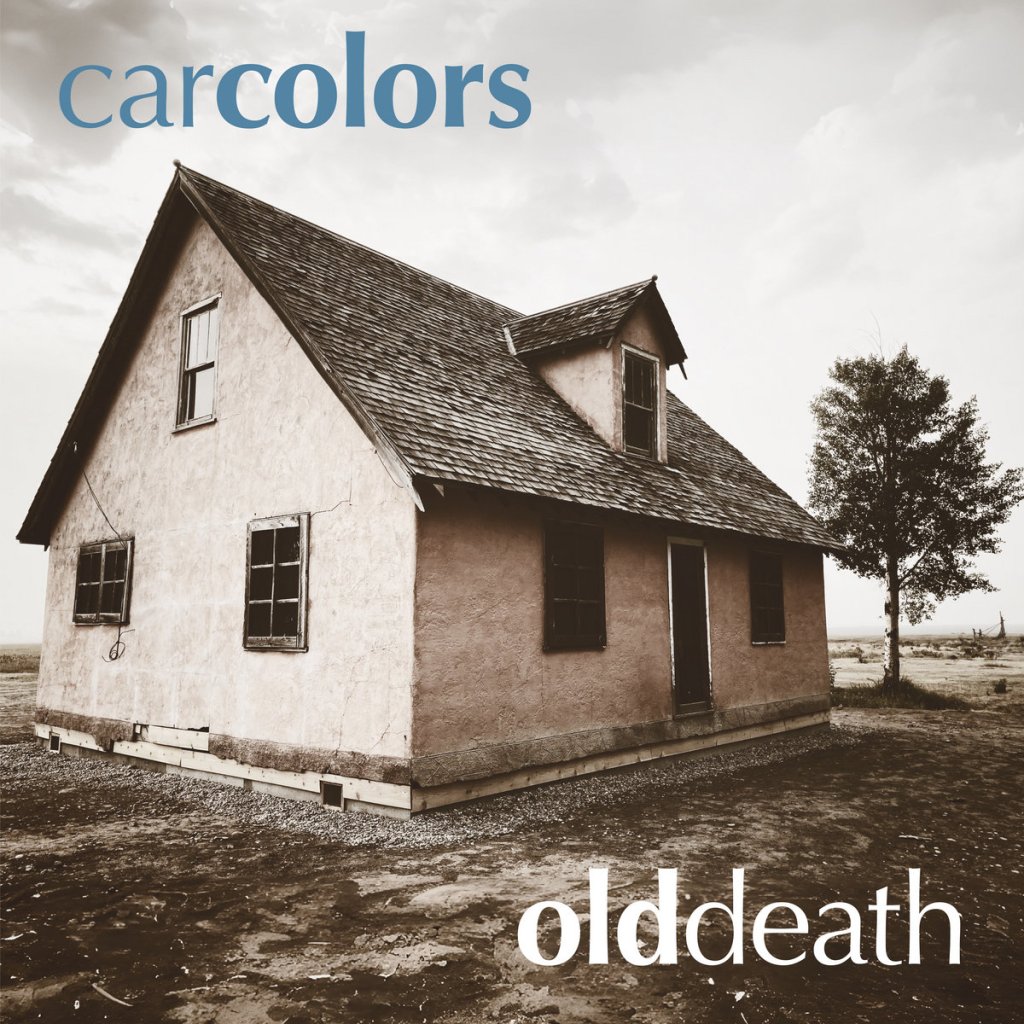
“What is a history teacher? He’s someone who teaches mistakes.”
Graham Swift, The Waterland.
Waterland, Graham Swift’s signature work, is a novel that ultimately looks at the consequences of growing out of touch with time. The ways that we respond, or endure, in an era that does not conform to what we treasure or even need to keep ourselves alive. Through the lens of someone like Tom Crick, a history teacher whose marital strife and growing obscurity in his profession pushed him to reinvent his teaching style, we learn of how one person has a place in our recording of time. No matter how small it may seem at first.
The thematic look on the intertwining between different periods of time, our relationship with the past, regrets, and fears of being forgotten are ones that many would be familiar with. In particular, this is the kind of experience that I find to be readily apparent in the Wrens’ ex-band member and singer-songwriter-guitarist, Charles Bissell. I have already previously written in this blog about the history of the band and what it is about them that I love so much even though their fourth album may never come into fruition save for leaks and bootlegging.
In this post, the focus will not be so much of the context surrounding the band’s demise. Instead, it will be more based around the lyrical and instrumental side, think more or less about the kind of camera shots of important objects in a film or analysing a literary text. Fans who have followed the Wrens for a long time through social media or even sites like Pitchfork would be aware of Bissell’s clear fondness of literature. Whenever he would treat his band’s account like his blog prior to moving on to his Car Colors project, he tends to share pictures or posts of the kind of books he wound up reading.
This would lead to bouts in the post-Meadowlands music where his songwriting takes on a more idiosyncratic approach. In stark contrast to a lot of the other artists whose lyrics sheet are straight to the point, Bissell’s songs are largely stream-of-consciousness-based. In his song’s Bandcamp description, he cites T.S. Eliot’s Ulysses, one of the defining Modernist works, as one of the inspirations. The ways in which the book plays time by compressing all of the events compared to the twenty years from its original source, Homer’s Odyssey, would no doubt have left an impact on how he writes his songs. Take for instance the intro of ‘Car Colors’:
“[2013:] ex-girls sing it from my mouth / (please) advise, any old crushes /
/”Jupiter xli, help” / (I’m) marooned on Wildwood(‘s) rushes
what follows: lowest points, sad-ventures, bits of my horse victories
[2010-2019] I’m stuck on witching hour work my own boys won’t know //
(if the) meadow-lends itself to war / (and) wrens, (to) set cadets going
[2019:] and if ten years pulling at the oar’s been for eight carols to rowing”
If there exists a certain kind of stage direction in songwriting to make up for being illiterate at reading music notations, then Bissell’s might be the defining example. It does not simply flirt with poetic phrasings nor does he settle down on a verse-chorus-verse structure that makes most pop songs memorable. Instead, he utilises parentheses and brackets, alongside forward slashes, to indicate certain years or to grammatically fill in for certain lines to make sense of. Although he would read the parenthesised parts out loud every now and then, Bissell would deliberately omit them when he sings to ensure that the lyrics stay on beat.
In turn, this paves the way towards misaligning the song from the lyrics that feels deliberate in messing up listening expectations. It adds to the certain theatricality offered from the instrumentation that would bend to the themes and directions of the written content. It’s made all the more notorious given Bissell’s predicament at rewriting and redoing the architecture of his songs until it’s at a state where he feels it’s good. Even if that means several years’ worth of work.
There still exists (at the time of writing) a demo of ‘Old Death’ back in 2014 which was originally made for the Wrens’ unreleased fourth album which shows some apparent differences to the singles now. Firstly, the production is more lo-fi where it feels as if there were less layers to separate each tracking. There exists a form of refrain in the “This hitch, this lift” verse which sees its use to highlight the climax of the whole ordeal. The lyrics and the ending were both different as to mirror the growing autobiographical influences on Bissell’s songwriting.
However, there are certain parts that have remained the same to punctuate the thematic and structural goals that help to unite all aspects into a cohesive, conceptual whole. As said by Kevin Negus and Pete Astor on Popular Music, these similarities that remained consistent throughout several iterations show the importance of structure. It highlights the foundational aspect of songwriting as ‘lyricless songs’ which demands a synthesis between the instrumentation, the songwriting, and the verses. When placed into the context of how it fits with the overall impact that was supposed to be felt, then the single’s impact on the listener must, in Negus’s own words, be shown through the workings of inferring emotional reactions in each note or intonation.
The lyricism offers a palimpsest-like effect where certain details are left out due to the weathering effects of time. The ways that the chiming guitar riffs would allude to weddings or its futility as hinted previously on ‘Three Types of Reading Ambiguity’, the lo-fi fizzle on Bissell’s vocals that would pop up in a way that feels apparitional, the dynamic mixing that always fade in and out whether we’re taken to a certain period in his life. These aspects of the production all add up to the sense of being forgotten, of being left behind by times as you try to complete your work with so many delays. With each way that Bissell would phrase his lines, it adds a layer of significance over its memorability in relation to the otherwise dense songwriting. It brings ‘Old Death’ to life by making it greater than the sum of its parts.
It was through these synergies that helped to elevate the lyrical content of ‘Old Death’. How impactful would the first three verses be, as Bissell bemoans the tribulations of his work, had it not been for the chiming guitar chords? Does the vibrant production elevate the work’s ambitions through its stereo-based expansions and studio-based vocal editings? To what extent does the Wrens’ tumultuous history of editing and altering their works influence ‘Old Death’ as the cumulation of Bissell’s career as a musician? On top of our personal experiences, it is through these subtexts and adjustments that makes the single a lot more captivating.
There are other artists aside from Bissell whose works have shown this dense type of songwriting that adds a layer of relevance to their music. Black Country, New Road have based Ants From Up There on their acclaimed ‘Basketball Shoes’ in which certain musical motifs can be found there. Brian Wilson’s Smile marks the official release of the Beach Boy’s oft-worshipped lost album that many had long speculated as the greatest that never was. And so on we go with Weezer’s Pinkerton, Wilco’s Yankee Hotel Foxtrot, or Big Star’s Third…
Whatever the aim is, Car Colors have succeeded in creating a work that aims to strike you in the heart. Even for a newcomer who might never know of Bissell’s previous outputs, there was something about the way that he conveys his feelings that immediately gripples you with the prospect of failure. Of missing your chance over and over again. It’s an intensely relatable statement of regret that wasn’t resolved by being waived with how you need to live your life without having any. Virtually everyone in real life would ponder at one point as to whether their life could’ve gone differently, maybe for the better, if they opt for an alternative. Even for those who might argue otherwise, it’s more out of acceptance that what had happened is final rather than unyielding positivity. Decisions are as temporal as the present. Feelings are as permanent as life.
So on goes the wait as Bissell’s upcoming album, one that he affirms with the greatest conviction he has throughout his self-deprecating history as a singer-songwriter. As the Meadowlands would quietly be shelved to the memories of older millennials and the Wrens’ implosion leaves many to go their separate ways, perfectionism takes hold over completion or closure. With each shift or alteration, the story keeps on stacking up for the handful of his fans who had archived each last iteration in hopes of seeing what the final product will be like…
As ‘Old Death’ was finally released more than a month ago, the last few verses cap Bissell at his lowest points throughout his personal life. He ignores his friends to the point where he was remembered as a footnote. He struggles with balancing his society-stringed college work with his aspirations. Even his efforts have led him to play at small bars with only a cult following to his name when he could’ve been doing a tour from his decade-old reputation. Nonetheless, like Tom Crick with his history, Bissell soldiers on with his music career as his pride. He will get the last laugh before time does. “[2024:] show me the secret way…”


Leave a Reply