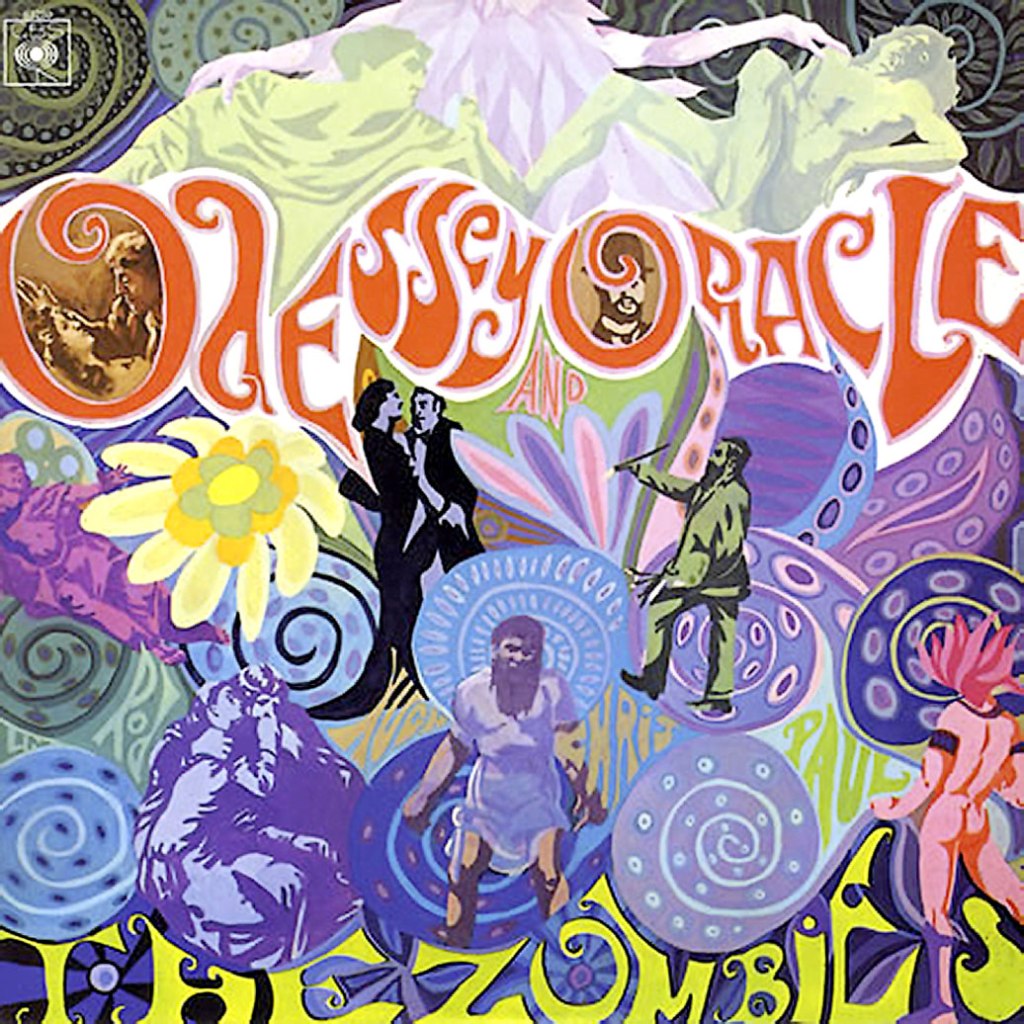
Sixty-five years after its release, the oft-overlooked sophomore album from the St Albans-born band marks one of the late 60s’ great watermarks.
By the time the Zombies released their second album, 1968 is sandwiched between some of the most iconic tracks and moments in popular music. The Beatles spent the second half of the 60s making some of the most influential songs of all time while their pop rock melodies never waver away. The Beach Boys, led by Brian Wilson at the time, created the magnum opus of pop with 1966’s Pet Sounds which stood out for its ornately baroque instrumentations and very elaborate production. Bob Dylan takes charge in injecting poetry into songwriting as a key characteristic. Enter the likes of Jimi Hendrix, the Doors, and Velvet Underground, rock is on the cusp of some of the biggest innovations it has ever seen.
The tough competition means that the Zombies will be overlooked for their efforts, one which means that their first breakup received little traction after Odessey and Oracle was finally finished. Lead singer Colin Bluntstone said on Central Track that while he doesn’t think that it is their last project then, they do know that their singles aren’t popular with the crowd. With occasional tensions over how they want to approach certain tracks or the lack of audience even at live events, the band had to call it quits at the end of 1967. Little did they know, in the year after Odessey and Oracle, did one of their singles ‘Time of the Season’ become a beloved counterculture anthem in the United States.
With the seductive vocal performance from Bluntstone, a funky, sensual bassline, and a rewarding harmony of a chorus, ‘Time of the Season’ is a late bloomer of a classic. Receiving over 200 million listens on Spotify is a good enough hint as to show its legacy, but what makes it so beloved is its explicitly flirtatious lyrics. “What’s your name? (what’s your name?) / Who’s your daddy? (who’s your daddy?) / Is he rich like me?” goes the second verse as if to tug in that primal urge. Yet, one of the reasons for why it is renowned by the mainstream is on how, according to First Thought, it plays with sexual tropes to convey a cautionary message of how lust can lead to danger.
What makes ‘Time of the Season’ so iconic isn’t applicable to the rest of the album however. Odessey and Oracle stands out for its powerful use of organs and dreamlike atmosphere through their themes. ‘Care Of Cell 44’ is now known to be a masterpiece of an intro with its subversive premise of a love couple reuniting after one of them spends time in prison. Its spine-chilling harmonies and melodically lovely keyboards make for an unforgettable track that many would even joke of as the greatest song the Beach Boys never made. ‘Brief Candles’ stands out for its fairytale innocence in remembering a relationship that never works out. Its chorus is especially one that is worth listening to for its hitting the grandeur of significant memories that could change someone for the better even if it was never meant to last.
‘Beechwood Park’, on the other hand, tackles the notion of past flames from a more melancholic perspective thanks to its downtrodden guitar. In reminiscing about the past romances over the summer, the thought of tying the relationship with a place will leave a mark of bittersweet nostalgia on many with their love life especially in an area where they used to hang out in. ‘Changes’, by contrast, is an equivalent to a John Keats poem put on music with how mystical it represents the female love interest as being empowered by the seasons. The a-capella chorus in particular contains some of the most astonishing vocal harmonies as we hear of how, through a compact way of using summer and autumn to describe her appearance, the voice attempts to start a relationship with her. It’s such a beautiful gem of a deep cut
Otherwise, much of the album deals with the complex angles of love and life with not-so-subtle nods toward possibilities like adultery, loneliness, or even trauma. Respectively, ‘Maybe After He’s Gone’, ‘A Rose For Emily’, and ‘Butcher’s Tale Western Front 1914’ were all standouts for how different their subjects are without breaking the cohesion of the project. They mix relatively mature subject matters with infectious hooks and a wondrous palette of arrangements in their instruments. The execution and synergy between the instruments and the singing works so brilliantly that you need to listen to all but ‘Butcher’s Tale’ numerous times to get the message. Funnily enough, the latter track was originally released as a single to try and take advantage of the anti-war sentiments from the Vietnam War only to receive little attention like all other songs.
Particularly so, ‘Hung Up On A Dream’ sounds like the cosiest lullaby you may have listened to. Its guitars were played in a way that sounded like bowed cellos which flows so well with the piano that it makes you believe in the vision and beliefs of hippiedom that feels all too naive. Given the time of its release with the Cold War between the US/NATO and the Soviet Union, one can’t help but wonder if the cynicism is warranted as to not believe too much in future peace. After all, such activism may retrospectively feel more like a trend than it does a genuine movement of anti-jingoism following the 60s.
There are still highlights that were as every bit jocose as ‘Care Of Cell 44’. These examples include the wholesome ‘Friends of Mine’ which fondly celebrates love in a friend group, an unofficial wedding anthem that is ‘This Will Be Our Year’, and ‘I Want Her She Wants Me’ that puts a second chance at reciprocated love. They’re twee to a tee with a whole load of passion around how much the love interest means to the narrating voice.
With such a key split between positivity and negativity in Odessey and Oracle that’s covered in all the nuances in their themes, the Zombies have made a timeless, flexible album that could be listened to well beyond the summer. In the decades following its release, the record is now regarded as a key cornerstone in the psychedelic era for its awe-inspiring ambition and direction. An article by Treble considers it to be so far ahead of its time that it will be remembered as the best no matter the contender. Meanwhile, the Rolling Stone’s 2010 list of the greatest ever albums placed Odessey and Oracle just within the top 100 before having it be moved to 243rd in 2020.
Showered now with more accolades than most of their contemporaries, the Zombies are now remembered as one of the best psychedelic pop bands of all time. Now being placed roughly around the top 250 albums on the aggregation site Acclaimed Music, Odessey and Oracle is as every bit a treat to listen to now as it does back when it’s a diamond amidst gold.


Leave a Reply