The Canadian singer-songwriter’s seventh album tackles nostalgia and grief in a marriage with mixed results.
2.7/5
Noelle Dollanganger. Canadian singer-songwriter, artist, and critical extraordinaire who, during the mid-2010s, was once hailed by the Rolling Stone as one of the ten new artists to check out. For all the hype she receives, it struggles to pay dividends in terms of ascending her into the underground greats during her debuting decade. Overshadowed mostly by her peers instead, her lyrical style of slowcore is made into a form of gem that her small following treasures throughout her career. Helping her stand out more as an artist is the notable influence of dream pop which gives her song a faerie-like magic.
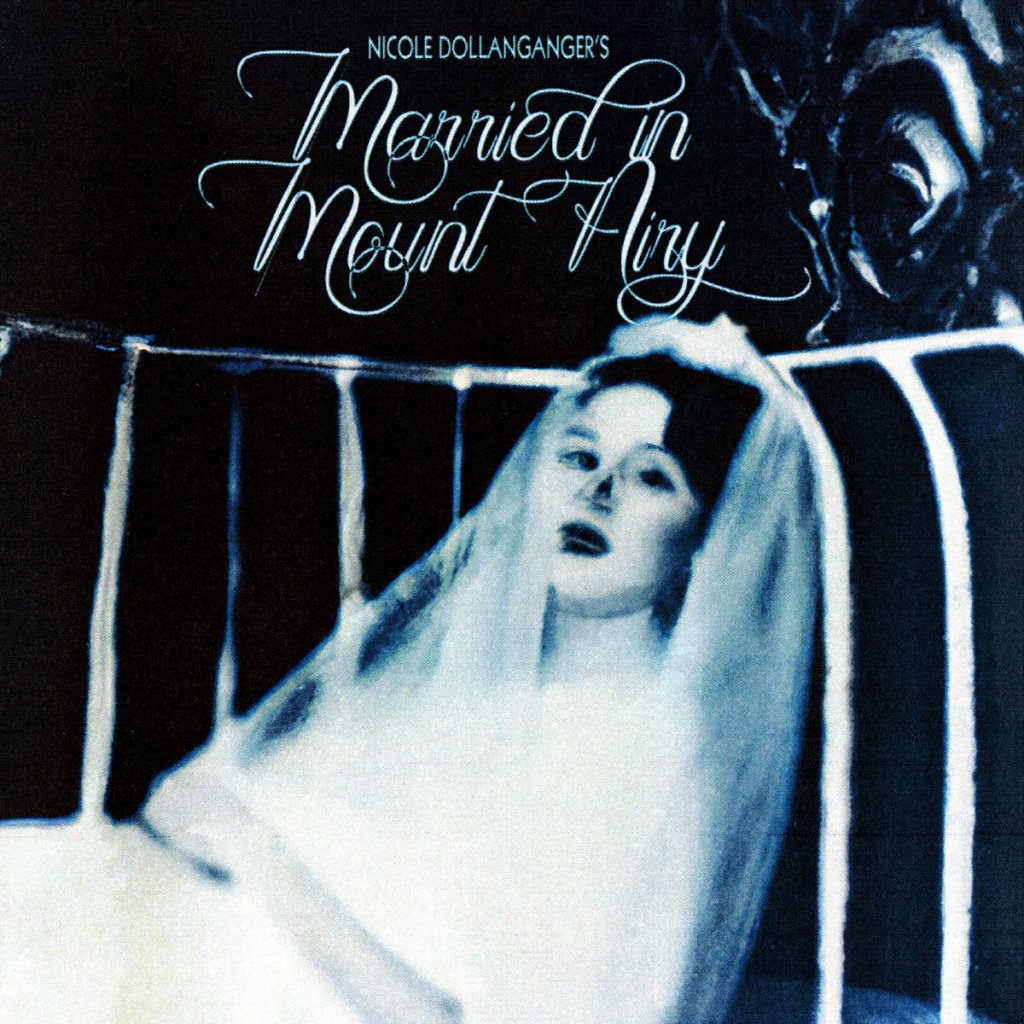
Married on Mount Airy is her seventh full-length album which conceptually deals with the unrequited love a wife felt to her philandering husband. While love is a very common theme to tackle in popular music, it’s uncommon to see the main theme being around dysfunctional marriage. Let alone one that is set and hinted at as a period piece. For those who are curious about the narrative, I will cut to the chase of it – there is no happy ending. Much of the album describes the devotion that the narrative voice felt as she remained faithful to her otherwise lecherous, abusive spouse. From their marriage in the late 1960s from the title track all the way to the husband’s death as in ‘Whispering Glades’, not even in his passing can she move on for good.
Named as being gothic, much of the lyricism alludes to mortality, extreme emotions, and the subtextual presence of the past intruding into the present. You could sense it through a bit of magical realism such as when the wife imagines her spouse “in the blue light of the TV” as she keeps him on her mind in ‘Gold Satin Dreamer’. Codependency is noted in ‘My Darling True’; a persistent feeling that pervades even as she expressed displeasure as shown in ‘Nymphs Finding the Head of Orpheus as does the husband in ‘Moonlite’’. Nonetheless, these do little to detach the two away from their dysfunctional union as admitted in the final track ‘I’ll Wait For You to Call’. From the wife’s perspective, she renounces her love even for all the problems that they deal with each other.
While I do admit that the way that the story has been executed is likeable, the rest of the elements for the album is a mixed bag. It feels off-putting to hear the reverberations flow on through Dollanganger’s vocal singing and the lack of lo-fi sounds outside of the simple guitar melody in the title track diminishes the hauntological feeling. In particular, the clean-sounding production, made notable in ‘Dogwood’, ‘Sometime After Midnight’, and ‘Bad Man’, really takes away the feeling of tension. It’s so technically solid, with its multitracking harmonies that it leaves little room for me to fully resonate with the atmosphere of the record.
The overproduction might have held the emotional potency of the album back for me, but there are spots that struck me in awe. ‘Runnin’ free’ has the cathartic blaring of the guitar and the piano which sends a chill to the spine. Following the implied demise of the husband, the entirely instrumental ‘Summit Song’ is the one exception I have to the lack of lo-fi impression as its droning effects, minimal structure, and faded piano notes leaves the same sense of emptiness that the wife must’ve felt.
Married in Mount Airy has its moments with its theatrical instrumental highs, subdued drumming, and an alluring concept. In practice, the proficient production and lullaby-like vocals makes for an alright listen at first before it begins to come off as being detractors from what could’ve been a special commentary on marriage in the mid-20th Century. You might have heard a handful of lines which allude to the cult of domesticity as a social conduct, yet there’s such a big focus on the lovey-dovey attachment in the toxic relationship that we do not know much about the album’s world. It’s all just words in the end.
If you like what one would describe as a deconstruction of an ideal marriage where two people are first shown to be in complete love with each other, then you are welcome to check this out. There are records however that I feel tackle something that’s similar to it in a way that makes for a more emotional or rewarding listen. The Mountain Goats’ Tallahassee is a beloved part of the already impressive discography of John Darnielle’s stories as we are brought into the self-destructive codependency of an unbearable couple. One of my favourite albums in Jordaan Mason’s Divorce Lawyers I Shaved My Head turns dysfunctional marriage around with an unflinching and provocative depiction of gender dysphoria. Dollanganger’s efforts might be worth the props for how pleasing a listen it is at first, but there’s little within it that hits you with finesse as its surface-layered strengths gradually change into self-sabotaged weaknesses.


Leave a Reply