
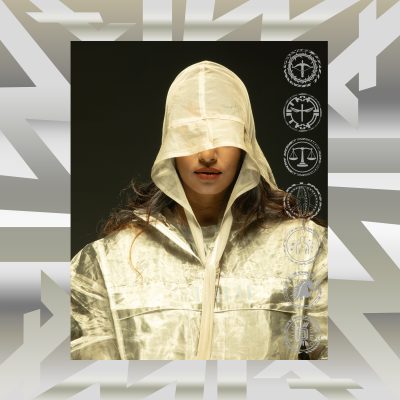
Simply put, Mathangi Arulpragasam’s gospel art-rap album is the embodiment of everything wrong with the return to religion.
Mathagi ‘M.I.A’ Arulpragasam was at one point one of the shiniest rap icons to have emerged from the United Kingdom. Her first two albums were hailed (and are still renowned to this day) as among the finest of the 2000s upon their release with her sophomore record Kala especially coming along with one of the most acclaimed singles over the past 25 years in ‘Paper Planes’. Her gritty social and political commentary, which was also exemplified by the masculinity-observant ‘Boyz’ or the fervent ‘Bucky Done Gun’, lends well with her open-minded incorporation of influences outside of the UK and the United States. Many artists in her position would have to compromise with either one of their political values or their mainstream reach. M.I.A needed to do neither back then.
It was the knock to the head that didn’t so much cement her success as it did bleed her out into a music pariah even if it took a while. Her 2010 record Maya was received with a more polarized view especially for how experimental it was even by her standards through the use of industrial music as the main foundation. It had since enjoyed re-evaluation over how it would soon contribute to industrial music’s mainstream appeal as shown by Ye’s 2013 album Yeezus or the more alternative The Money Store by Death Grips in 2012. The return to relative normalcy with 2013’s Mathagi led to what could be described best as artistic stagnation as M.I.A went from carrying on with her initially progressive stances of backing Jeremy Corbyn for the UK’s prime minister back in 2017 to being an anti-vax Trump-adjacent conspiracy theorist by 2024. It is a pretty horrific downfall to say the least.
2026 marked the biggest left turn in M.I.A’s career as she released a gospel-influenced seventh album that feels suited for the climate of the world. On paper that is. M.I.7 was supposed to be a Christian album that centers itself around the artist’s newfound religious belief and how it helps to enforce her principles. There were hints on how far the extent of that belief goes in the way that she made references to certain passages from the Bible along with having the album structured conceptually around the Book of Revelation’s seven trumpets to herald each segment of the apocalypse. There’s still a clear level of creativity to be found from the artist.
Yet, M.I.7 saw much of its appeal fractured on arrival owing to the background with regards to its artist. Much of the production has a clear rhythm so to say, but they don’t substantiate the holistic theme especially with the purported urgency it should carry regarding the state of the world. ‘PRAYER 777’ has a breakbeat type of beat that gives off an uplifting mood even if there’s something about the song that comes off as self-centered. ‘CIRCLE’ has the twinkly synths go in full display over the pleas for God and Jesus to rule over the Earth to the point of being disproportionately billowing, thereby giving the impression that it’s overproduced. ‘RIDE THE SKY’ percusses along with hollow calls to war against sin which should make the listener feel proactive in renewing their faith. It instead dulls the drive to convert as there’s no persuasion to be found.
The album failed to examine the importance of being a Christian in a perilous environment outside of just relying on faith itself. I guess that faith in and of itself is a key part of religion in general although with a music artist like M.I.A herself, you would hope that she’ll incorporate a punchy evaluation of her belief. The closer insight into the lyrics would tell you that the newfound faith was more self-centred than the artist would like to admit herself and M.I.7 instead portrayed a subtly manic egocentrism that could be felt in many criticisms of religion. Anything can be justified as long as you have permission from divine providence.
‘JESUS’ marked one of the clearest hints over the selfishness of M.I.A as the song was based on how she will use her faith to cleanse all evil without much clarification. Instead, it honed in on the binary conflict between her and evil – “I fight rulers of darkness, the diabolic and heartless / I didn’t start this, but my fires light the bridges to where God is”. The vagueness only worked through the perspective of personal retribution against all that was corrupt in the world (“I take by force what is mine, what is divinе”). This insistence that one knows best because of the values their deity holds is what led to the violence of the Crusade or Jihad and had contributed in part to the rise of right-wing populism into the norm nowadays. One that I’ll get to later on in highlighting this album’s problematic context.
There are other songs that further highlight the use of religion to justify selfish intent within M.I.7. ‘MONEY’, outside of being the budget version of ‘Paper Planes’, finds itself indulgent in its purported satire of materialism. M.I.A positioned herself as the moneylender whose charity had been exploited over and over again even in spite of her anti-capitalism. The repetition, outside of being annoying, was supposed to highlight the cyclical nature of greed only to absolve the rapper herself of her complicity or guilt in the system simply because there are too many beggers who want her wealth despite growing economic inequality nowadays. ‘CALLING’ contained the refrain of “I’ll see you there” from the Ye-founded Sunday Service Choir as the rapper positioned herself as a messiah-like figure. An enlightened one who’s responsible for leading many to God to save many from eternal damnation. She didn’t commentate much on her past and instead exclusively focused on the broad appeal in converting to Christianity.
There’s a lack of introspection to be had throughout M.I.7 which makes the religious appeal of gospel ring hollow. Be it ‘SACRED HEART’ or ‘EVERYTHING’, there’s an overwhelming sense of toxic positivity to be had in wishing for a whole new world that supposedly stands for Christian ideals. The detachment of M.I.A’s personal experiences to her beliefs render the whole project come off as self-affirmation above all else. The trumpet interludes and the contrapuntal lack of personal anecdotes to link to Christian ideals only enforced her egocentrism.
Comparatively, Ye’s ‘Jesus Walks’ breaks down his religious views in the face of coping with crime and discrimination as well as being a commentary over being unable to express your beliefs without being mocked for it. Several of Sufjan Stevens’s songs are openly Christian in its premise yet he evaluates his belief and its conflicts with his sexuality or tribunals. If we’re thinking about the structure of the album, the interludes in Little Simz’s 2021 Sometimes I Might Be Introvert connected her anxieties over her growing fame and fortune over the ways it shapes her personal life. The artistic refinement to make the record work as a whole still gives way to insightful exploration of themes especially in its relationship with its artist. M.I.7 only has the glitz without the gravitas to make itself work.
The record ends, following ‘EVERYTHING’, with ‘30 MINUTES OF SILENCE’ which was self-explanatory. Except that there’s an extra three minutes which makes for the most interesting part in the album. In those three minutes, M.I.A affirmed that she’s always been telling the truth, that she’s the constant victim of media slander and surveillance, and proclaimed that her vulnerabilities have made her bear witness to a future that replaced our world with a utopia envisioned by God. It’s the most introspective part in the album and it only centered the rapper not as a struggling soul who wished for less genocide or oppression, but as a paragon who had done nothing wrong and whose message will help prepare us for the new world.
This segment thus recontextualised M.I.7 from being an album that sought to convert to being one that wiped clean years of degradation in principles, declining popularity, and perhaps even mental health issues. M.I.A as of now was involved in several controversies aside from her Trump affiliation and I’m not thinking about her outspoken views from the past decade. She also launched a clothing line to block 5G waves during her appearance on infamous American political commentator Alex Jones’s Infowars and had made weird remarks about illegal immigrants while opening for Scott ‘Kid Cudi’ Mescudi’s concert back in May of this year which led to her being given the boot.
M.I.7 was released in a time where Christianity was bubbling up to political prominence with adverse effects on human rights and the environment while propping up right-wing influence. A poll on the first round of Brazil’s general election showed Evangelicals voting for right-wing candidate Flávio Bolsonaro over the left-wing Luiz Inácio Lula da Silva. A bid to further enforce the US’s foreign policy in backing Zionism include increasingly apocalyptic calls for the country’s Jewish populace to emigrate to Israel for the Second Coming of Jesus Christ. Australia’s far-right hawk Pauline Hanson frequently uses Christian rhetoric despite being an atheist herself to push for nationalist stances against immigration. That M.I.A’s initially anticolonialist and antiracist views had not been used to condemn the weaponisation of her beliefs against the downtrodden would come off to many as especially suspect.
Therefore, the album stands out as being the worst of this year. In the wider context of its creator and the sociopolitical climate, its messaging rings hollow and lacking in self-reflection. Conceptually, it’s wishy-washy in its appeals to Christianity that failed to elaborate on its importance barring sanctuary from the apocalypse as detailed in the Book of Revelations. Lyrically, it’s bare-bones and lacking which is very disappointing compared to M.I.A’s past discography. And in terms of production, it doesn’t have the flair that made her among the most hyped between the late 2000s and the early 2010s. It is a creatively barren project that at least alludes to its source material, but it is anything but an inspiring tale of religious renewal.
I would not at all recommend M.I.7 to fans of the rapper nor would I welcome even other Christians to give it a check. It’s a shallow exercise in faith that doesn’t invoke you to embrace the religion to give your life a new perspective. There are a lot of names that tackle the same themes as M.I.A here who are more convincing be it V.O.S with their sole 1997 album Come N-2 My World or The Texas-Jerusalem Crossroads by Lift to Experience back in 2001. Suffice to say, this album might as well pass as being a bit of a loony to say the least.


Leave a Reply