
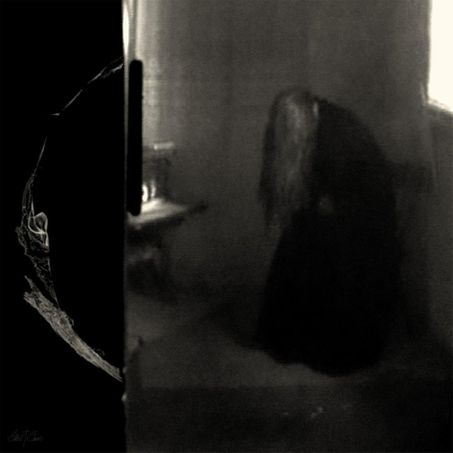
The Floridan singer-songwriter’s ‘extended play’ examines the meaning of perversion with deftness even if it drones on more than what is fitting.
Content Warning: This article contains references to sexual references like masturbation alongside sexual assault such as child molestation.
Hayden Silas Anhedonia, better known through her project name of Ethel Cain, is an up and coming name in American alternative music. She previously made music under different aliases and projects prior to settling down with her current stage name in 2019 and had made a studio album debut in 2022 with Preacher’s Daughter. Informed heavily by her close background with the Southern Baptist sect of Christianity and her ambitious artistic direction, she quickly won critical acclaim and had amassed herself a fandom who follows her accounts like on SoundCloud for her eccentric interests and even provocative social and political criticisms on the US’s domestic affairs.
Perverts carry on the religious sentiment found in Preacher’s Daughter and land it onto the notion of sin and deviance. Marketed as an ‘extended play’, the recording lasts for a whopping 90 minutes which might come off as a tad bit misleading. What much of it contains instead are drones. A lot of drones with heavy vibrating electronic music notes and slowcore’s downtrodden pace. In conjunction with her Tumblr posts which explains the context behind much of her artistic choices and influences (like Simulacra and Simulation by Jean Baudrillard), the studio recording had not shed an ounce of Cain’s conceptual vision.
How the rest of Perverts might work in practice, however, is very much up to debate as to whether the sum of its parts have succeeded in matching its grand potential. Therein lies the core strength and weakness of the ‘EP’ where the long droning means that it mesh with the ambience that predominates a lot of the tracks. While it can highlight the magnitude of the point of no return being crossed, it also makes Perverts a largely tedious listen. ‘Housofpsychoticwomn’ is one notable example as it largely consists of the attempt at creeping out with the muted “I love you” amidst the changing pitches of the tone.
The total duration is 90 minutes roughly as noted near the beginning and with nine tracks in total, there are a lot of moments where each one drags on longer than it should have. Maybe it’s done in a way that aims to unnerve or at least gives food for thought to the listener, yet the sheer length means that such an experience works best at the first time. Subsequent listens would set the rest of the track up for a sleeper. Take the titular track as an example which serves as an intro. Lasting for 12 minutes, much of the song consists solely of one continuous tone with intense cloudy wind on all sides and an occasional harsh cluster. The few bits of the refrain collude with the sheer divine disappointment at sexual pleasure. In ‘Thatorchia’, wailing emanates as the sustained note transitions from one before the sluggish guitar plucks along in a manner which reminds one of doomgaze’s misery. ‘Pulldrone’ proves to not be much different as following the spoken word verse on nihilism and derealisation, the droning persists for 10 minutes afterward.
The most important motif isn’t so much on a certain sequence of notes so much as it is the climatic tone clusters that arose. Almost a stand-in of the deafening silence to make you ponder about the significance of perversion. ‘Punish’ tackles child molestation with the inspiration being the case of Gary Plauché’s killing of his son’s predator. When the second verse ends in denial over the grave sin that was committed, the clusters explode with rage as to highlight the arrogance of the narrator. It has a sensation that will stick with you for a while. ‘Vacillator’ has an impression of a spacey R&B song, yet its subversive take on obsessive lust paves the way to eerie breaks that highlight the awkwardness behind its search for sexual gratification. The droning itself overcomes the devotion to God in ‘Onanist’ which echoes the perceived decline of personal dignity in favour of hedonistic pleasure. Given the concept at hand, you might know what this means.
The biggest highlights of Perverts rely on the inclusion of other instruments like an acoustic guitar to bring to life slowcore’s depressive tiredness. In ‘Etienne’, the piano accompanies the gradual build-up of the guitar while they both play their respective riff for a long time. It ends in an ironic sense of renewal over the monologue about a suicidal person who runs to get a heart attack only to end up enjoying it. ‘Amber Waves’ serves as the grand finale which describes a hauntingly tragic tale of a drug addiction that’s influenced by a finished relationship that the narrator never gets over with. While much of the ghastly vocals, delivered in a near-resigned way that is akin to accepting purgatory, are reminiscent of Grouper, the real seller is the last four minutes after the sung section. Sticking with her strengths, Cain allows us to feel the utter shallowness of our guilt in the face of divine retribution as if all our vices culminate in our inner goodness being perverted beyond recognition.
Perverts is one of those “weird” projects that feel like it should, by all accounts, be considered an album although the artist feels otherwise that a different label might fit it better. It drones on (pun intended) and it goes on and the length makes it feel like a marathon that an inexperienced athlete would be completely unprepared to take on. Those who are thinking of getting into the upcomer’s discography should stay away from the ‘extended play’ due to both its niche genre and its length. Fans, as per expected, will be elated at knowing that their favourite’s creativity and thoughtfulness has not skipped a beat. As for those who are into drone, ambient, or otherwise more “gothic” kind of music? There’s definitely a bit of confusion over the priority of the tone over the more neoclassical darkwave elements that the likes of Kristin Michael Hayter have mastered. All things considered however, it’s a pretty good listen. In fact, its notable left-turn direction sets Cain up for a maestro in any music that feels horrifying.
 GutterPutter
Leave a comment