
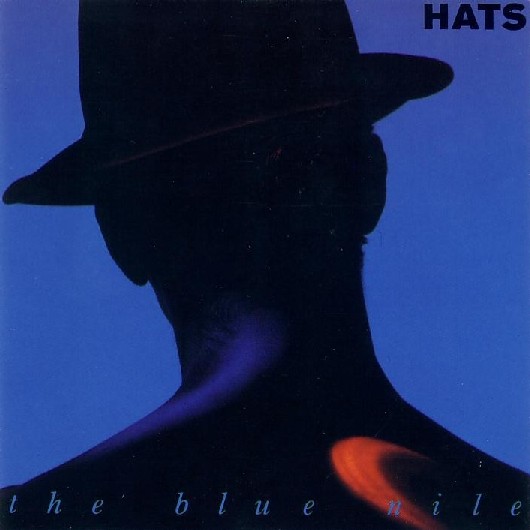
Through the masterful use of synths, the Scottish sophisti-pop savants made their magnum opus synonymous both with the night and with love.
In 1988, three men from Glasgow, Scotland converged in the small village of Pencaitland to record their second album as a band. It was five years since their debut, A Walk Across the Rooftops, was released with rave reviews and appraisals from publications like Sounds and Uncut. Their style of music follows the same blueprint as the fledgling sophisti-pop genre. Its production takes top priority with virtually all recording sessions being done under strict conditions. Keyboards are the key instrument be it electronic or synthesisers; the chords adding a vulnerable delicacy alike to a jazz performance on the piano.
It might look as if it retreads through the formula that allowed contemporaries like Prefab Sprout to excel, but the three didn’t go to immediate obscurity. Instead, Hats became the signature record for the Blue Nile after its release in 1989. There’s no historicist context to examine what makes the album special except for the simple fact that it is made on the tail end of sophisti-pop’s creative peak. The end of the Cold War didn’t appear to subtextually inform the romantic sentiments the same way David Bowie’s ‘Heroes’ had once done a decade prior. The Troubles did not stir up political commentary surrounding independence as did Thatcher’s waning premiership for left-wing populist sentiments. Hats does pop well enough compared to contend as one of the greatest albums of the decade, let alone its genre without needing to set off rhetorics.
The album instead works in tandem with the night through its music. By that, while I am by no means the kind of person who is an expert in music theory (most of my knowledge of the subject is self-taught), it’s impossible to ignore how much the synths add to its nocturnal atmosphere. The combination of diminished chords and the blend between the articulations allow the instrument at hand to take over most of the surrounding sounds within each track. In turn, this gives the album a feeling that is almost minimalistic without coming off as being empty and a distinctively romantic undercurrent that is not reliant on climatic bridges. This is further enhanced by the production where the use of layering not only enables the synth to embody so much of the Blue Nile’s direction, but it flourishes in all parts of the song like the neon light in the evening.
Take the hit single ‘The Downtown Lights’ as one key example. Considered to be both the Blue Nile’s magnum opus as a singular song and an exemplary work within sophisti-pop, the use of the synths elevate the track well above its stable. The way that the song is structured enables each key of the instrument to fill in much of the space, thereby making it all-encompassing through numerous layers. In its six-and-a-half minute runtime, there are around four to five layers of synths playing, each in a different pitch and varying length, that compliments the song’s theme of longing and urban love. While there are lyrics that allude to the night, that mention is not what ties the song to the night. It is more so the tenuto of the background synth instead; its shifting tone providing a more modern vibe to the fronting music while it never seems to have reached the point of eruption. Like the streetlight shining under the moon, it sticks out just about to illuminate the absence above the pavement.
Comparatively, ‘Over the Hillside’ and ‘Let’s Go Out Tonight’ turn their heads toward adding marcato and legato to the simple guitar rhythm. Through the slow and steady beat from the reverberated drums and bassline, the synths flip to imitate the impression of the distant neighing or the breezy wind that emanates through downtrodden outings. There, they do not occupy almost the entirety of their respective tracks, but they instead hang around as backings. For ‘Over the Hillside’, the marcatos and the legatos enable the drum to portray a picturesque feeling of the train embarking after work. ‘Let’s Go Out Tonight’, in its more overwhelming mixture of notes that might signify a seventh chord, are done in a minor key as to infer the end to a long-gone love.
By taking notes of the ways that the synths are used throughout the album, it would be no surprise that they help to dictate so much of the melancholia and the isolation felt in the evening. ‘Headlights on the Parade’ takes on the baggy influence via its danceable percussion that seemingly celebrates being in a relationship. Yet, pay attention to the layered number of synths once again. For every triumphant major note from the keyboard that champions love, the leading synth is sharp like a heart attack, its backing equivalent wavers, and another plays the same three notes like a ticking bomb. It overshadows the vibrancy of the other instruments, the damning dimness that is realised when the outro reveals that the affair must come to an end in the unforgiving urban landscape. This is only supported by ‘From a Late Night Train’ which is the most minimalistic with its synth providing elegiac support to the sole piano. It is the sign of a lone jazz singer, mourning over his love interest who departs beyond the city he lives in.
It is telling that when ‘Seven A.M.’ and ‘Saturday Night’ comes up that the synths at once are at their most jovial. ‘Seven A.M.’ has the bassline come off as seductive, the ambience surrounding the pulsating notes to heighten the impression of sunlight breaking through. It supports the prospect of being back with your partner after an all-nighter journey or shift which makes for an appropriate penultimate track. ‘Saturday Night’ has its synths be conclusively used as a substitute for horns, reconciling both the alienating feeling of the night with the simple prospect of settling down with an “ordinary girl”. It is grand as a statement for a late date without the need for grandiosity as per say; the major chords of the synths contrasts with ‘Over the Hillside’ to mark the book ends of the album. The night remains looming over the romance that might feel artificial. However, as the day ends as does the relationship, another begins with a new start to another.
 GutterPutter
Leave a comment