
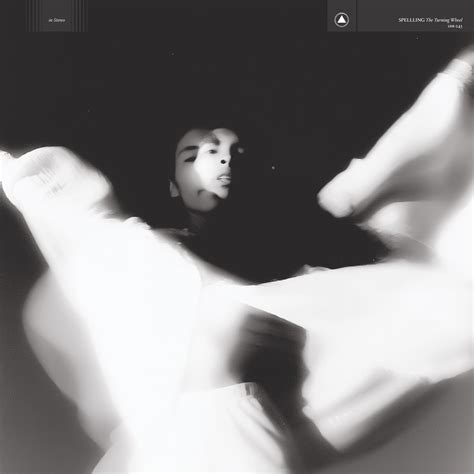
Many artists have tried to meld classical composition & instrumentation to pop music with a drizzle of studio enhancement, but few can craft it into a cacophonous bastion of mythic proportion as this record did.
Summative Verdict
4.8/5
There’s no denying that the third album from the American multi-instrumentalist singer-songwriter Chrystia Cabral is making some waves among the scene. While the reviews so far have been on a more general side with a 7.5 average on AnyDecentMusic? & a 79 on Metacritic, there is one review that helps to boost her status & that’s the rare laudatory 10 from Anthony Fantano a.k.a TheNeedleDrop. Since then, she’s garnering more & more attention as a serious artist in her own right with many favourable comparisons to another ambitious, influential artist in Kate Bush. I have personally listened to The Turning Wheel just after it’s been officially released, but my desire to focus on a different project has led to writing a review of it being shelved for a week or so until just around now. What I can say from my first impression & my feelings around the record now is that for all of its grandeur, Spellling had not only produced a work that’s rather evolutionary from most baroque pop artists, but she has introduced a certain identity to her music that is seldom recognised ever since Tom Waits.
While the genre that is most befitting of The Turning Wheel is that it’s a baroque pop record, listening to the album conveys a bricolage of nearly every alternative pop genres with a tint of an R&B vocal performance. What this leads to is a colourful demonstration of the artist’s potential which is being set into stone from ‘Little Deer’ thanks to its ethereal production value. The siren-like background vocals & the synth is fundamental in converging the classical instruments & the futuristic sounds from neo-psychedelia & synth-pop to form a parable unlike any other. ‘Always’ would’ve been your typical love song purely on the begging of the singer to have her lover come back to her, but the soaring chorus on top of the lyre, violin & percussion is so ecclesiastical that one can’t help but buy themselves into the same feeling of romance as she does. The title track you may well call a lost Disney classic with its orchestral feel & gospel-like vocal harmonies as she sings of embracing the differences between the urban & the countryside:
‘You want to set out for the cities
Turning wheel, but I want to stay up on the hill
‘Baby aren’t you happy
I live underground
Attention of the people
Makes me drown’
Spellling, ‘The Turning Wheel’
It’s paradoxical in that the ambition of the record is under conflict with the desire of living a simple life that is ‘[staying] up on the hill’, but you barely notice the ambient production in the background which just makes the whole experience all the more enthralling. There’s a sense of pride in her isolation, one that you could even allude to her career as an unknown artist compared to the likes of Billie Eilish, which connotes her experiences as a veteran artist with little attention given to her. There’s a subversive tint of a happy ending where instead of becoming big, she prefers the humbleness of her legacy. However exhilarating life as being a notable figure is, it fails to compare to the preference of having your work speak instead of your constant vocal expression around your greatness.
‘Awaken’ & ‘Emperor with an Egg’ calls back to the mythological impressions that has been built up from its orchestration thanks to its progressive lyricism in its epic metaphors & glorious tales of a revelatory event that may occur later on. The sound effect of the thunder in the end of the former track is a nice touch to have you be brought into its claims while the childlike exuberance, comparable to a vaudeville, is fuming in ‘Emperor with an Egg’. It exhumes a certain charm with its synths & symphonic cohesion as we close in on to ‘Boys in School’. Clocking in at just over 7 minutes, we can start to see Spellling spread her wings in the themes she tackled as the song deals with the impression of being true to one’s self. One can portray the song in a multitude of ways wherever it be on transgenderism (‘The body is the law & I’m only human after all/ Wanted to be the one that you need’), sexuality (‘You don’t even know, you don’t even bother/ You gave me a heartbeat, you gave me a heartbeat’) or feminism (‘If I change my mind I’ll go walking outside/ Just to see how the law is in place still’). The soaring electric guitar on the second half on top of the looping synth chord only serves to make the track more poignant, expansive, holistic in its vision.
‘Legacy’ is about as close as what I would consider a dud track in the behemoth of the record & even then, it is a remarkable piece for that we can see the soul impression kick in more. The lyrical touch on having to live up to her father’s achievement as she tries to find herself & while it can come off as being repetitive in a negative sense, the instrumentation once again continues to endure with the production helping to build up the concerto. ‘Queen of Wands’ is laconic, but what a succient track it is in its more up-tempo beats & synth & most apparently, its expression of empowerment that reminds me a lot of Angela Carter’s short story collection in The Bloody Chamber. The same reminiscence is applied to ‘Magic Act’ which is the most explicit rock track in the whole album – this time in its dreamy depiction of sexual empowerment (‘Take my body/ Make my brain a garden’). One can sense an arc of the female self being in a state of actualisation as Carbal starts to utilise herself as a way to break free of the patriarchy.
From there, we arrive at the final two albums which is close to inspirational. ‘Revolution’ is about the acceptance of growing up without sacrificing the wonder & the drive in one’s childhood. ‘What I want is a fire that never goes out/ I’ve gout all this desire/ In a world of doubt/ I’m in a permanent revolution’ is a killer chorus & the structure of the first half of the song beckons the fast playing of a jazz ensemble with the horns & the soul demonstration. on top of that is the lengthy instrumental outro that consists of a groovy drum beat, a glimmer of piano & the organ gradually climbing in as they all fade to the sample of the black community celebrating. The closer in ‘Sweet Talk’ is not larger-than-life unlike much of the album as the sounds is more gentle. We have reached a point of a prog-soul act where Carbal swoons over her love of music amidst the pulsating violins & quiet bass. It may not be the final bang you would’ve expected the album to pull off, but what a touching send-off it would’ve been given its explicit love for music itself. It may not be the perfect album of the year, but it’s a damn fine push of the art pop genre to its fullest potential.
 GutterPutter
Leave a reply to Capping off 2021: Reflections, Upcoming Changes, & Best Music of the Year! – GutterPutter Cancel reply