
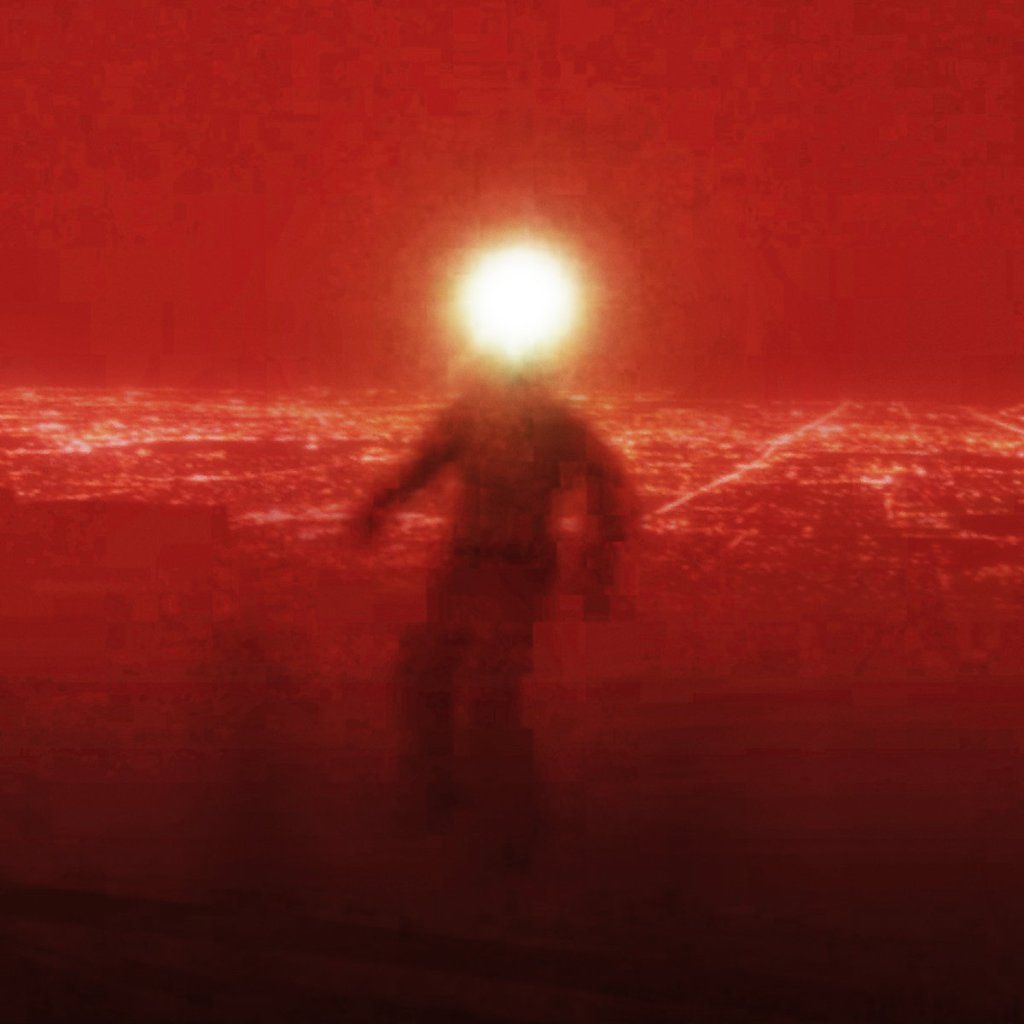
In all due honesty, the rapping leaves much to be desired around living. The insane production however is an electrifying triumph.
Summative Verdict
3.6/5
The past 2 years proved to be a lot for the hip hop group since their self-titled debut. From the passing of their member in Stepa J. Groggs to the growing polarisation of the United States, there is a sense of disillusion lingering around their future. The speculations & even a hint from the now two-man group that they might disband in respect to their fallen member adds weight to the significance to the album. The lauded experimental production from Parker Corey, given its strong glitch hop stylistics, is at the forefront of By The Time I Get To Phoenix as does MC Ritchie with a T’s despairing verses. This time, the sampling & the arrangement grew even more eccentric in its brilliance even if I may not find the rapping aspect to be the most highly consistent. Forget tracing it back to the likes of JPEGMAFIA, this particular record captures the disorientation of life & death through its experimentation with ease.
Tracks like ‘Outside’ or ‘Postpostpartum’ can be best described as being a next evolution to the kind of beats that you would often listen to in underground hip hop. With its futuristic synths & its dense layers of electronic sounds prior to its sample of uneasy breathing in ‘Outside’, the impression of the apocalypse is at the forefront. Meanwhile, ‘Postpostpartum’ sees a largely variable array of choppy mixing on the background beat which adds to a sense of insanity – supplemented by its elaborate vocal alteration. ‘Superman That’ is another track that utilises the dense amount of glitchy sound effects to its advantage through its IDM-inspired sound. The result is that of an indescribable assault of avant-electronica with the lyrical core being an echoing hook of “Ain’t no savin’ me, ain’t no savin’ me or you.” I’m not sold on the lyrics as while it is clearly heartfelt, it is simply not gripping enough to invite me into feeling the desire to empathise with the group. Alas, it will be the point that I’ll elaborate more on later as the sheer vastness of the production is too grand to pass up on.
A handful of other beats like ‘Smoke Don’t Clear’, ‘Ground Zero’, ‘Wild Wild West’, or ‘Footworks in a Forest Fire’ sees Corey’s production push itself to its psychological limit as each piece of the sounds for the song goes all over the place. You can see the hear the ways in which Ritchie’s voice start to alter into either being either high-pitched or deepened to accommodate the feeling of despair alongside some pre-recorded verses of the late Groggs. You can admire the looping sample of some mechanised sound as well in ‘Top Picks for You’ which demonstrates a small instance of serenity within the tragedy. Granted, the vast amount of unorthodox noise influences & instrumental-led bombast on top of its begrimed theme is prone to coming off as being difficult to get into. Unlistenable? That might well be the best way to describe the main issue with By The Time I Get To Phoenix’s largely experimental approach. However, it never falls into the trap of vapidity. It could go from being a typical abstract hip hop beat to an onslaught of industrialised, noisy & glitchy sounds in a span of a second.
Among some of the biggest highlights of the record for me would be when the album’s sound is more notably rooted in rock. ‘SS San Francisco’ for instance adopts an enticing bassline from one of The Fall’s songs over the roboticized, processed voice of Ritchie. With the featured rapping of ZelooperZ, you can feel the fear around the prospect of having to raise the children up in a world that’s on the cusp of being in an apocalypse. ‘Knees’, in a tamer contrast with much of the album, demonstrates an emotionally resign in the life-death loop as Ritchie recounts the pain of growing & getting into grips with one’s passing. The sampling of black midi’s ‘Sweater’ & the ghastly sprinkle of the other vocal samples makes the ennui of death all the clearer & more given the context of Grogg’s demise, it makes for an affecting listen. All in all, ‘Knees’ proves itself to be accessible in contrast with the other tracks & as the penultimate track of the album, it provides us the thesis of the record as being “a tough pill to swallow”. You won’t forget that refrain in a long while after you’re done with the album.
Finally, this would then bring me into the main issue that I have with the album & that it’s the lyrical content. It’s a largely hit-&-miss affair. Depending on the tracks, it can either have some of the most touching statements on the passing of a loved one or it can disintegrate into a rather grating instance of paranoia in the new world. At worst, some tracks can come off as being rather inappropriate in its intent of intimidation given the theme of hopelessness & demise. Compare the aggression of ‘Ground Zero’ or ‘Smoke Don’t Clear’ to the heartbreak of ‘Top Picks for You’ or ‘Knees’. Given the changing influx of the production, the difference in the more hardcore-based rapping to the forlornness can come off as being jarring at times. If the record were to present rapping at its very best, it can leave a highly bittersweet feeling around the ordeals that it tackles. ‘Bye Storm’ is one such example as the synth sample takes the mantle of being the main instrumental while Ritchie reminisces about need to move on. “Sh*t, we got caught by a storm and we ain’t even know it/ To you, this sh*t knee high, to him, it’s to his shoulders” is simple, but it’s a much-needed commentary about the difference in suffering. By The Time I Get To Phoenix might not have the slickest wordplay or technicality at front, but it makes up for its funereal ode.


Leave a Reply