
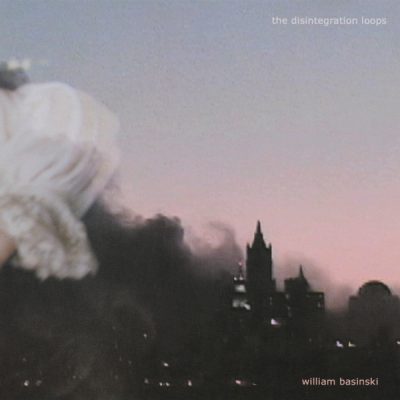
Released nearly 25 years ago, avant-garde composer William Basinski’s work, done through withering tapes, stands sharply as an aural time capsule.
The September 11th attack is among one of the most consequential events in recent history. It led most of the Western world to destroy Afghanistan, painted Muslims as scapegoats for most problems, sowed the seeds to make paranoia the new normal, and made ultranationalism mainstream. It’s one thing to grieve for the victims and to wonder why the tragedy happened in the first place. It’s another to turn that grief into a tool that amplifies and multiplies the destruction from being statewide to international. There are articles written about the families of the fallen as well as films, music, and even games which humanise the victims. There is little that ponders about what it means to live at all from the aftermath.
Enter The Disintegration Loops, a series of 4 albums made by the composer Willian Basinski which consists of a 1 hour-long tape recording of his tunes that wither as it continues to run. It is very simple to understand on paper and just based off of that description, it sounds like a hollow listening experience. However, there is a profound subtext to be felt, a staunch existential realisation, about the release of the albums or more specifically the first one in the wake of 9/11. If you were to read through the YouTube comments on the album’s upload, there will be a lot of remarks about how fitting it must be as the tune to signify your death. They harken to the mournings of the lives lost in the tragedy.
On that day, Basinski was said to be sitting at the roof of his apartment building, having just finished the project, as the planes crashed into the World Trade Center. The shock at seeing the attacks occur caused him to record the events as it unfold and he later on played the first of The Disintegration Loops out loud the next day in memory of the victims. He later dedicated the entirety of the project to them in the liner notes; a forlorn acknowledgement that what would soon be his most recognisable work is tied to the senselessness of death.
Only a month after the attack, the United States declared war on terror with the intent of going after the perpetrators in the pan-Islamist faction Al-Qaeda who were based in Afghanistan. As empathetic as it is to know that a kind of justice is needed for the killing of so many lives, many warned that invading Afghanistan will have disastrous geopolitical consequences. The Middle East after all had been subjected to Western interventions before in Iraq from the Gulf War in 1999 and 1991 which led to its destabilisation and retreat into religious radicalism and authoritarianism.
Music artists joined in on the protests and condemnation of the war. Just over a year after 9/11 and the first playing of The Disintegration Loops in public, The Fire This Time was released as an audio documentary under Hidden Art Recordings. It’s based on the aforementioned Gulf War and the history surrounding it and its consequences on Iraq. Yet, there’s a sharp bite in how it fixates on the casus belli, the fetishization of weapons, and the disintegration of international laws. Recordings of pundits, journalists, and officials alike justify the war through the need to “establish democracy”, “demilitarising” the Islamists, or by decrying the United Nations as being useless. Samples contrast the claims however with screams of Iraqis being under fire and monotone presenters Its IDM-driven background music works even less for dancing than per expected of the genre and more like emulations of nuclear detonation. The timing could not have been any more fitting. History is repeating itself just over a decade after the invasion of Iraq.
If this is going off-topic, then let me wrap back around to how a record like The Fire This Time is important in establishing the long-term legacy of The Disintegration Loops. By no means am I inferring that the record is inspired. What I mean is that the two function like two sides of the coin especially keeping in mind its context. It is impossible to divide The Disintegration Loops away from the horrors of 9/11 and the subsequent invasion of Afghanistan just as it is impossible to divide The Fire This Time from its condemnation of the Gulf War and the media for essentially manufacturing consent for it to happen.
In its essence, The Disintegration Loops works all the more poignantly if it’s interpreted not only as a meditation of mortality but also as a meditation of history’s eventual corrosion. It is after all made entirely of Basinski’s old demos gradually crumbling as it plays with slightly minimal studio production use of reverbs to give it an ethereal atmosphere. Be it the horn, the fuzzing drone, or the vibrato, the one key constant lies in its gradual disintegration as per the album title. It initially stands as a testament of life gradually coming to a close. Yet, it is through the subtext of 9/11 and the tragedies that soon followed it that grants it its greatest meaning. Now it mirrors a library’s worth of interpersonal stories and advice that would have converged together towards a common humanity that is forever gone. Forgotten.
And now the past will soon follow it. And all the morals that once tailed behind it will soon follow it. And the people whose stories set it up will soon follow it. The Disintegration Loops work now because of how its very genre as a tape music album has a retrospective value in depicting the events over the past quarter of the century that’s filled with agonies and ruin over our actions. The tapes themselves are old. They are used up to their fullest capacity before eroding for good. And now they are forever unavailable for use; they are only to be imitated. And in its ties to 9/11, its search for closure with its mortality is blemished with the casualties that magnify its dying cries.
 GutterPutter
Leave a comment