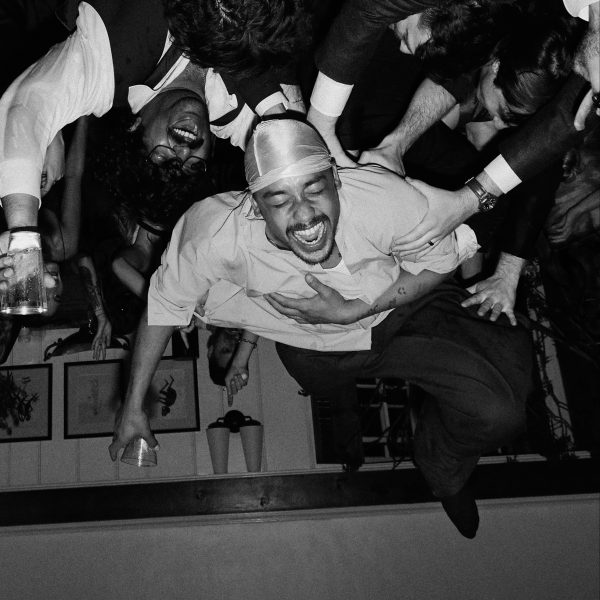
Dijon Duenas’ second solo album is as imaginative a take on R&B as Devon Hendryx or Frank Ocean. And a strong contender for the genre staple.
Before Baby, Dijon Duenas is a name that would pop up first in only a handful’s head. Many would likely think of FKA Twigs, Frank Ocean, or the Weeknd as the frontrunners in defining alternative R&B with their eclectic style and poppy songwriting. Even on the level of cult following, JPEGMAFIA’s begotten ex-project of Devon Hendryx is more likely to appear on a music nerd’s radar. Dijon, by contrast, once worked more on the sidelines as part of a duo with a high school friend before working with former hip hop group BROCKHAMPTON and acclaimed popster Charli XCX throughout the 2010s. It was only until 2021 when he released his debut solo album Absolutely with relatively little attention given.
Back to the grind, Dijon got his big break this year with some credited vocals on Bon Iver’s latest album Sable, Fable (that I’ve only listened to a bit of, but am so far unimpressed). This gets further bolstered by his songwriting and production help on Justin Bieber’s Swag. These contributions might not have been enough to make a splash among publications like Pitchfork, but it does get a few curious listeners in his direction. On the 15th of August, Baby is out as the second album, one based on his recent experiences as a father, in his discography with his little fandom up in line to give it a listen. And a listen they truly give as they praise it as one of the best records of the year; one that might forever redefine alternative R&B. And they might not be wrong with the remark.
Baby is an alternative R&B album that has the cloudy echoes of Clams Casino, the glitchiness of Imogen Heap, and the hypnagogicism of James Ferraro. Its initial burst of acclaim is built on the back of its especially experimental production that balances the line between being accessible and unique. The title track kicks this thesis off with its glitchy repetition of the sampled “baby” vocals, jagged cuts of a guitar riff, and a clear albeit quaint reverb to fill in the space. It thus adds to the intimacy of the concept which revolves around telling your kids how you met their mother. ‘Another Baby!’ takes this to a more uptempo, abrasive direction with the post-industrial drum pattern and erratic cuts of both rapping and keyboard samples which would bring to mind sound collage in its more sexual focus. And that’s not the extent of its direction as ‘(Freak It)’ plays with stereophonic mixing and delays for a more maximalist feel in its flirtatious mood.
The album sought to maintain the binary opposition between sex for pleasure and sex to start the family alongside romantic love and familial love. ‘Yamaha’ is a standout in how it sought to portray the addressee Anne as both someone to seduce and a partner to cherish. Its development from physical attraction to genuine affection adds to the subtly hypnotic mixing wherein the production’s volume corresponds to the feeling. ‘Rewind’ leans deep into the responsibility of being a parent with its reliance on the acoustic guitar and a sense of guilt over unhealthy habits being picked up. ‘HIGHER!’, from its repetitive piano chords, portrays the ecstasy of being with a loved one through its heavy emphasis of layering Dijon’s vocals whether he sings the chorus, its clarity blurred from the excitement.
Exciting and refreshing as its production is, its eclecticness does little to hide away the flaws that render the album a bit unfinished even if it doesn’t smear its burst of creativity. ‘(Referee)’ is, for one, too short for its good and comes off more as an exercise in nailing the key musical aspects. On the other hand, ‘FIRE!’ and ‘my man’ still has its distinct production spotlights yet it didn’t succeed exactly in masking the lyrical shortcomings (not to an extent compared to someone like Tyler, the Creator). ‘FIRE!’ seems to try and portray a newfound relationship which begins with a music artist – fan dynamic. Through this, it lacks the emotional relatability or at least empathy compared to the aforementioned binaries of sex and love. ‘my man’ at least tries to tackle it through exploring the introspective memory of your father and his impact left on you. It feels like a less-thorough rehash of ‘Rewind’ where the plainspoken lyrics made the self-reflection come off as a bit hollow.
The final three tracks sum up the broad focus on love and family through revisiting its most potent musical directions within the album. ‘loyal & marie’ imagines the implicit self-doubt felt from being in a relationship with an older woman with an acoustic guitar and a considerably more ambient kind of minimalism. It’s an abrupt turn away from the explosive production that you would have already been used to, but its more mature focus resonates hard with anyone who feels that their love life is at the end of its chapter. ‘Automatic’ is among my favourites in Baby as its hip hop influence shines hard. The boom bap-like beat with some vinyl scratching samples and the soulful synths makes for an intensive track that blurs the line between dancing and sex all the while the instrumental shows how they are enticing in similar ways. ‘Kindalove’ concludes the album with its more subtly lo-fi direction in its mastering as it focuses solely on what it feels like to be purely in love. Dreamy and almost nostalgic, it is almost like a retrofuturistic homage to a Motown hit song.
Baby, at first listen, feels like a near-immediate strike of diamond even though I had just previously written a rave review on McKinley Dixon’s Magic, Alive! Consequent listens however do show that Dijon’s general lyrical prowess didn’t stand on its leg as well as it could have with its conversational style. It might make the tracks relatable at times, but it doesn’t always enable each song to become more than the sum of its parts (which include its incredible production). However, the song structures are more flexive which allows for the representation of love to be explored in different perspectives. Its vision maximalist and its musicality empowering, Baby could be regarded as a part of the loose boundary-pushing movement with Quadeca and Double Storm. Fans of the latter two artists or rather those who love a more avant-pop kind of songwriting should check Dijon out regardless of their preferred genre even if he might not have made a certain home run. That being said, it should not be surprising if later musicians began to adopt his more chaotic style of production.
 GutterPutter
Leave a comment