The Agony of Hudson.
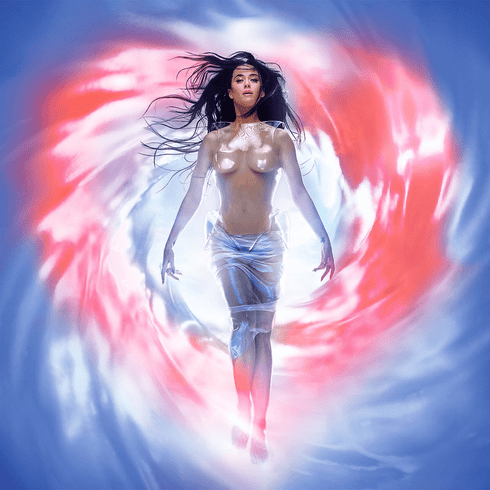
Oh, how long ago was it since I have last heard of Katy Perry’s music aside from ‘California Gurls’, ‘Last Friday Night’, or, in all its little miracles, ‘Teenage Dream’? Initially going by her real-life name of Katheryn “Katy” Hudson on her religious debut, Perry flips her image around with a stage name and a seemingly unlimited backing of radio airplay. 2008’s One of Us and 2010’s Teenage Dream are both multi-platinum cash printers for Capitol Records with their many hit singles having reached gold certifications in as many Western countries as there are. This success was further built in the early 2010s with the likes of ‘Roar’ and ‘Dark Horse’, but the two singles’ staying power aren’t as strong comparatively speaking.
As Billie Eilish, Dua Lipa, and others set themselves up to be the mainstream mainstay throughout this decade, Perry faced a bit of gradual descent from fame. Following her attempt at maintaining relevance after the early 2010s, 143 is her first album after the peak of the Covid pandemic which was four years ago. Her previous album Smile was released in the same year, but much of the work was already done by that time. Contextually, the album’s release after the event is important due to the social upheaval in what is deemed important. You still have the occasional club banger that provides the catchy beat with a mix of innuendos and sensuality. But the instant classics that we are likely going to geek about when we hit our fifties are Woke to a tee (and I mean that as a positive).
Among the most beloved songs your casual friends are likely to know of at the time of writing include: the first major country number one from a black American musician, a dissonantly upbeat song about closeted Sapphic love, a diss track that calls a rap popstar out for having sex offenders on his entourage while comparing his career progression to the history of American slavery, a soulful waltz between love and drinking which feels like an rock-addled update to Elliott Smith’s ‘Between the Bars’ with surprising impact, an update to one of this year’s most lauded albums with a wholesome feature from a friend whose past instances of conflict inspired the original version, and a dozen others! I might not talk about pop music all that much and it might have to do with my biases against it. However, let us not kid ourselves when it comes to the most of the hits on the chart. Chances are, maybe the masses aren’t all that bad when it comes to their music taste…
Which leads to 143, an omnishambles of a project that just so happens to incorporate every little stereotype for why I seldom make a comment on successful mainstream music. It was produced in some parts by Lukasz “Dr. Luke” Gottwald who was accused by Kesha of having abused her in all forms with sexual abuses being a key highlight. It’s not even a pre-planned pick that was done years before the allegation reaches its climax in 2023; Perry lets him handle her lead single for the album ‘Woman’s World’. The branding of it as a “feminist” hit is filled to the brim with faux-compliments which only accentuates the hypocrisy of Dr. Luke’s involvement given how oppressive it can be to speak out against corruption in the music industry. There are also ‘Lifetimes’ and ‘I’m His, He’s Mine’, dealing with the beauty of love, which contains neither the bittersweet nuances of Charli XCX nor does the production itself feel as refreshing as Chappell Roan’s. Just endless indulging about how it feels good to be a #girlboss without the relatable embrace of self-love and camaraderie, warts, spots, and polish included.
If anything, a lot of the beats there feel like cookie-cutter cutouts from a bygone era that is the late 2000s-early 2010s. ‘Gimme Gimme’ has a featured verse from 21 Savage about party and booty that’s laced with a d-side dance production consisting of a mix of upbeat electronic notes and ratchety drum pattern. ‘Crush’, oh the horrors, is one of those shamelessly shallow house music where the selling point revolves solely around the beat drop – but the drop never came for the groove to kick into overdrive. Instead, you only get to listen to the same monotonic rhythm that just ebbs and flows to a washed-up mid-thirties pop artist going off about puppy love in a way that only works best if she’s half the age she’s at now. You can copy and paste that point in one way or the other to other songs like ‘Nirvana’ or ‘All the Love’ which meanders on about romance without any sense of personally vulnerable subtext. Cookie-cutter, copypasta…
Now, let’s go back to the whole #girlboss feminism attempt that is set up from ‘Woman’s World’. It would have been passable, even ignoring Dr. Luke for a minute, had it been made as a response to the legacy of the seminal #MeToo movement and its retrospective relationship with the Covid pandemic’s impact on male-female relationships. When Fiona Apple dropped Fetch the Bolt Cutters back in April 2020, it won admiration not only for its staunch feminist themes of sexual assault and harassment. It has that claustrophobic feeling from its monaural homemade production which makes the album both a time capsule of the pandemic’s stay-at-home mandate to contain the spread and a subtle symbol of the systemic sexism regarding professional women. It is this notion which makes the whole album more exciting. To rub salt on the wound, she boycotts her Grammys win as Dr. Luke was producing for Doja Cat’s ‘Say So’, ignoring the longtime allegation of assault to Kesha before the 2023 lawsuit.
Now, what does 143 offer in comparison? ‘Truth’, ‘Wonder’, and ‘Gorgeous’ which attempt to respectively tackle relationship problems and girls’ night with as much thought as one would get a Forbes billionaire to advance the labour union. There are no commentaries surrounding the allegations made against Katy Perry’s infamous ex-husband Russell Brand nor are there condemnations of any form against his turn towards conspiracy theories even in a subliminal sense. There are no sympathies made on the feeling of isolation within younger women, many of whom might have listened to Perry’s songs back in the 2010s, due to the shrinking avenues for socialisation outside of commercial activities like clubbing or shopping. Nothing as well about raising a child in an environment that feels different from your younger years. There is nothing about either of the three songs that would actually help to reassure the listeners about their concerns, let alone inspire them to be the best that they can possibly be.
This is why it’s hilarious in a sense that the closest highlight there is in 143 would be ‘Artificial’. Based on the song title, you would have at least hoped that it’s to do with social media addiction, being chronically online, anything that tempers our commonplace use of technology in our everyday life. Surely the trap beat is there for added irony, right? Nope! Perry just uses the semantics of such to sing about a wonky relationship. That’s it! The reason why it’s the “closest highlight” is due to Destin Route’s verse. If you recognise the name, good news! He’s JID coming to the rescue with a verse that actually sums up our concern with incorporating technology into our social lives! Anonymity, misinformation, the possibility of a double identity where we let our worst traits come to life without any restraint, you name it. The issue is that because JID actually thinks through with what he wants to rap about that it bears little to no relevance to whatever romantic woes Perry is moaning about. What a deep charade this affair must have been,
143 is so offensive in its shallowness, its outdatedness, its dying grasp at relevance, that it puts to shame those who not only enjoy commercial success with mainstream recognition, but also critical laudation. I’m thinking about Hozier as one example whose lyrics happen to make Ed Sheeran’s writing feel like a molehill compared to Mount Everest; his best materials in particular might as well be to Bob Dylan what Sylvia Plath is to William Shakespeare. Yet, Perry has failed to show the beauty of music as an art form. There are no risks taken in the political or social consciousness because there are none whatsoever. Instead, its inspirational goal is pronounced dead on arrival as soon as Dr. Luke was picked as producer even though he is likely to have damaged Kesha’s life with long-lasting effect. It does not empower culture, it is an entirely original antithesis to counterculture with nothing but corporate klutz and hollow cheeriness. It scars art. Katheryn Hudson might as well condemn herself to the shackles of a bygone era, one where hits are made with the intent of the dancefloor, commentary be damned.
 GutterPutter
Leave a comment