
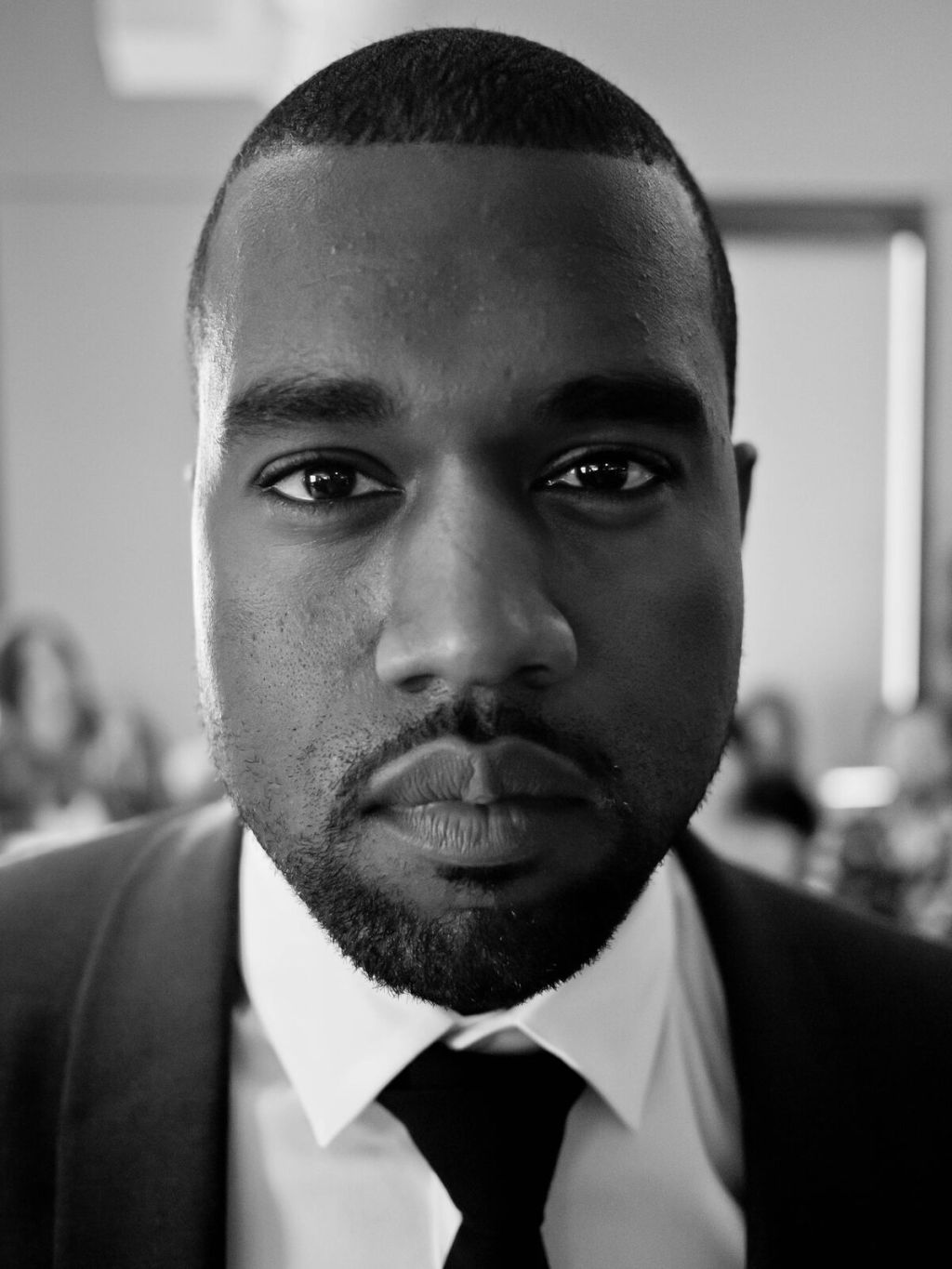
So, at first, it would be tempting to make a pretty negative review on Kanye West’s (formally known now as Ye due to name change) newest effort. Back in February, I listened to his latest album Vultures 1 which is the first of the three collaboration records with Ty Dolla Sign with the release date being to coincide with his debut The College Dropout’s 20th year anniversary. The second of the series was supposed to be released this month, yet delays have been made as Ye claims that he is still working on it. It is pretty hard to tell whether we are able to listen to it this month as per hoped given Kanye’s track record of releasing his records in a half-baked fashion since 2016’s The Life of Pablo. Chances are, the PR team is already working overtime to come up with excuses to prevent any racist, sexist, or offensive remarks while restraining some of Ye’s worst comments.
Instead, what I want to try and draw focus on is largely on the impact Kanye has on hip hop with his music and how his innovations conflict with his antisemitism on top of his antics. Between the Israeli invasion of the Palestinians in Gaza (with genocide accusations) and far-right conspiracy theories spreading like wildfire, discrimination against Jewish people is skyrocketing. It is convenient to use rumours or verifiable events to demonise and delegitimize an ethnic group, especially one with a proven history of persecution.
What makes antisemitism exceptional among specific types of discrimination lies in its lack of differentiation over who counts as a Jew. As said by Ben Halpern, Jewish individuals do not have to continually share the same values as their religion to be spared from the offences. Instead, it is largely dependent on the ideological upholding of Judaism as the one true religion with the others being cast aside as false. This perpetuates tensions between the Jewish communities and others regardless of whether one side is deliberately aggravating or if there’s any actual problem at all.
West does not shy away from his devout Christian background. His father was a pastoral counsellor according to his mother who had encouraged her sole son to be outspoken. One of his biggest breakthroughs comes in the form of The College Dropout’s ‘Jesus Walks’ (2004) which is one of the most acclaimed Christian rap songs of all time. At the time of writing, he managed to release at least three albums that extensively covered his beliefs including The Life of Pablo, 2019’s Jesus is King, and the two Dondas. The explicit show of religious support mixes well, as a result, with Kanye’s provocative takes which, as the events in the late 2010s and the early 2020s would later show, is dangerous to say the least. After all, much of contemporary antisemitic incidents within Western countries like the United States tend to derive from Christian fundamentalists who would often turn to purported rumours about “Zionist-occupied governments”.
In the case of Kanye, what makes his antisemitism distinct is that of his international following. Unlike the likes of Donald Trump, whose extremist stance on different ethnic groups tends to vary (at best), or Richard B. Spencer, who is only known within far-right circles, West is a superstar. Even after his big scandal on his comments around Judaism and Nazi Germany, he is still headlining festivals like Rolling Loud. Vultures 1 tops many charts around the world including several US-specified ones with its single ‘Carnival’. In spite of his endless controversies, he still enjoys hundreds of millions of listens to his songs on Spotify. Even with the outbreak of his infamous InfoWars interview back in October 2022, he still retains a substantial portion of his fanbase. How could anyone still tolerate the kind of stuff that he says?
The fact is that for so many of his fans, it is that easy to separate the art from the artist. I am going to break the ice and say that I am one of those fans even if it’s largely to do with his debut album. Some of the artists or bands that I held up in high regards like Brand New or Morrissey have messed-up allegations behind their back throughout their history such as sexual assault or general misconduct against other people. Yet, I still do check out some of their music from time to time largely because the quality of their musicianship is very high. Their songs struck the chord for so many listeners whether it be for the heartfelt confessionalism or sharp wit in the writing. The issue is that no matter how much you believe in the Death of the Author theory, a purely personal opinion grounds itself, in one way or the other, on bits of the creator. Context is one of the most powerful aspects that could influence your reading on a certain text (in a broader sense relating to any work, not just words). Once you learn of its backstory, you can never put the genie back in the lamp.
This, in turn, makes my thoughts surrounding Kanye’s content all the more compelling. For all his affluent upbringing and considerable wealth (his net worth is $400 million after Adidas, Gap, and other companies dropped him), his early solo outputs are conscious in their own ways. His middle-class standing, soulful production, and ear for poppy songwriting meant that he has an innate broad appeal that goes beyond the controversial gangsta culture that pervades hip hop. After all, who else has their first three albums contain songs that celebrate one’s mother or the need to be confident about your dreams on one end and shine lights on the corrupt luxury industry on the other? I can’t ever forget his damning incitement of living up to old promises on ‘All Falls Down’ with “We’re tryna buy back our forty acre!” Kanye’s works might have sowed the seed for many middle-class people of all kinds to reconsider the nuances of systemic racism outside of the controversial representations coming out of hardcore rap.
However, when you throw in the overt antisemitism, it’s hard to reconcile the more socially progressive stance that Kanye had implicitly shown in his earlier works with… whatever garbage conspiracy yap he’s spouting now. Not helping at all with the point is on how his songs like 2010’s ‘Runaway’ have acknowledged his terrible attitude in a self-aware way. Yet, he only just accepts it as it is and never bothered to address it thoroughly. Instead, he subtly alludes to self-harm or worse if someone like his love has decided to leave him. Combine that with his borderline personality disorder and you are now in a tough situation with a person as unpredictable as him. How do you handle your relationship with a pop icon who has a long history of unwarranted commentary, offensive views, and a dodgy record in handling their health?
Therein lies the tragedy behind Kanye’s works in retrospect. The man who blows open pop rap as we know it today has disgusting views toward the Jewish people that will forever stick to him like an albatross no matter how sincere his apologies may seem. Given his social media posts that attribute Jonah Hill for his “change” or how his Hebrew-written apology was undermined by his bragging of having “f**ked a Jewish b***h” on Vultures 1, the bastardry will remain with him long after his peak. His views might have well legitimise the likes of Tom MacDonald whose following are largely bigoted listeners who bemoan “woke” culture for stepping over their freedom of speech. Moreover, the amount of artists who consider him to be their idol will never shake off the prospect that he might not be the everyman jewel that they thought he is. For those who decide to jump in on a chance to work with him like JPEGMAFIA, that is a showing that will surely besmirch the fans’ opinion on them as a person. In turn, this leads me to enquire on one thought: what of his music as a whole?
I want to close this off by not arguing in favour of shutting yourself away from his music. It is easily arguable that I could come off as being hypocritical through my consumption of not just Kanye’s music, but also several other artists who have clear controversies behind their back like Sun Kil Moon’s Mark Kozelek. This problem only gets deeper given that I have actually disavowed listening from the likes of Daughters in light of the allegations by Lingua Ignota, now preferably known as Kristin Hayer. Knowing how much I have actually enjoyed the latter’s music, this puts into perspective the problem surrounding the value of art and a person.
Is the brilliance of a creative work more worthy of attention than the suffering of the group or even just one person? In an ideal world, I would love to answer that question with that the person matters more. In practice, our personal biases toward anything that we cherish means that I will complicitly lean towards continuing on with listening to music even by someone as awful as Kanye West. And with the track records of people like him asking for reparations to help out the descendents of the persecuted or enslaved, that only nails down the pain. How are you going to argue that someone like him has done something good when he has now shown to be harbouring abhorrent views?
Should we drop his music? Should that extend towards other artists including those who are not as famous as he is? What of the music industry itself that keeps on propping him up? What if someone were to decide to continue listening to him after they have made their minds up? What about the generations of artists he managed to inspire? Even those whose style is comparably alike to his? Do we need to remind ourselves of people like him so as to not forget the banality or normalisation of discrimination? Or does that only lend itself to a Streisand effect where many people decide to check it out for themselves? That is the greatest casualty of Kanye’s antisemitism; that of the irreconcilability of our responsibility over the extent and conclusion of our condemnation.
 GutterPutter
Leave a comment