
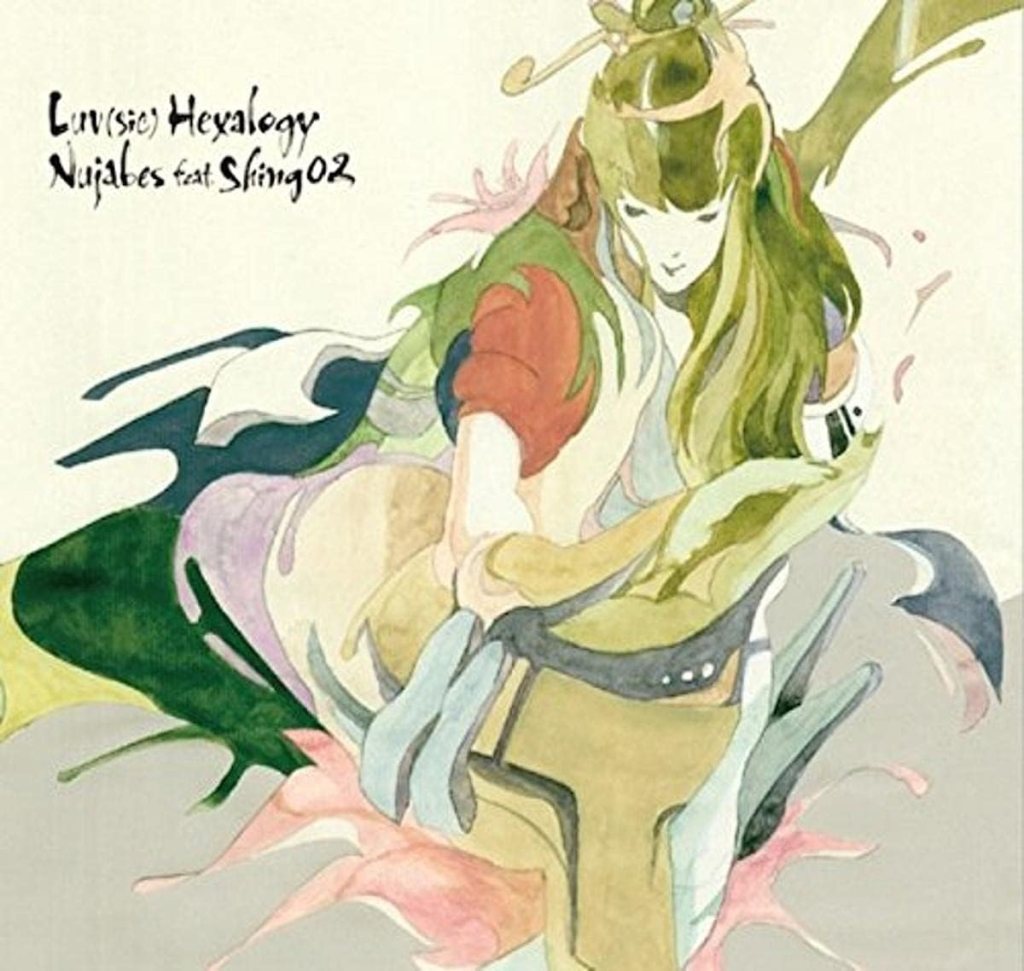
A collaboration between a beloved Japanese producer alongside an emcee of the same nationality helps to birth some of hip hop’s best love songs.
Love songs are always paramount in popular music. As both useful ways to garner attention or as authentic emotional expressions, they serve the backbone of many singles. While you hear of power ballads, you are always reminded of the undying dedication towards someone. To hear of being so in love that you can’t picture being with anyone else or even being alive without your partner reeks of loyalty even if the implications might be concerning. As people start to question whether romance is needed in your personal life, it’s a growing commonality to hear songs that celebrate being single after a toxic relationship. These little acts of subversion have their appeal yet some songs work better than others through the genre it’s being played at.
Barring emo/pop punk songs that look into break-ups, hip hop is one of the biggest genres that do not look into unconditional romance. Instead, the songs there tend to adopt a form of introspection that are always elaborated on thanks to the ways rap verses tend to be structured. Southern rap duo Outkast’s ‘Ms. Jackson’ is one example of how the genre breaks down on the implications of staying together “forever.” Antwan ‘Big Boi’ Patton raps about the custody battle with raising his child against a bitter ex while Andre “3000” Benjamin ponders on how exceptionally rare it would be for a young couple to stay together for long. Other examples of how hip hop subverts the typical convention of love songs would be Eminem’s ‘Love the Way You Lie’, based on toxic relationships; Tyler, the Creator’s ‘Earfquake’, revolving around feelings that lingers after a break-up; and Common’s ‘I Used to Love H.E.R’, an allegorical twist of attachment towards the development of hip hop.
Under the realm of underground rap, one of the very best examples of how love songs were examined within hip hop comes from Japanese producer Jun ‘Nujabes’ Seba’s Luv(sic) hexalogy. The collection of six songs were scattered among some of his albums with help from his friend and go-to emcee Shingen ‘Shing02’ Annen. The most famous track ‘Luv(sic) Part 3’ is found on 2005’s masterpiece Modal Soul as the fourth track after a great three-track intro with the Cyne-led ‘Feather’, the jazzy ‘Ordinary Joe’, and the ethereal ‘Reflection Eternal’. The song series were made over the course of Nujabes’s career from his breakthrough in 2001 to a posthumous release in 2013 after his death, amassing a beloved following from both ends of the music artists’ fanbase. In fact, Shing02 had acknowledged the significance of the series on his Facebook post when he confirmed that he’ll finish off the series with the remaining beats for the project.
The Luv(sic) hexalogy was made with considerable inspiration from many songs that either allegorises hip hop as a pure artefact of affection or are related to one’s personal bond with music. Shing02 went into detail about his writing throughout the project’s development on Nujabes’s subreddit where he talked about the creative process and the album’s thematic construction. He specifically mentioned the importance of his love for making songs in his collaboration. He feels that “it was important to write something personal, a song that spoke about [his] own vulnerability about wanting to have a lasting relationship with music.” Yet, that doesn’t mean that Luv(sic) is all about hip hop itself; Shing02 started his post off with a paragraph on love’s omnipotence. To quote from him:
“Love defies formula, it borders on insanity and spirituality. No matter how slim the chances, one [sic] you meet the love of your life, you might just end up creating something that may outlast your lifetime…”
Shing02, ‘The Story of Luv(Sic) – as written by Shing02’
I feel that it’s worth noting that Shing02 is not known to be one of the greatest rappers in the whole world. His delivery is criticised for feeling lifeless or lacking in charisma compared to the subtle magic of Nujabes’s adoption of jazz elements. His lyricism is generally seen as being a bit humdrum to hardcore listeners. It’s worth mentioning as well that prior to working with Nujabes, he was leaning in favour of West Coast-inspired beats over downtempo jazz instrumentals. What he does have, which he acquired over the course of the collaboration, is his experience in writing love songs in general. His other tracks that deal with the topic includes ‘Love You Like Water’ and ‘愛密集 i miss you’ where he would dive into his native language.
The normality of Shing02’s artistry made him the perfect fit for Nujabes’s innovative production style and it shines on Luv(sic). His internal rhymes and flow might not be as impressive as the likes of Biggie Smalls or Eminem, but this actually helps to add authenticity to his emcee skills throughout the six songs. This is apparent in the first song ‘Luv(sic)’ where his rhymes are easy. Take “canine sensitivity” with “relativity” and “captivity” in the first three lines of the verse that ends in “-tivity”. It’s not technically impressive. Yet, the amateurism actually helps to add charm to the song as he weaves in philosophy, religion, and even a bit of politics. This is apparent in the second verse where his first few lines were made up of half-rhymes to illustrate the development of his love for music. For example, take “Good gracious, every process has a genesis and ends with a revelation / God bless this opportunity for me to find a voice”.
He’s not in it to amaze you. He’s in it to point out the power of love itself. The instrumental from Nujabes also helped to back the atmosphere up as well. It’s inspired by boom bap from the 90s with some griminess of the East Coast-sampled piano and some dose of recorder. Compared to the later tracks, there’s a greater focus on socio-political commentary to explain how love can arise from appreciating the world as it is. This acknowledgement reminds me of songs like Elliott Smith’s ‘Say Yes’ which optimistically suggests that relationships will flourish through an implicit kind of self-love. The kind of love that will grow in you once you find yourself immersed with the beauty of nature.
This, in turn, leads to ‘Luv(sic) Part 2’ where Nujabes’s production takes more of the atmospheric use of jazz that’s comparable to Julee Cruise’s debut Floating into the Night. The more spacious feeling offers a sense of intimacy as we move on from wondering about where love could rise from to dealing with being lovestruck for the first time. The way that the saxophone weaves in and out with the fade effect helps to add to the dreamy impression as Shing02 raps of his growing feelings that are bordering on irrational even. His flow is also looking to be more impressive than the first song with his use of half-rhymes, alliteration, and meter beat to make for a nursery-like rhythm. Take for example the cretic to trochaic impression from his starting line “Once again, now where do I start, dear love / Dumb struck with the pure luck to find you here”. Or the plosive impression of a stutter when he is “pondering the previous plights.”
The development of Shing02 as an artist throughout the hexalogy mirrors the gradual understanding one has towards the prospect of falling in love. Just as he hones his lyrical craft to prove his prowess as a rapper, so too does the voice become conscious of love’s allure and significance. This growth is also further shown from the poignant lyrics in ways that paint a certain chemistry in how the voice feels about his love interest. The religious section of the first verse is among the most evocative I felt in learning of his passion, the Eden-like awakening that brings him out of his shell to be at his most humane:
“It’s like there’s a God in me saw a devil in you
I wanted to break myself in the worst way when I met you
Who would have thought, conversate by the river, celebrate birth”
Shing02, Verse 1, ‘Luv(sic) Part 2’
As much as I talked about Shing02’s rapping, Nujabes should honestly receive more comment over how he shapes his production style. He’s proclaimed by many as the godfather of chillhop/lo-fi hip hop for a good reason owing to his slower pacing and greater focus on minimal samples to carry through most of the song. In ‘Luv(sic) Part 3’, the beat carries on the ethereality of its previous instalment with its atmospheric, mellow drum pattern. Yet, the mix of disc swerving and vocal sample sets forth the theme of the song without starting the verses off. The passage of time shines a light on both our expectation towards a bubbling relationship and our perspective of the world through music.
If we look at the overall concept of Luv(sic) as being built on the growth and evolution of love both in a conventional relationship and towards music, then the second half truly magnifies its legacy after it comes to an end. ‘Luv(sic) Part 4’ goes back to the boom bap roots with a more soothing piano progression as if to signify that the relationship is finally taking roots. The allusions to time from Shing02 is more definitive compared to its previous instalment through its references to the months in order from January to December. It’s like a hint of reality that is hitting both him and the voice with their passions coming to fruition. Its sampled saxophone, another component in a typical jazz rap album, pierce through with a certain swooning feeling that is hard to ignore. Love’s charm is all but set to win you over even if it is proven to be fleeting.
‘Luv(sic) Part 5’ stands out as being the most despondent with its more overt piano and downtempo production, coincidentally released after Nujabes’s death. In a way, the deeper staccatos highlight the abruptness that love itself can wither over time. Nujabes’s signature use of atmosphere forms a funereal sense of finality. Shing02’s nostalgic outlook over the days spent as children all the way to the final breath only add to how even the feeling isn’t going to last forever. Someone is going to pass away eventually with their lover being forced to confront their mortality. It helps as well that the chord progression is similar or reminiscent in its melody to Sting’s ‘The Shape of My Heart’ which is about luck and mysticism. This symbolic kind of unpredictability and the attempts made to explain the chaos of life while grieving makes for a largely bitter closure to the end of both the relationship and outgrowing your passions.
When we finally saw the release of ‘Luv(sic) Grand Finale’ in 2013, Nujabes had found his legacy to outlive him well to the point of becoming one of hip hop’s greatest producers. Shing02’s recognition as an artist & emcee rests largely on his numerous successful collaborations with him with projects like the anime Samurai Champloo’s Music Record: Departure. This bond is among one of the most memorable in the underground scene and it’s through this relationship that we get to see the final song be the most jovial.
Instead of sadness, there’s a psychedelic, spacey feeling that pervades through the whole song. The lyrics are not an elegy, but an ode instead. By beginning with “I met a metaphorical girl in a metaphysical world”, Shing02 doesn’t confirm either the metaphor of his love of music or the general theme of being in a relationship. If anything, the lack of clarity truly opens the door for the song and the hexalogy to be interpreted the way you feel it to be the most appropriate. Further adding to that is how the lyrics are a lot more abstract. On one hand, you have the confrontation of unrequited feelings in “A labor of love you mean slavery” or “I read that love is kind but it’s also blind of any style.” On the other hand, you have some of the most overt leanings toward the evolution of hip hop with references to the new styles and the feeling of becoming old. These little bits allude to how love is such a cherishable feeling despite its contradictions, how its immense power leaves you breathless at the mere thought of it even when it’s withering away.
It’s with these observations that we are left with the unifying theme of what Luv(sic) is ultimately about as they’re the works that Nujabes and Shing02 had carried on for their fans. Is it truly about being in a relationship that was never meant to last when you look at it from a wider conceptual perspective at first? Is it a celebration of hip hop through its ups and downs as noted from Shing02’s main inspiration? Or is there a metatextual commentary on how Nujabes’s uniqueness has left an indelible part of rap music and that Luv(sic) is ultimately the front page of his legendary discography?
Paratext or otherwise, there’s really no clear answer to it. Shing02 never chimed in to say explicitly that the hexalogy is all about the appreciation of rapping itself, leaving many to be able to relate his words to their first experiences of being in a relationship. It’s this depth of potential interpretation and its open context of the bond between the two artists that allows it to endure not just as an acclaimed project, but as one of the most influential blueprints in underground hip hop. It’s a gem that is transcendent at its entirety long after the producer’s death: “After six comes seven and eight…”
 GutterPutter
Leave a comment