
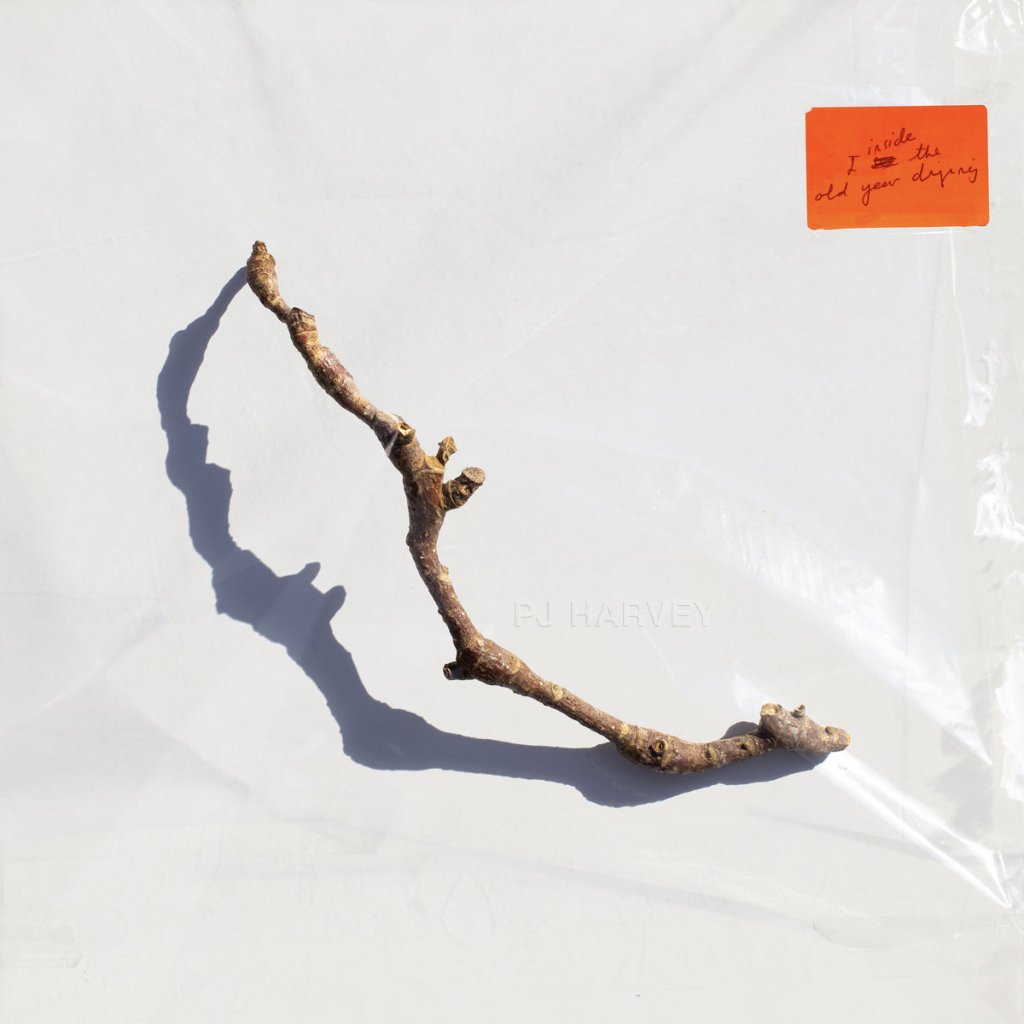
Britain’s best Dorset singer-songwriter decides to ruminate on ageing and nature with her native dialect. The result is nothing short of magic.
4.5/5
PJ Harvey is one of the premier artists of the United Kingdom ever since her breakthrough with 1995’s To Bring You My Love. Her blues influence that’s backed by her admiration of Captain Beefheart and her relatively humble beginnings in Bridport, Dorset allows her to churn out hits in alternative rock. Escalating her reputation is her artistic love for adding depth to her music; this insightful endeavour is proven through her citation of Modernist writers and contemporary conflict as main inspirations for her 2011 opus Let England Shake. Many might argue that her songs are incapable of presenting itself as being sophisticated, but the lyrical and musical ambition suggests otherwise.
With her longtime collaborator John Parish, I Inside the Old Year Dying is the latest album from Harvey after 2016’s The Hope Six Demolition Project. The record is a companion piece to her epic poem Orlam from last year during her then-indefinite hiatus from creating her own LPs in favour of composition and literary writing. Thanks to these experiences, she backs her songs up with a rare lyrical style that is rarely found even in her local scene via her use of her home county’s dialect. This means that much of the album itself is influenced by her childhood with a thematic search for deteriorating innocence, fragile love, and existential dread.
You can sense the archaic fantasy through the title itself. The enunciations and linguistic distinctions can show within many tracks One example are the “Wordle zircles”, the “Quarterevil”, and “Chilver”, all words from Dorset’s own dialect, in ‘The Nether-edge’ which dives into the seediness of a local village. In turn, this provides a unique kind of addition to the overall texture of the song that highlights her native background and its little bits of mythology. This rose up again with the opener ‘Prayer at the Gate’ where, within the minimal organs and an ambient-like drone, we hear some remarkable pieces of poetry. “And drisk shrouded in its cloak / Holway, river, brook and oak,” goes Harvey in describing a symbolic passage to the prospect of being reborn, “All souls under Orlam’s reign / Made passage for the born again”.
The Dorset dialect’s importance within the album is key to its success. Thanks to how seamless it can weave in between being recognisable and being alien, it draws a certain similarity to the likes of dream pop in how it can put you in a trance. However, Harvey shows that she can achieve that without relying on the studio as shown in the title track. The tribalistic drumming against the grieving “sheperd gurrel” is more than enough to elicit a kind of tension in the village of Underwhelem without saying out loud what had happened. It rose up again in the slightly altered title ‘I Inside the Old Year I Dying’ where the delicate finger-picked guitar rings to a nymph-like seduction against the humbled bassline. Or the plea to “Love Me Tender” on ‘August’ which makes even the rather claustrophobic, noisy production feel like a backing statement to the unending search.
It’s worth raising up the fact that I Inside the Old Year Dying, being made to accompany Orlam, is supposed to be filled with motifs pertaining to youth and nature. However, these were generally backed with a tense sense of instrumentation. ‘Seem an I’ sees a bit of electronic echo merging underneath the repetitive drumming and the suave bassline go against the observant notices of misery within your locale. ‘Autumn Term’ points toward the anxieties of going to school, “red eyed / ‘Gainst the wilder-mist”, with multilayered singing and a seemingly irregular metre in the guitar riff. ‘Lwonesome Tonight’ echoes back to Harvey’s signature blues direction with a fairytale-like story of a courteous romance. The Biblical reference from “As I’ve loved you, so you must” has a bit of subtext around toxicity that’s fuelled only by lust and fear of being lonely. It feels, as if to say, that even innocuous stories with unconditional love finds its meanings undermined by codependency.
There were also other instances of experimentation in the music from the more psychedelic ambience of ‘All Souls’ to the dissonant derangement found in ‘A Noiseless Noise’. However, these songs pale in impact when compared to the two companion pieces in ‘A Child’s Question, August’ and ‘A Child’s Question, July’. To me, these two tracks feel like the climaxes of the whole album as they examine what it means to be in love and how it feels to have your connection to nature wither away as you grow older. ‘A Child’s Question, August’ flips the “Love Me Tender” from ‘August’ into anguished desperation over passing over summer as an adult without any closure of romance. With ‘A Child’s Question, July’, we instead find ourselves into the perspective of “[hailing] the hedge as it grows” to try and learn. The lack of response as the questions escalate to more religious comments on life suggests that of the loss of childhood innocence over nature’s supposed omniscience.
I Inside the Old Year Dying is a largely complex work especially when you look at it through a literary lens. Interwoven with motifs, symbols, uncommon dialects, and subversive takes on themes like love or childhood, this album feels like a cumulation of Harvey’s past seven years in being an aspiring poet. The instrumental side might not be as pronounced, but there are subtle instances where the notes that’s been played and the overall sound feels reminiscent of a musical stage direction. If you’re looking for poetry set to unconventional folk backings, then PJ Harvey’s latest endeavour will certainly not disappoint you as does her fanbase. Feel free to give this a listen.
 GutterPutter
Leave a comment