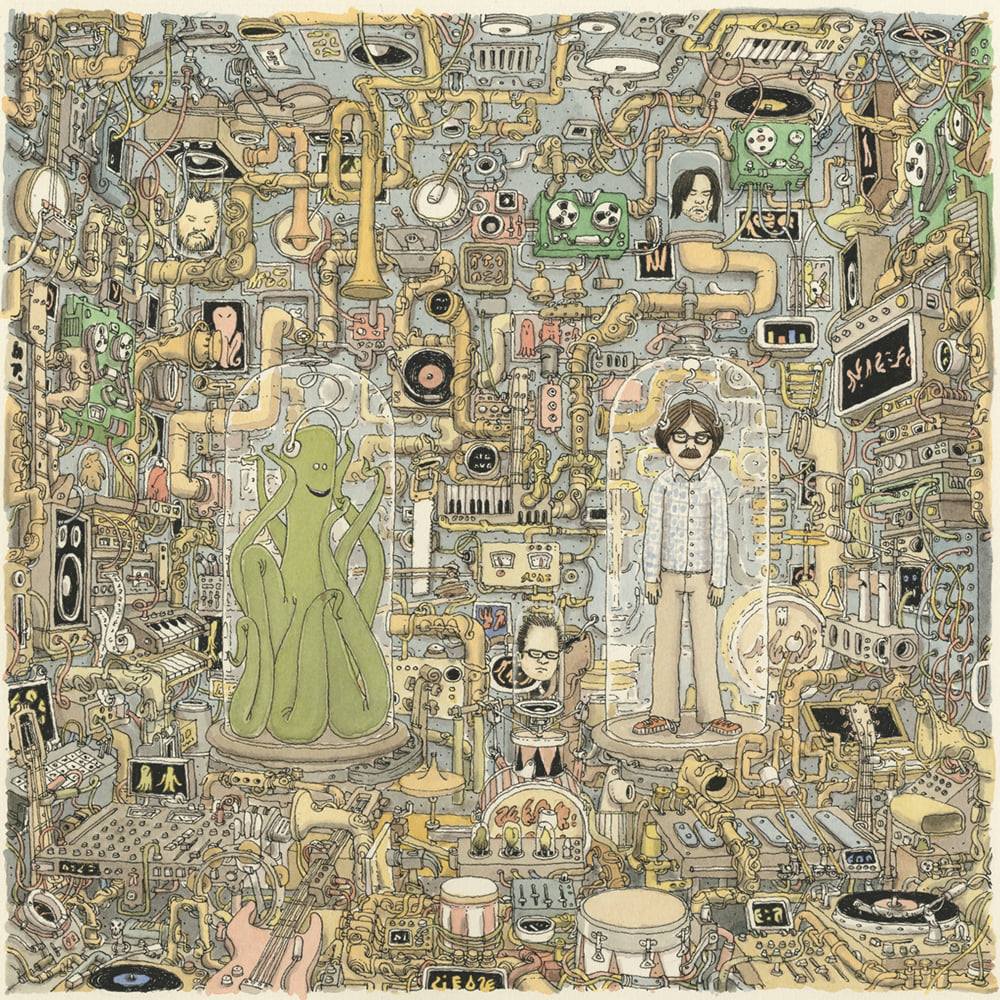
A combination of both baroque orchestration with Weezer’s signature appeal to memorable hooks lead to one of the band’s most solid work post-Pinkerton.
Summative Verdict
3.8/5
By the time OK Human is finally made, Weezer has a well-storied discography that dates as far back as the critically beloved Blue Album in 1994 & Pinkerton in 1996 with their strong impact on the power-pop genre & by extension, both the pop-punk & emo genre. After the release of the seminal works & lead singer/guitarist/frontman River Cuomo’s break from his music career to try & focus on getting his Harvard degree, the following series of albums fail to live up to the legacy of the first two record – the closest being 2014’s Everything Will Be Alright in the End and 2016’s The White Album. Following once again with a string of disappointments, it’s until recently with OK Human when it looks as if while it’s unlikely that the band will ever find their strengths in their first two records, they are at least back in their comfort zone of solid pop-rock formula. This time with orchestral influences from the Beach Boys & the Beatles as an example.
The use of string instrumentation, accompanied by the baroque piano & simple drumming really compliments well with Cuomo’s singing as much of the album deals with technology & our lives staying in during the pandemic. The lyrical content tends to veer a bit too much in being alike to a stereotypical boomer complaints (on top of being too simple for my taste) as the laments on how the younger generations are losing their touch on reality in favour of digital content which is most explicit in ‘Screens’ to which it feels too on-the-nose for one to take its message seriously.
That doesn’t mean to say that the rest of the record is going to complain about how the good old days is gone. If anything, some of the track picks are among the most catchiest & personal in the band’s discography for a long while. The opening in ‘All My Favorite Songs’, for example, might have a cheesy chorus in ‘All my favourite songs are slow and sad/ All my favourite people make me mad/ Everything that feels so good is bad, bad, bad’, but can you linger on it for a long while if that ignores how well-orchestrated the classical accompaniments is? ‘Aloo Gobi’ continues to build on the orchestration as its biggest strength as the synergy between the violins, the horn, the violas & the piano really brings in a level of sophisticated fun of its inspiration. However, that comes without the relative childishness of the first track as Cuomo’s writing starts to shine in by mixing Weezer’s signature ears for hooks with successful portrayal of eloquence to portray social anxiety: ‘Don’t wanna sit next to humans, I’m agoraphobic/ Order up a decaf latte, spin Gainsbourg tunes’. ‘Grapes of Wrath’ might well be one of the best songs for one to get their kids or students into reading especially with how infectious the hook is – ‘I’m gonna rock my Audible/ Headphone, Grapes of Wrath/ Drift off to oblivion/ I just don’t care, I just don’t care’ & it contains some of the most nerdiest lyrics from the band in the long time. ‘Numbers’ contemplates on quantifying human value & out own personal anxieties with our self-worth. That very track also contains some of Cuomo’s best singing & the harmonic back-up singing enhances the emotional resonance with great depth as the production starts to show its sheen brilliantly. The orchestral back-up instrumentation never feels too overwhelming & you can pick out each part adds to a greater sum.
Although the second half is when the record starts to slip up, there are some highlights that is worth talking about. ‘Bird with a Broken Wing’ has a touchy chorus & stresses the production’s focus on the violas & the violins well to show the 60s’ influence even if the lyrics didn’t make me emote as much as the first half. ‘Dead Roses’ & ‘Everything Happens for a Reason’ weren’t exceptional, but it does continue to show the album’s biggest strength in its luxurious incorporation of the classical instruments. ‘Here Comes the Rain’ is the most uplifting song on the album & presents the most enthusiastic singing from Cuomo – impressive given that he’s just over fifty now when artists around his age would’ve much rather perform just for their paycheck instead of enjoying what they do. ‘La Brea Tar Pits’ is solid, but I would lump it as being among the weaker tracks in the listing. Its role as being an ending track would serve well with the thematic concerns around Cuomo never being able to move past the shadows made by the first two records, but the lyrics feel like a hit-&-miss at that point & by then, it feels like a miss to anyone who doesn’t feel invested in Weezer (or at least the majority of their discography). That being said, the final string accompaniment alongside the subdued piano is a nice callback to their debut single ‘Undone – The Sweater Song’ & older fans would much so appreciate that reference as Cuomo & others will continue the pains of having to live up to the magnitude of their 90s’ output.
Unfortunately, I wouldn’t say for sure OK Human is a definite, game-changing return to form of Weezer back to its former glory as a pop-rock powerhouse, but the album itself is a welcome switcheroo that shows the band well in their comfort zone. Cuomo’s past dalliances with adopting classical music into his work pays off kindly as shown with how much I’ve talked about the orchestra as being the album’s most distinct plus & while the lyrics can come off as being juvenile & whiny of nowadays’ lifestyle, it does contain some of Cuomo’s most concentrated lines on top of the band’s love of effective choruses. Thus, OK Human easily enters into the better half of Weezer’s catalogue of music – Cuomo’s brief flirtation with the classical music instruments benefits well with the pop sentiments of the band, leading to a great example of semi-mainstream baroque pop.
 GutterPutter
Leave a comment